

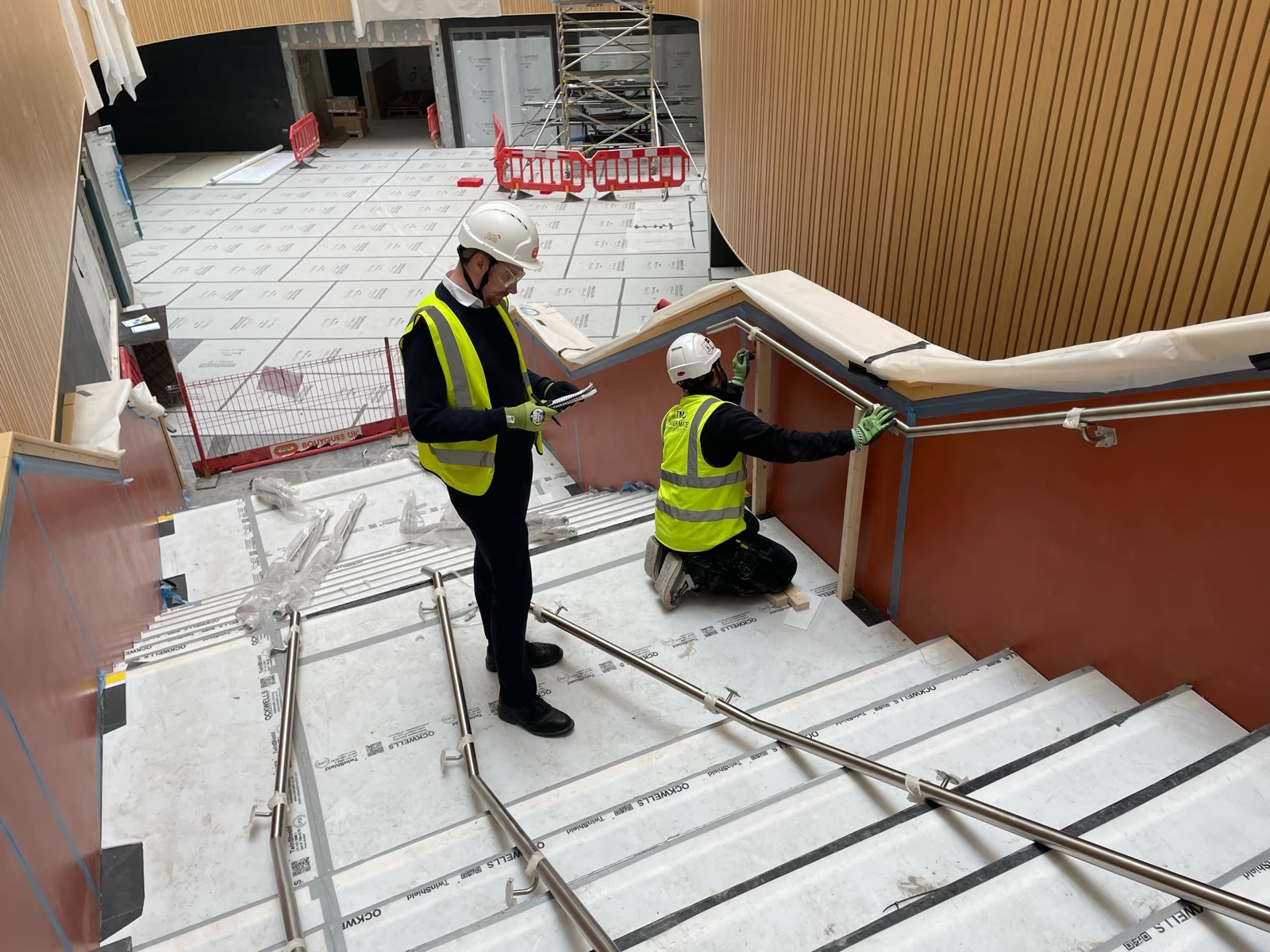
The Work at Height Regulations 2005 apply in Great Britain to work at any height where a person could fall a distance liable to cause personal injury. Duties fall on employers and anyone who controls the work. Under regulation 6 of the Work at Height Regulations 2005, you avoid work at height where reasonably practicable, prevent falls where it cannot be avoided, and minimise the distance and consequences of any fall.
The Work at Height Regulations 2005 apply in Great Britain to work at any height where a person could fall a distance liable to cause personal injury. Duties fall on employers and anyone who controls the work. Under regulation 6 of the Work at Height Regulations 2005, you avoid work at height where reasonably practicable, prevent falls where it cannot be avoided, and minimise the distance and consequences of any fall.
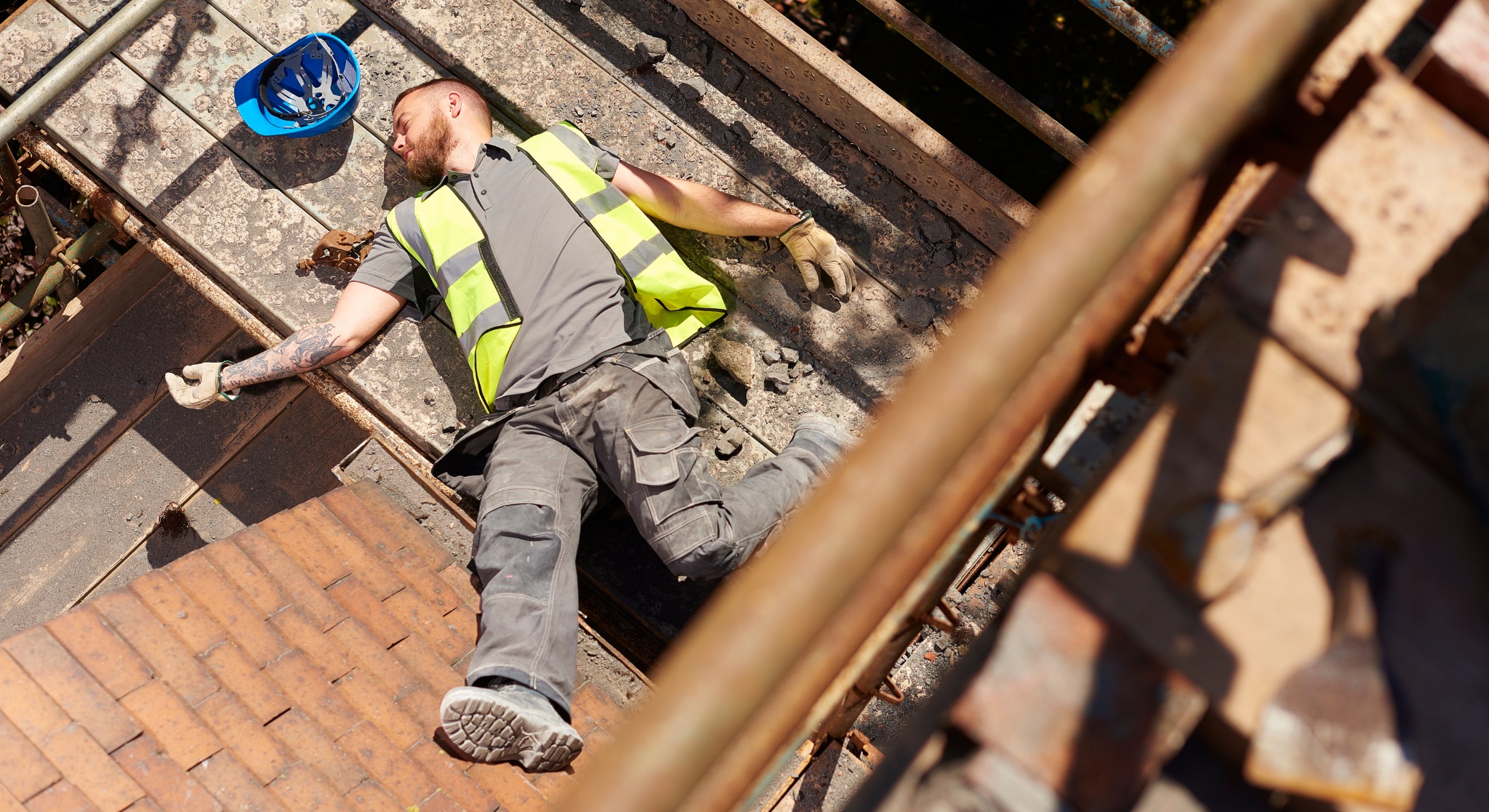
Northern Ireland has its own Regulations, also made in 2005. In Great Britain, falls from a height were the most common kind of fatal accident to workers in 2025/26, accounting for 31 of the 126 worker deaths in HSE's provisional figures.
What counts as work at height?
Regulation 2 of the Work at Height Regulations 2005 defines it as work in any place, including a place at or below ground level, where a person could fall a distance liable to cause personal injury if the measures the Regulations require were not taken. Getting to and from that place while at work counts as well, except by a staircase in a permanent workplace.
The definition sets no height. HSE's guidance puts it as three tests: you are working at height if you work above ground or floor level, if you could fall from an edge, through an opening or through a fragile surface, or if you could fall from ground level into an opening in a floor or a hole in the ground. A slip or trip on the level falls outside it, because a fall from height means a fall from one level to a lower one.
On a warehouse, merchant or factory site:
| Situation | Work at height? | Why |
|---|---|---|
| Standing on a stepladder to reach a high shelf or racking beam | Yes | Above floor level |
| Crossing a roof that has roof lights in it | Yes | A fall through a fragile surface |
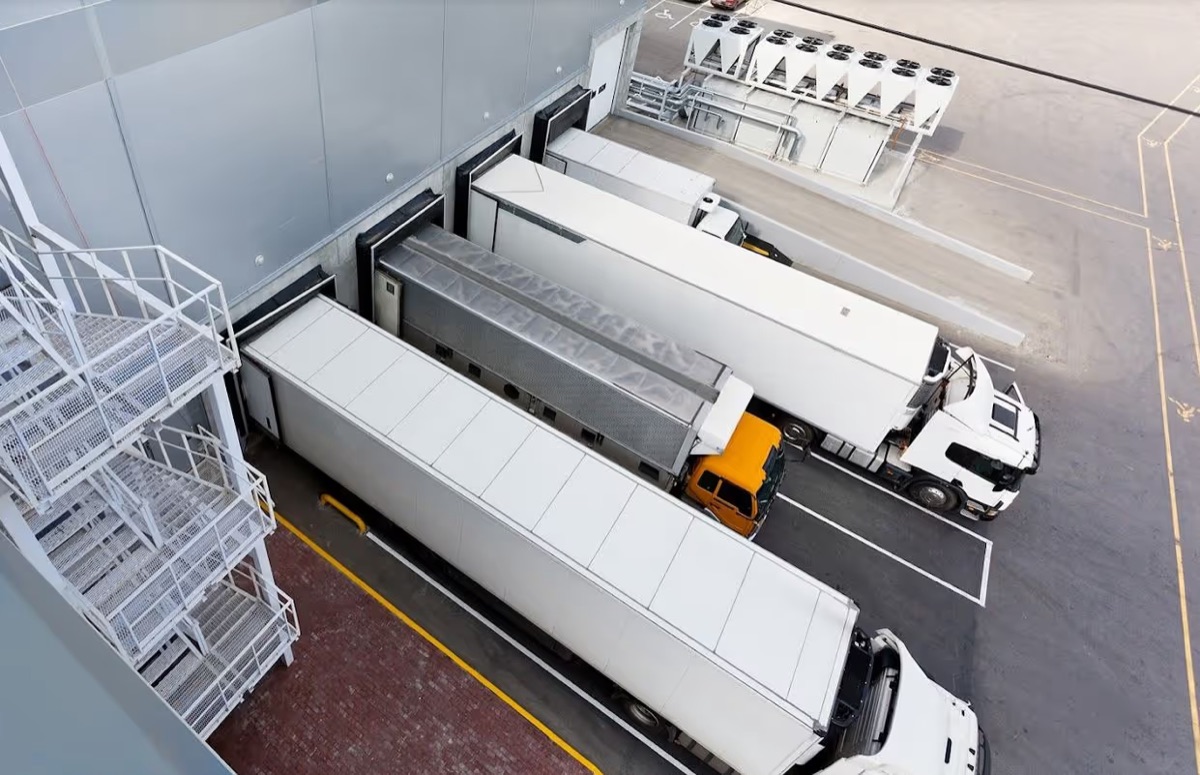
| Standing on the bed of a flatbed lorry to unload it | Yes | A fall from an edge |
| Working beside an open floor hatch or inspection pit | Yes | A fall from ground level into an opening |
| Using the permanent staircase up to a mezzanine office | No | Access by a staircase in a permanent workplace is excluded |
| Slipping on a wet floor in the yard | No | A fall on the level |
How does the hierarchy in the Work at Height Regulations work?
Regulation 6 of the Work at Height Regulations 2005 starts from your risk assessment under regulation 3 of the Management of Health and Safety at Work Regulations 1999, which our guide to the Management Regulations explains. It then sets three steps, in this order:
| Step | What the regulation requires | HSE's examples |
|---|---|---|
| Avoid | Do the work other than at height where it is reasonably practicable to do it safely that way | Extendable tools used from the ground; lowering a lighting mast to ground level; assembling edge protection at ground level |
| Prevent | Work from an existing place of work, or use an existing means of access, that meets Schedule 1 to the Work at Height Regulations 2005 where that is reasonably practicable; failing that, provide work equipment to prevent a fall, so far as is reasonably practicable | A concrete flat roof with existing edge protection; a guarded mezzanine; scissor lifts, tower scaffolds and scaffolds; a work restraint system that stops a worker getting into a fall position |
| Minimise | Where a risk of falling remains, provide work equipment to minimise the distance and consequences of a fall, so far as is reasonably practicable, plus additional training, instruction or other measures | Safety nets and airbags installed close to the level of the work; a fall arrest system using a high anchor point |
Regulation 7 of the Work at Height Regulations 2005 governs the choice of equipment, and it gives collective protection measures priority over personal ones. HSE describes collective protection as equipment that works without the person at height doing anything, such as a guard-rail, a scissor lift or a tower scaffold. Personal protection needs the individual to act, for example by putting on a harness correctly and connecting it through an energy-absorbing lanyard to a suitable anchor point.
The same regulation lists what to weigh, including the working conditions, the distance and consequences of a potential fall, how long and how often the equipment is used, and the need for easy and timely evacuation and rescue.
What else do the Work at Height Regulations require?
Planning, weather and rescue
Under regulation 4 of the Work at Height Regulations 2005, work at height must be properly planned, appropriately supervised and carried out in a manner that is, so far as is reasonably practicable, safe. Planning includes choosing the equipment and planning for emergencies and rescue. The work is carried out only when the weather does not jeopardise the health or safety of the people doing it.
HSE says low-risk, relatively straightforward tasks need less planning effort. Its leaflet INDG401 adds that a rescue plan should not rely entirely on the emergency services. Where conditions can change on the day, a dynamic risk assessment sits alongside the written plan, which for a contractor may be set out in RAMS.
Competence
Nobody may take part in any activity involving work at height, including organising, planning and supervising it, unless they are competent or are being trained under the supervision of a competent person. That is regulation 5 of the Work at Height Regulations 2005. The Regulations name no qualification.
HSE describes competence as sufficient skills, knowledge and experience for the task. For low-risk, short-duration ladder work, it says that may be no more than instruction in using the equipment safely plus appropriate training, often given on the job. Drawing up a plan for a complex scaffold needs a more technical level, where industry training and certification schemes are one way to show it.
Where your people use steps, ladders or harnesses, our one-day working at height course covers the Regulations, risk assessment and planning, and inspection of access equipment, delivered at your premises on your team's own equipment.
The equipment schedules
Regulation 8 of the Work at Height Regulations 2005 applies a schedule to each type of equipment:
| Schedule to the Work at Height Regulations 2005 | Covers | One requirement in it |
|---|---|---|
| 2 | Guard-rails, toe-boards, barriers and similar collective protection | In construction work, the highest guard-rail at least 950mm above the edge (910mm for one already in place on 6 April 2005), and no gap over 470mm next to an intermediate guard-rail |
| 3 | Working platforms, with extra rules for scaffolding | An assembly, use and dismantling plan for scaffolding, drawn up by a competent person, depending on its complexity |
| 4 | Nets, airbags and other collective safeguards for arresting falls | Used only where a risk assessment supports it and other, safer work equipment is not reasonably practicable |
| 5 | Personal fall protection: work positioning, rope access, fall arrest and work restraint | The user and enough other available people trained for the operation, including rescue procedures |
| 6 | Ladders and stepladders | Used only where a risk assessment justifies it (see below) |
For work outside construction, HSE's FAQ says there are no prescribed guard-rail dimensions. It treats guard-rails that comply with the Building Regulations, which require 1100mm, as high enough for factories, warehouses and other buildings. Where no standard applies, its operational guidance suggests a minimum of 950mm.
Fragile surfaces, falling objects and danger areas
Fragile surfaces come under regulation 9 of the Work at Height Regulations 2005. You make sure nobody passes across or near, or works on, from or near, a fragile surface where it is reasonably practicable to do the work safely, under appropriate ergonomic conditions, without doing so. Where that is not reasonably practicable, you provide platforms, coverings, guard-rails or similar, so far as is reasonably practicable, to support any foreseeable load. You warn anyone who may go near it, with prominent notices at the approach so far as is reasonably practicable, or by other means.
HSE lists roof lights, liner panels, non-reinforced fibre cement sheets, corroded metal sheets, glass and rotted chipboard among the surfaces likely to be fragile. It notes that these falls can happen during repairs or cleaning on the roofs of factories, warehouses and farm buildings, as well as in construction.
For falling objects, regulation 10 of the Work at Height Regulations 2005 requires steps to prevent materials or objects falling, so far as is reasonably practicable, and where that cannot be done, steps to stop anyone being struck. Nothing is thrown or tipped from height where it could injure someone, and materials are stored so that nobody is put at risk if they collapse, overturn or move unintentionally. Regulation 11 of the Work at Height Regulations 2005 adds that any area where people could fall or be struck by a falling object is clearly indicated and, so far as is reasonably practicable, fitted with devices that keep unauthorised people out.
When can you use a ladder?
Schedule 6 to the Work at Height Regulations 2005 allows a ladder for work at height only where a risk assessment has shown that more suitable equipment is unjustified because of the low risk and either the short duration of use or existing features on site that you cannot alter.
HSE says ladders can be a sensible and practical option for low-risk, short-duration tasks, though they should not automatically be your first choice. HSE's ladder guidance has you consider the risk before the duration, and as a guide recommends other equipment for any task that would keep someone on a leaning ladder or stepladder for more than 30 minutes at a time.
The schedule also requires a stable, firm base, a portable ladder secured or fitted with an effective anti-slip or stability device, an access ladder that protrudes far enough above the landing unless another firm handhold is provided, and a secure handhold and support for the user at all times. HSE recommends a pre-use check each working day and detailed visual inspections at fixed intervals by a competent person, recorded and following the manufacturer's instructions. If your team checks its own ladders, our ladder inspection course takes half a day.
How often must work at height equipment be inspected?
Regulation 12 of the Work at Height Regulations 2005 covers guard-rails, working platforms including scaffolds, nets and airbags, personal fall protection and ladders. An inspection is whatever visual or more rigorous inspection by a competent person is appropriate for safety, including any testing needed for that purpose.
| When | What regulation 12 of the Work at Height Regulations 2005 requires |
|---|---|
| After installation or assembly, where safety depends on it | An inspection in that position before the equipment is used there |
| Equipment exposed to conditions causing deterioration that could lead to danger | An inspection at suitable intervals, and each time something liable to jeopardise its safety has happened |
| A working platform used for construction work, from which a person could fall 2 metres or more | An inspection in that position within the previous 7 days, or on the site for a mobile working platform |
| Equipment leaving your business, or brought in from another one, other than lifting equipment covered by LOLER | Physical evidence that its last inspection was carried out |
You record the result of every inspection and keep it until the next one is recorded. For a construction working platform covered by the 7-day rule, the inspector writes a report with the particulars listed in Schedule 7 to the Work at Height Regulations 2005 before the end of the working period and gives it within 24 hours to the person it was done for. You keep that report on site until the construction work is complete and then at an office for 3 months.
A mobile elevating work platform is also lifting equipment, so it has thorough examinations under the Lifting Operations and Lifting Equipment Regulations 1998, and each one counts as an inspection under regulation 12 of the Work at Height Regulations 2005, apart from the report rules for construction platforms. Our LOLER guide covers the intervals.
Separately, regulation 13 of the Work at Height Regulations 2005 requires the surface of every place of work at height, and every parapet, permanent rail or other fall protection on it, to be checked on each occasion before the place is used, so far as is reasonably practicable.
Who has duties under the Work at Height Regulations?
Regulation 3 of the Work at Height Regulations 2005 applies an employer's duties to work by its employees and by anyone else under its control, to the extent of that control. The same duties apply to self-employed people within the scope of health and safety law, for their own work and for work by people under their control, and to any other person who controls work by others, to the extent of that control. HSE's examples include facilities managers and building owners who contract others to work at height, so bringing a contractor onto your roof can leave you with duties too.
People at work carry duties of their own under regulation 14 of the Work at Height Regulations 2005. Anyone working under someone else's control reports any activity or defect relating to work at height that they know is likely to endanger someone, and everyone uses the equipment provided in line with their training and instructions.
Frequently asked questions
What is classed as working at height? Any work where a person could fall a distance liable to cause personal injury, under regulation 2 of the Work at Height Regulations 2005. It includes work at ground level where you could fall into an opening or hole, and getting to and from the place of work, other than by a staircase in a permanent workplace.
Is there a minimum height for work at height? No. The definition sets none. The Regulations use 2 metres for inspection only. Under regulation 12 of the Work at Height Regulations 2005, a working platform used for construction work, from which someone could fall 2 metres or more, is inspected in position at least every 7 days.
Are ladders banned under the Work at Height Regulations? No. A ladder is allowed where a risk assessment shows more suitable equipment is unjustified because the risk is low and either the use is short or the site has features you cannot alter. HSE suggests other equipment once a task would keep someone on a leaning ladder or stepladder for more than 30 minutes at a time.
How often does a scaffold need inspecting? A scaffold used for construction work, from which a person could fall 2 metres or more, is inspected after it is put up in position, after anything liable to jeopardise its safety, and at least every 7 days, with a written report each time. Other work at height equipment exposed to conditions that cause deterioration is inspected at suitable intervals for its environment and use.
Who is responsible for work at height safety? The employer, for its own employees and anyone under its control, and anyone else who controls work at height, such as a building owner bringing in contractors. Workers must report dangerous activities and defects and use equipment as trained.
Do you need a qualification to work at height? No. Regulation 5 of the Work at Height Regulations 2005 requires competence, or supervision by a competent person while being trained, and names no qualification.
When did the Work at Height Regulations come into force? On 6 April 2005. They have been amended since, including in 2007 for caving and climbing instruction and in 2015 for the self-employed.
Where to start
List every task on site that puts someone above floor level or near an edge, opening or fragile roof, including the occasional ones such as changing a light or clearing a gutter. For each, write down which step of the hierarchy it sits at and why an earlier step is not reasonably practicable, then check that the equipment it relies on has a current inspection record.
Many of our consultants are former HSE and local authority regulators. Through an Opus Safety partnership, a named consultant works through these duties with you, site by site.

Last updated
October 21, 2026
Opus Safety
Health & safety insights
Guidance, updates and practical advice for your sector.




Management of Health and Safety at Work Regulations 1999: what they require
The Management of Health and Safety at Work Regulations 1999 require employers in Great Britain to assess risks and appoint a competent person.
Dynamic risk assessment: meaning, the law and examples
A dynamic risk assessment is a trained worker's check as conditions change on the job. No regulation names it, and it never replaces your risk assessment.
HSE prosecutions: Counting the cost of non-compliance
Two fall from height prosecutions in one week and a £120,000 dust fine. What recent HSE enforcement action means for your controls.
Working at height: Critical training points to protect your team
Working at height is the UK’s number one workplace killer. Get a checklist of key training areas to prevent falls and improve working practices.
Builders merchant hazards: nine risks, and what fixes each
The nine health and safety hazards in a builders merchant, from yard traffic and forklifts to wood dust, with the law behind each and what fixes it.
Recent prosecutions – worker dies after fall from shipping container
A Gateshead haulage firm was fined £200,000 after a worker fell 1.5 metres from a shipping container and died. What your work at height assessment must cover.
Recent prosecutions – plant hire company fined for poor work at height and welfare practices
Hefty penalties can be levied even in the absence of an accident. Get specialist advice to reduce your risk of harm and prevent falls from height.
Recent prosecutions - business fined £13,000 for fall-from-height incident
A company faces serious financial penalties for failing to protect staff from fall risks. Learn how to prevent the top cause of workplace fatalities.

Why businesses choose
Opus Safety
We've worked across UK industry for years. The numbers show what our clients achieve when compliance becomes a strength, not a burden.


