

COSHH consultants and risk assessment services
A COSHH risk assessment works out the health risk from every hazardous substance your work uses or creates, and what has to be done to prevent or control exposure to it. In Great Britain, regulation 6 of the Control of Substances Hazardous to Health Regulations 2002 says work liable to expose employees to a substance hazardous to health must not be carried out until a suitable and sufficient assessment has been made and its steps put in place. That covers what you buy in, such as solvents, cleaners, adhesives and cement, and what the work itself creates, such as wood dust, silica dust and welding fume, which come with no safety data sheet. Our consultants assess each substance as it is used on your site. Northern Ireland has its own 2003 Regulations.


What a COSHH risk assessment includes
Every substance hazardous to health on site, assessed against COSHH 2002 and written up so your team can act on it.
Regulation 6 of the same Regulations sets out what the assessment has to consider: each substance's hazardous properties and the supplier's health information, including the safety data sheet; the level, type and duration of exposure; the circumstances of the work and the amounts involved; jobs such as maintenance where exposure can be high; any workplace exposure limit; the effect of the controls; the results of health surveillance and exposure monitoring; substances in combination; and the classification of any biological agent.

The substance inventory
Your consultant lists every substance hazardous to health on site: what you buy in and what the work produces, such as wood dust, silica dust, welding fume and oil mist. Your safety data sheets are checked against how each product is actually used, because HSE's guidance is that a safety data sheet is not a risk assessment and cannot take account of your workplace.

Exposure and the limits
For each substance and task, the assessment looks at how people are exposed, for how long and how much, including during cleaning and maintenance, and sets that against any workplace exposure limit in HSE's EH40/2005. Respirable crystalline silica, for example, has a limit of 0.1 mg/m³ averaged over 8 hours, and hardwood dust 3 mg/m³. Staying under a limit is one of the conditions of adequate control under regulation 7 of COSHH 2002, and the assessment checks the others too.

Controls in COSHH's order
Prevention comes first: replacing a substance with a safer substance or process where that is reasonably practicable. Where preventing exposure is not reasonably practicable, it must be adequately controlled, in the order regulation 7 of COSHH 2002 sets: suitable work processes, systems and engineering controls; control at source, including local exhaust ventilation (LEV); and personal protective equipment, on top of those measures, where adequate control cannot be achieved by other means. The assessment then says where exposure monitoring and health surveillance are needed, and how often.
What lands on your desk afterwards
A report your team can work from, and the records an inspector will ask to see.
The COSHH risk assessment
Every substance and task, linked to its exposure route, health effect and control measure, with the significant findings recorded as regulation 6 of COSHH 2002 requires where you employ five or more employees.
A prioritised action plan
Ranked by risk, with timescales and the person responsible for each step, as HSE's guidance in L5 suggests.
Monitoring and health surveillance, with frequencies
Where the assessment shows exposure monitoring or health surveillance is needed, what kind and how often.
Control checks
Which controls need maintaining, checking, and examining and testing.
What you should be able to show
These are the main things COSHH expects you to be able to show. Could you put your hands on all six today?
- ✓A current COSHH assessment covering every substance hazardous to health, including those the work produces, with the significant findings written down if you employ five or more employees
- ✓The steps you have taken to prevent or control exposure, with substitution considered first
- ✓A thorough examination and test record for each LEV system, carried out at least once every 14 months or at the shorter interval in Schedule 4 of COSHH 2002, kept for at least five years
- ✓Exposure monitoring results where the assessment calls for monitoring, kept for at least 40 years where they represent the exposure of identifiable employees
- ✓Health records for employees under health surveillance, kept for at least 40 years
- ✓Information, instruction and training for every employee liable to be exposed, including the significant findings of the assessment

What a COSHH risk assessment costs
Price depends on a number of variables, including:
How many substances and processes there are
A cleaning cupboard and a few products is a short visit. Process lines, spray booths and dust-producing machinery take longer, and HSE's Approved Code of Practice says the record should be fuller where the work presents more of a risk.
Whether air monitoring is needed
If the assessment shows it is, sampling and laboratory analysis are a separate cost. HSE's guide to buying it says a professional survey will probably last at least a day and could cost a few thousand pounds.
What information already exists
Safety data sheets, a substance inventory, LEV commissioning reports and logbooks, and a previous assessment all shorten the work.
Number of sites
Each site is assessed for the substances and processes it actually has.
A COSHH assessment and a DSEAR risk assessment look at some of the same substances for different risks: COSHH at the risk to health, DSEAR at fire and explosion. HSE's guidance allows the two to be combined.
Two ways to work with Opus
Book a one-off service for a specific need, or take on a partnership for ongoing support. Either way, the work gets done by the same team.
Book a service
For a specific need - a single assessment, audit, or
on-site service with a clear deliverable.

Opus Safety Partnership
Ongoing support and consider-it-done compliance. For businesses that want compliance off their plate, not on their to-do list.

Not sure which fits? Speak to a consultant - no commitment required.
Kellaway


Why businesses bring COSHH to Opus
One team from the assessment to the health surveillance it calls for. Our consultants assess the substances, and our occupational health technicians run spirometry, skin checks and isocyanate biological monitoring on site where the assessment shows they are needed.
Assessed as the work is done
Process dust and fume have no data sheet, so the assessment starts from the task, the machine and the extraction, and uses the paperwork alongside.
Consultants who include former regulators
Our team includes former HSE and local authority regulators.
Proportionate to the risk
HSE's guidance is that where the work is small-scale with obvious control measures, you can do the assessment yourself, and its Approved Code of Practice says the amount recorded should be proportionate to the risks.
COSHH risk assessments by sector


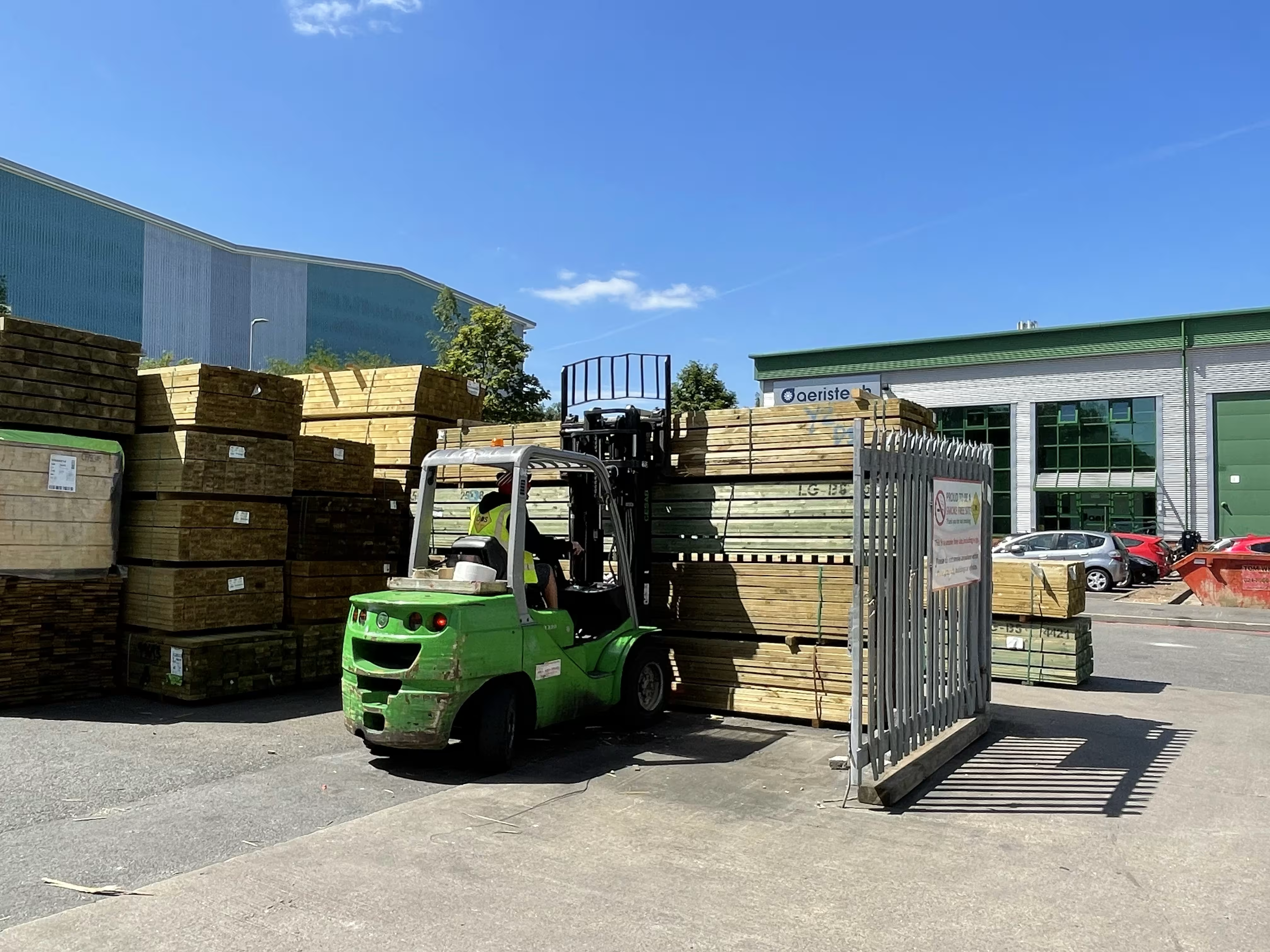
Builders Merchants
Your stock is a COSHH inventory too: cement, adhesives, fuels and treated timber, plus the dust from the timber cutting service. We assess what your staff handle and the dust the cutting creates, under COSHH 2002.

Warehousing & Logistics
Battery charging for lift trucks, fuel, cleaning chemicals and leaking or damaged stock are common sources of COSHH risk in a warehouse. The assessment covers each as it is handled, including spills and breakages.

Manufacturing & Engineering
Many of the exposures are made by the process itself: welding fume, metalworking fluid mist, silica from cutting stone or concrete, and wood dust from machining. Welding fume, silica and wood dust have no data sheet, so the assessment looks at the task and the extraction.

Garden Centres
Plant protection products, fertilisers, compost, and pool and cleaning chemicals, some sold to customers and some used by staff. We assess the substances your staff use and the tasks they use them in.

Metal Stockholders
Cutting oils and their mist, degreasers, coatings, and welding and cutting fume, much of it produced by the process. Where metal is ground, abraded or polished dry with powered tools in a room for more than 12 hours a week, Schedule 4 of COSHH 2002 sets a maximum of 6 months between the LEV's thorough examinations and tests.

Childcare & Nurseries
Cleaning products, sanitisers, bleach and nappy waste, used around young children. The assessment sets proportionate controls and safe storage, and where the risk is low, it says so.


Ready to book a
COSHH Risk Assessment?
Tell us what substances you use, the processes that create dust or fume, and how many sites you have. We will quote for the work, and by the end you will know every substance on site, how people are exposed and what has to change.
Frequently asked questions
Is a COSHH risk assessment a legal requirement?

Who can carry out a COSHH assessment? Do they need a qualification?
Is a safety data sheet the same as a COSHH assessment?
How often should a COSHH assessment be reviewed?
How often does LEV need testing?
When is air monitoring needed?
When is health surveillance needed under COSHH?
How much does a COSHH risk assessment cost?


