%201.svg)
%201.svg)
Health & safety built for builders merchants
A builders merchant's serious risks sit where customers, lift trucks and stock share the same yard: forklifts loading trade vehicles, customers walking between stacks, and boards and timber stored where they can fall. In Great Britain, section 3 of the Health and Safety at Work etc. Act 1974 extends your duty to customers and visiting drivers, so far as is reasonably practicable, and HSE's workplace transport guidance says members of the public should not be allowed in lift-truck operating areas. A named Opus consultant works through those risks with you, branch by branch, and can act as your competent person. Your business stays the duty holder.
IOSH Approved | 98% Client Retention | 400+ Active Partnerships





SECTOR-SPECIFIC COMPLIANCE
What a health and safety consultant for builders merchants looks at
Lift trucks and customers in the same yard, stacked timber and sheet materials, a product range that brings both health and fire risks, and fire across stock and packaging. An Opus assessment of a merchant branch covers all four.

Customers, lift trucks and vehicles
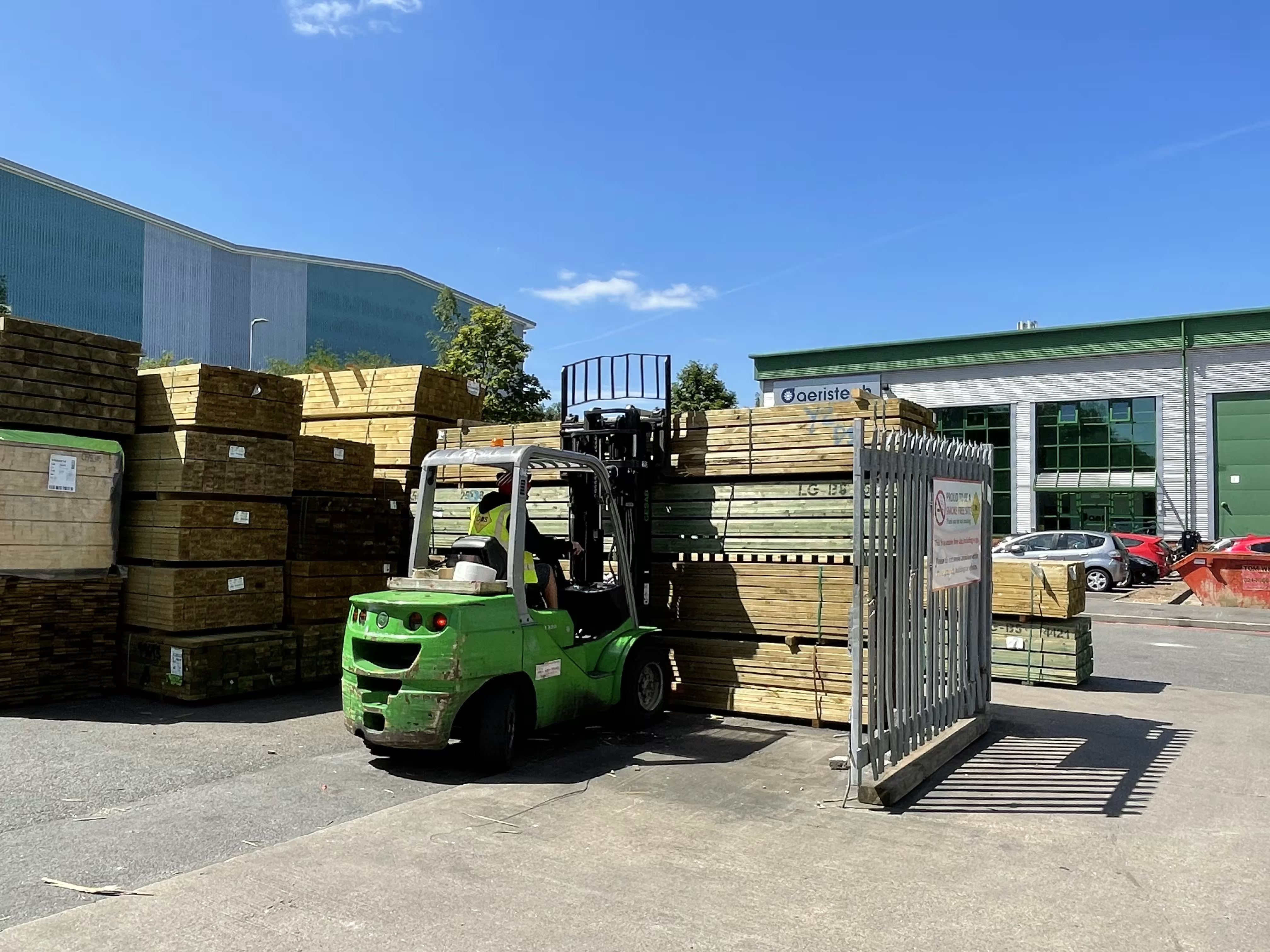
Forklifts, delivery lorries and customers share the yard. HSE's workplace transport guidance makes segregating pedestrians from vehicles the most effective protection, and for retail and wholesale premises it says to try to provide separate delivery and collection areas, keep the public out of lift-truck operating areas, and have a written procedure when a truck has to enter an area while customers have access to it.
Stacked timber and boards
HSE's guidance on stacking timber and boards applies to all sites, not just woodworking premises. Boards and other flat sheets should be stored flat or in a purpose-built rack, never on edge without adequate support; climbing stacks should be prohibited; and stacking areas the public could reach should be fenced.
Products with health and fire risks
Work that exposes staff to cement, adhesives, paints and solvents, or to dust from the timber cutting service, needs a COSHH assessment of the risk to health. The fire and explosion risk from the flammable products and the dust, and from LPG above all, falls under DSEAR, which protects customers as well as staff.
Fire across stock and the yard
Packaging, pallets and stock add to the fire load, and outdoor timber stacks need space between them and the boundary. Each branch needs a fire risk assessment, under the Regulatory Reform (Fire Safety) Order 2005 in England and Wales and under separate fire safety law in Scotland and Northern Ireland.
What you should be able to show
These are the records that show a merchant branch is under control. Could you put your hands on all six today? Our builders merchant hazards guide covers the yard, lift truck, stacking and COSHH risks behind them.
- ✓A risk assessment that covers customers and visiting drivers as well as staff: yard traffic, lift trucks, stacking, loading and manual handling
- ✓A yard traffic plan with segregated pedestrian routes, and a written procedure for any lift truck working where customers have access
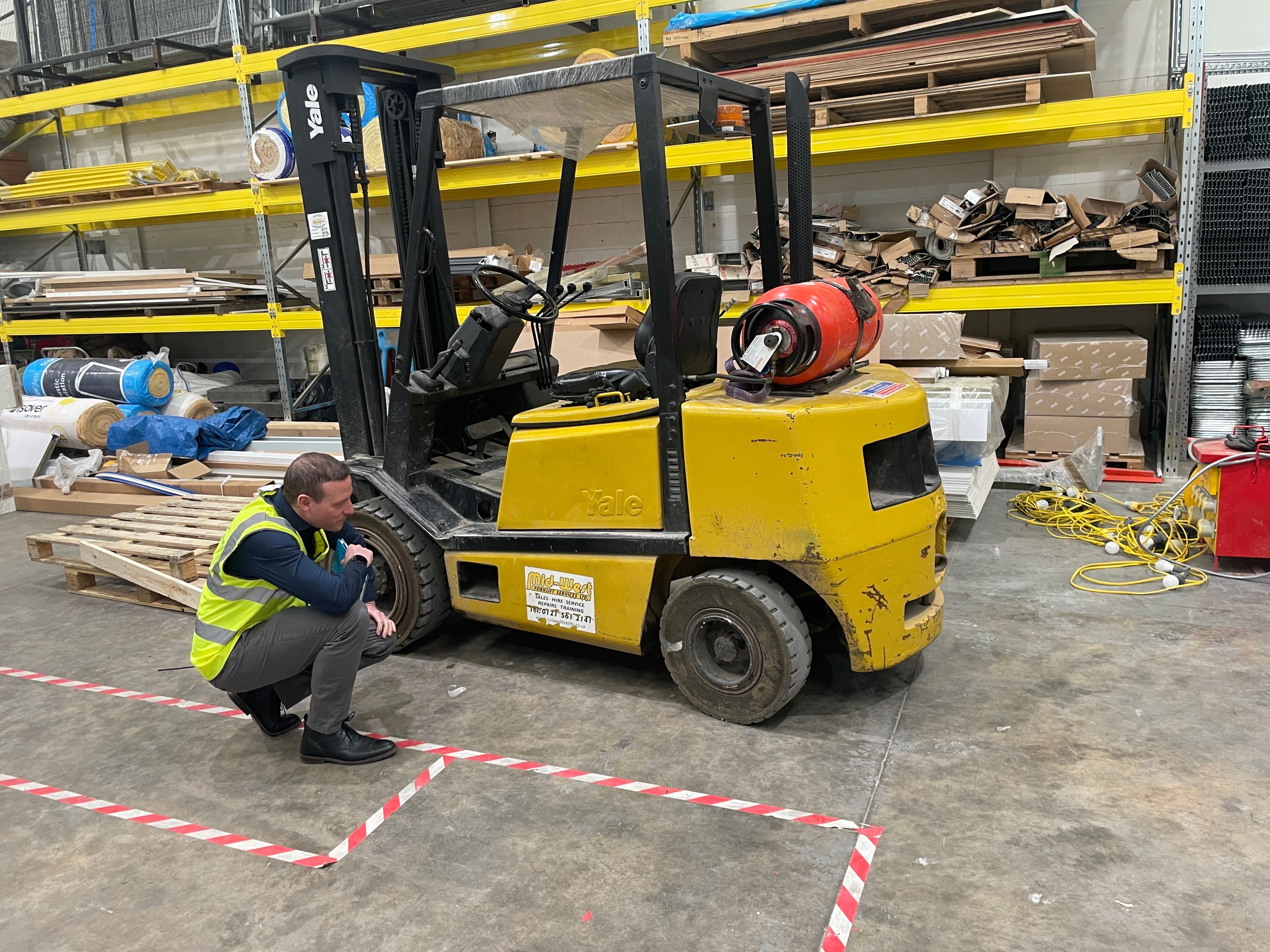
- ✓A current thorough examination report for every lift truck that LOLER covers, and each truck's maintenance records
- ✓Written authorisation for every lift truck operator, for the trucks they have been trained to use
- ✓A COSHH assessment for the products staff handle and the timber cutting dust, and a DSEAR risk assessment for LPG and flammable stock
- ✓A current fire risk assessment for each branch

Opus and the BMF
Opus is a BMF Preferred Supplier. The BMF says it "has teamed up with Opus Safety Ltd to provide the BMF Safety Partnership", a service "exclusive to BMF members".
Reduced rates for members
BMF members save on audits, assessments and Opus's core safety consultancy.
A free health check to start
Every BMF member can book a free phone health check to talk through their current approach.
One branch or many
The BMF describes a service combining risk analysis, training and support with software that simplifies safety processes across one branch or many. Its list includes gap analysis, policies and risk assessments, RIDDOR support, staff training and Compliance Cloud.
What you get as a partner

Know exactly where you stand
A site walk from an experienced consultant shows you where each part of the site stands today. No surprises, no guessing.



Pass inspections without the scramble
Your Competent Person prepares the evidence, reviews correspondence and briefs you ahead of inspections. Your business stays the duty holder, we make sure the work is done.


Meet regulatory requirements
Understand your legal obligations under COSHH and how to show you comply, with advice from consultants who include former HSE and local authority regulators.

One named consultant, not a call centre
Same expert every visit. Direct line for urgent issues. No rotating faces, no ticket queues.

Two ways to work with Opus Safety
Both give you full platform access. The difference is how much of the compliance work you want to own yourself.
Software Only
Full platform access, self-managed, training resources included, email support
Opus Safety Partnership
Everything in Software Only, plus a dedicated H&S consultant using the same platform - so nothing gets lost between site visits and your dashboard.
Not sure which is right for you? Speak to a consultant - we'll help you decide.
What non-compliance can cost a business
£2.2m
Fine after an HSE prosecution
A major builders merchant was fined £2.2 million after a worker was crushed to death by a pallet of timber on a conveyor at a sawmill the company operated.
HSE found the company knew employees were entering the conveyor's danger zone and relied on stickers, taking no further action to prevent access until after the death. HSE prosecution, March 2026.

Everything your people need, from one team


Health and Safety
Site walkthroughs, risk assessments and audits managed end to end by a consultant who's walked operations like yours before.

Occupational Health
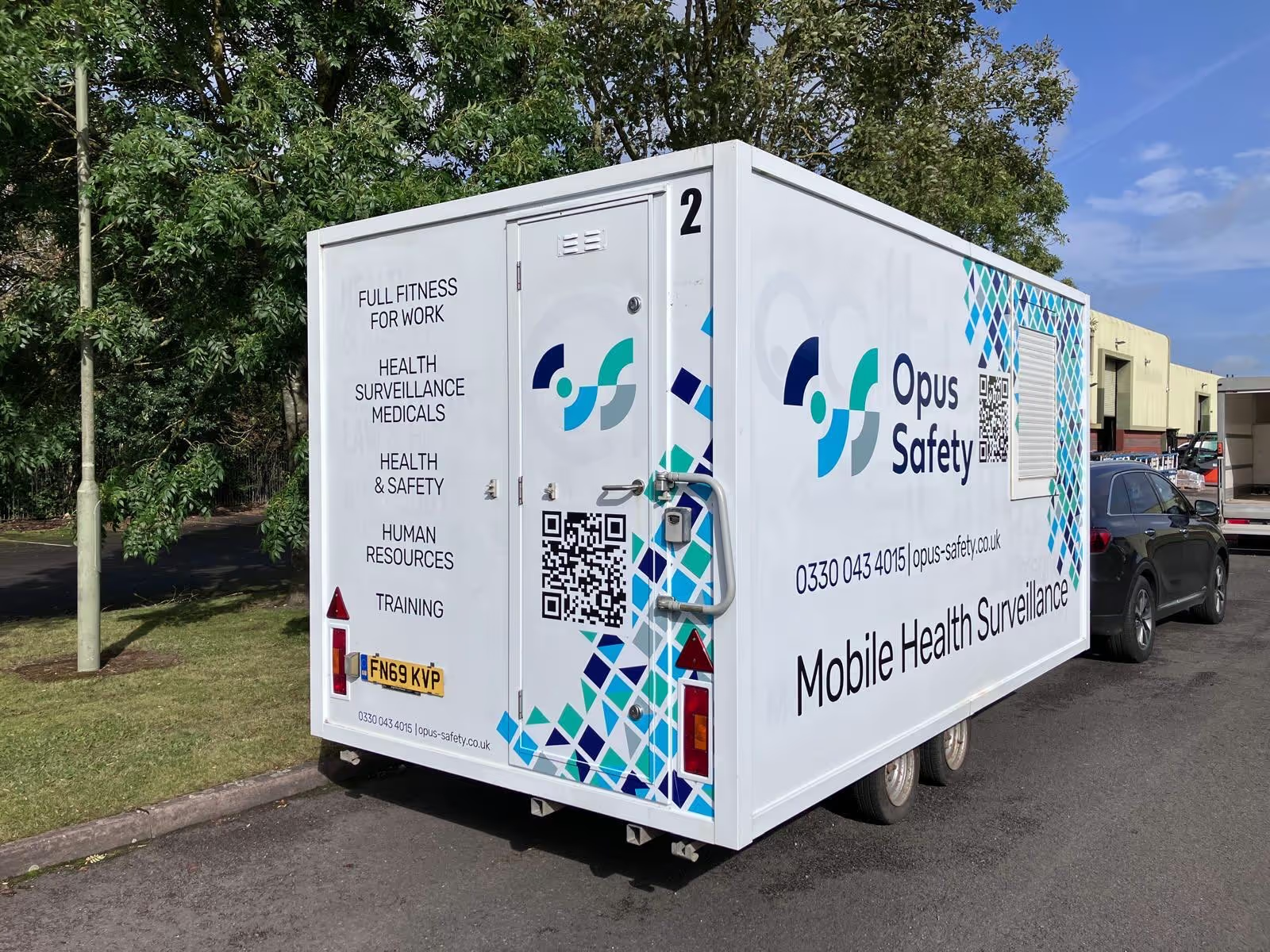
Health surveillance, exposure monitoring and fit-for-work reviews delivered by clinicians who understand your workforce.
Human Resources
Employment policies, disciplinary support and contract templates built for your operational reality - shift patterns, turnover, seasonal staffing.

Training
Essential courses delivered on site by your consultant. IOSH-accredited where it counts, sector-relevant every time.
.avif)
Lawsons

Joe Gillespie, Health and Safety Manager, Lawsons

Frequently asked questions
What health and safety law applies to a builders merchant?

How do we keep customers safe in the yard?
Do we need a COSHH assessment for our timber cutting service?
Who can act as the competent person for a builders merchant?
What does a health and safety consultant do for a builders merchant?
What training do builders merchant staff need?
Can one consultant cover several branches?
Still have questions?

Ready to protect your business
Book a consultation or request a gap analysis to see where you stand


%201.svg)


