

Workplace noise assessments and noise exposure surveys
A workplace noise assessment works out how much noise your employees are exposed to at work and what has to be done about it. In Great Britain, regulation 5 of the Control of Noise at Work Regulations 2005 requires one wherever work is liable to expose employees at or above a lower exposure action value: a daily or weekly personal noise exposure of 80 dB(A), or a peak sound pressure of 135 dB(C). The Regulations require the levels to be assessed by observing the work and using relevant information on the equipment, with measurement where it is necessary, and where it is, we measure with calibrated sound level meters and personal dose monitors. Northern Ireland has its own 2006 Regulations with the same values.


What a workplace noise assessment includes
Every source of noise your employees work with, assessed against the Control of Noise at Work Regulations 2005 and written up so your team can act on it.
Regulation 5 of the same Regulations sets out what the assessment has to consider: the level, type and duration of exposure, peaks included; anyone whose health is at particular risk; noise combined with vibration or with ototoxic substances; whether people can still hear warning signals and other sounds they need to hear to stay safe; the makers' noise data and quieter alternative equipment; exposure beyond normal working hours, including in rest facilities you supervise; health surveillance results; and the hearing protectors available. A workplace noise assessment is about the noise your employees are exposed to. Noise reaching neighbours, and noise impact assessments for planning, come under different rules and are separate pieces of work.

Measuring exposure
Your consultant observes the work and gathers the noise information that already exists, then measures where it is needed: calibrated sound level meters around the site, and personal dose monitors worn by people who move between noisy areas. Each employee or group gets a daily personal noise exposure, normalised to 8 hours whatever the shift length, and a peak level.

Exposure against the action values
The results are set against the six values in regulation 4 of the 2005 Regulations: 80 and 85 dB(A) daily or weekly exposure and 135 and 137 dB(C) peak for the lower and upper action values, and limit values of 87 dB(A) and 140 dB(C). The action values are read without hearing protection; only the limit values allow for it. HSE's guidance is that an exposure close to an action value should be treated as exceeding it, unless the assessment is precise enough to show it is below.

Controls, zones and hearing protection
At or above an upper action value, regulation 6 of the 2005 Regulations requires a programme of organisational and technical measures, and hearing protectors do not count towards it. That includes considering other working methods, quieter equipment, workplace layout, reducing noise by technical means, maintenance, and limiting how long and how intensely people are exposed. Under regulation 7 of the same Regulations, any area you control where an employee is likely to be exposed at or above an upper action value must be designated a hearing protection zone and marked with signs. The assessment says where the zones belong and which protectors suit them, aiming, as HSE advises, for 70 to 80 dB(A) at the ear.
What lands on your desk afterwards
A report you can act on, and the records the Regulations expect you to keep.
The noise assessment
Who is exposed, to how much and when: daily personal noise exposures and peaks by employee or group, the measurements behind them, who made them and on what date.
An action plan
The measures to remove or reduce exposure, prioritised by impact and cost, with a named person responsible and realistic timescales, as HSE's guidance in L108 sets out for the record.
Hearing protection zones
Where protectors must be worn, the signs each zone needs, and protectors suited to the noise in each one.
Information, training and hearing checks
What your people need to be told under regulation 10 of the 2005 Regulations, and which employees should have health surveillance.
What you should be able to show
These are the things the Noise Regulations expect you to be able to show. Could you put your hands on all six today?
- ✓A noise risk assessment wherever work is liable to expose anyone at or above a lower action value, with its significant findings and the measures you have taken and intend to take recorded, whatever the size of your business
- ✓A programme of measures to reduce exposure, wherever anyone is likely to be exposed at or above an upper action value
- ✓Hearing protection zones marked with signs, and protectors provided where exposure cannot be brought below an upper action value by other means
- ✓Noise controls and hearing protectors kept in good repair and, apart from protectors handed out only on request, properly used
- ✓Information and training for everyone exposed at or above a lower action value, including the significant findings and any measurements
- ✓Health surveillance, including hearing tests, for employees whose risk assessment shows a risk to their health

What a noise assessment costs
Price depends on a number of variables, including:
How many noise sources and roles there are
A workshop with a few machines is a short visit. A site with production lines, yard plant and people moving between them takes longer.
How much measuring is needed
Where reliable data from the machine makers or a similar workplace already answers the question, less measuring is needed.
Shift patterns
Exposure is assessed for the work as it is actually done, so night shifts, overtime and weeks that vary each need covering.
Number of sites, and whether they are alike
A group of similar sites can be assessed in one programme.
A noise assessment and hearing checks are separate pieces of work. If the assessment shows a risk to your employees' health, on-site hearing checks by our occupational health technicians can follow.
Two ways to work with Opus
Book a one-off service for a specific need, or take on a partnership for ongoing support. Either way, the work gets done by the same team.
Book a service
For a specific need - a single assessment, audit, or
on-site service with a clear deliverable.

Opus Safety Partnership
Ongoing support and consider-it-done compliance. For businesses that want compliance off their plate, not on their to-do list.

Not sure which fits? Speak to a consultant - no commitment required.
Kellaway


Why businesses bring noise assessments to Opus
One team for the assessment and for what follows it. Our consultants assess the noise, and our occupational health technicians run the hearing checks on site if the assessment shows they are needed.
Measured where it matters
Calibrated sound level meters and personal dose monitors where the data does not already exist, and the existing data used where it does.
Consultants who include former regulators
Our team includes former HSE and local authority regulators.
We will tell you when you are below the action values
HSE's guidance is that if your employees are not exposed at or above the lower action values, it is enough to record that. If that describes your site, the assessment says so.
Noise assessments by sector


Builders Merchants
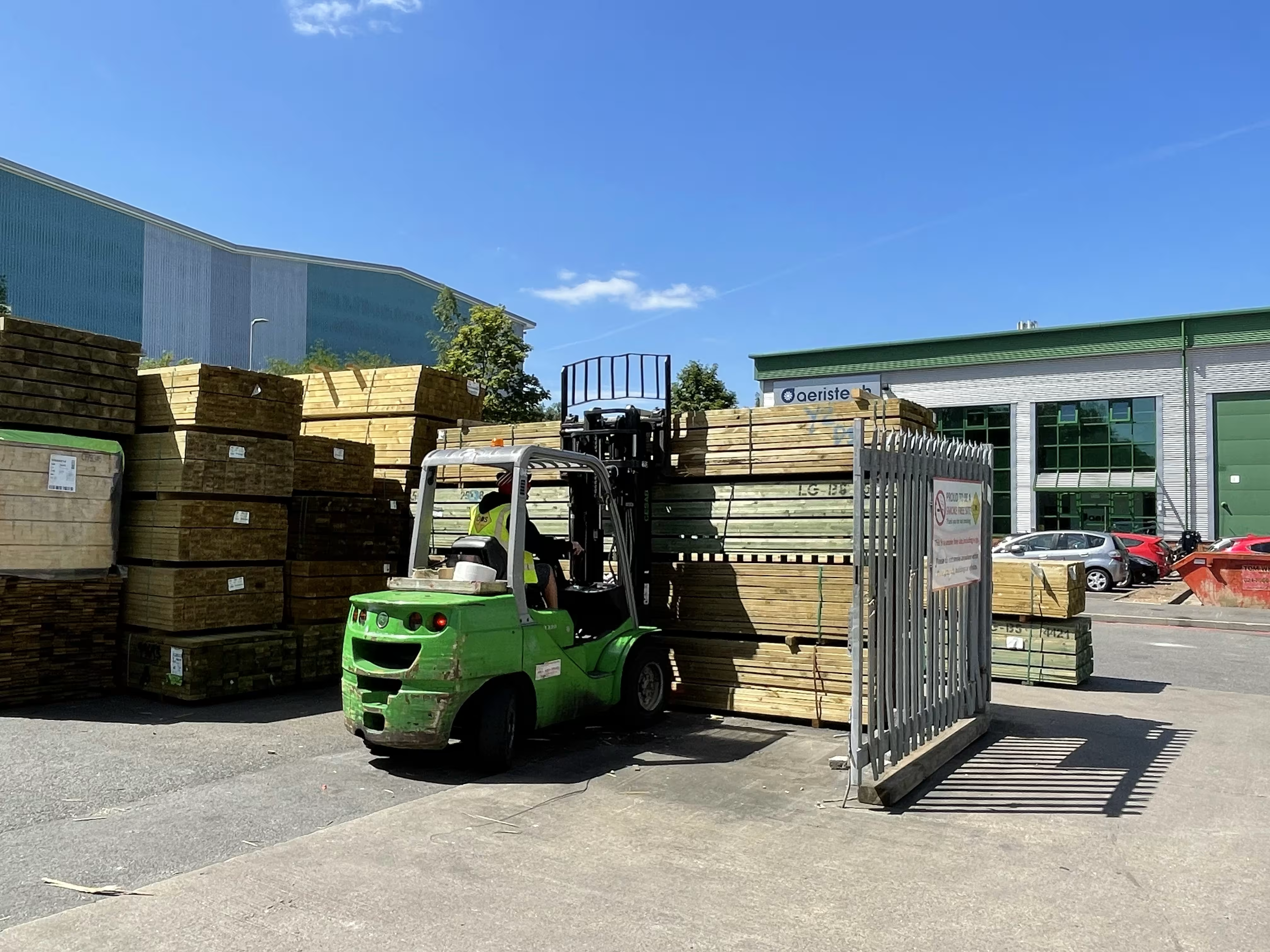
Yard plant, forklifts, and timber and stone cutting can push exposure past the action values while the trade counter stays quiet. We assess the people who do that work, where they do it, against the Control of Noise at Work Regulations 2005.

Warehousing & Logistics
Much of a warehouse sits below the action values, but balers, conveyors and loading-dock work can add up over a long shift. The assessment works out each role's daily exposure, so controls go where they are needed.

Manufacturing & Engineering
Presses, grinding, compressed air and metalworking can run for hours at a time. We work out exposure by area and by role, giving you a basis for hearing protection zones, noise controls and health surveillance.

Garden Centres
Most of a garden centre is quiet, though workshop tools and grounds machinery such as mowers, blowers and chainsaws can create pockets of higher exposure. We assess the people who use them and confirm where you stand.

Metal Stockholders
Sawing, cutting, grinding and handling steel make stockholding noisy, and impact noise brings high peak sound pressures, which are assessed separately from the daily exposure. We measure by operation and by role, and check the peaks against the C-weighted values.

Childcare & Nurseries
Children's noise counts, because the Regulations cover any sound staff are exposed to at work. Where staff exposure is below the lower action values, a record saying so is enough, and the assessment gives you that record.


Ready to book a Noise Assessment?
Tell us about your site, the work and your shift patterns. We will quote for the work, and by the end you will know who is exposed to how much noise, where hearing protection zones belong and what has to change.
Frequently asked questions
Is a noise assessment a legal requirement?

What are the legal noise limits at work?
Who can carry out a noise assessment?
How is workplace noise measured, and do you always have to measure it?
How do I know if my workplace has a noise problem?
How often should a noise assessment be reviewed?
When do employees need hearing checks?
Is noise-induced hearing loss reportable under RIDDOR?
How much does a noise assessment cost?


