

HAVS assessments and health surveillance for vibrating tool users
A HAVS assessment checks the people who use vibrating tools for early signs of hand-arm vibration syndrome: tingling and numbness in the fingers, loss of strength in the hands, and fingertips turning white in the cold and wet. Found early, exposure can be reduced before the condition gets worse, and HSE warns that once the damage is done it is permanent. In England, Wales and Scotland, regulation 7 of the Control of Vibration at Work Regulations 2005 requires health surveillance for employees likely to be exposed at or above the exposure action value, and for any other employees your risk assessment shows are at risk, where surveillance is appropriate. Northern Ireland has its own Control of Vibration at Work Regulations (Northern Ireland) 2005, with the same action and limit values.

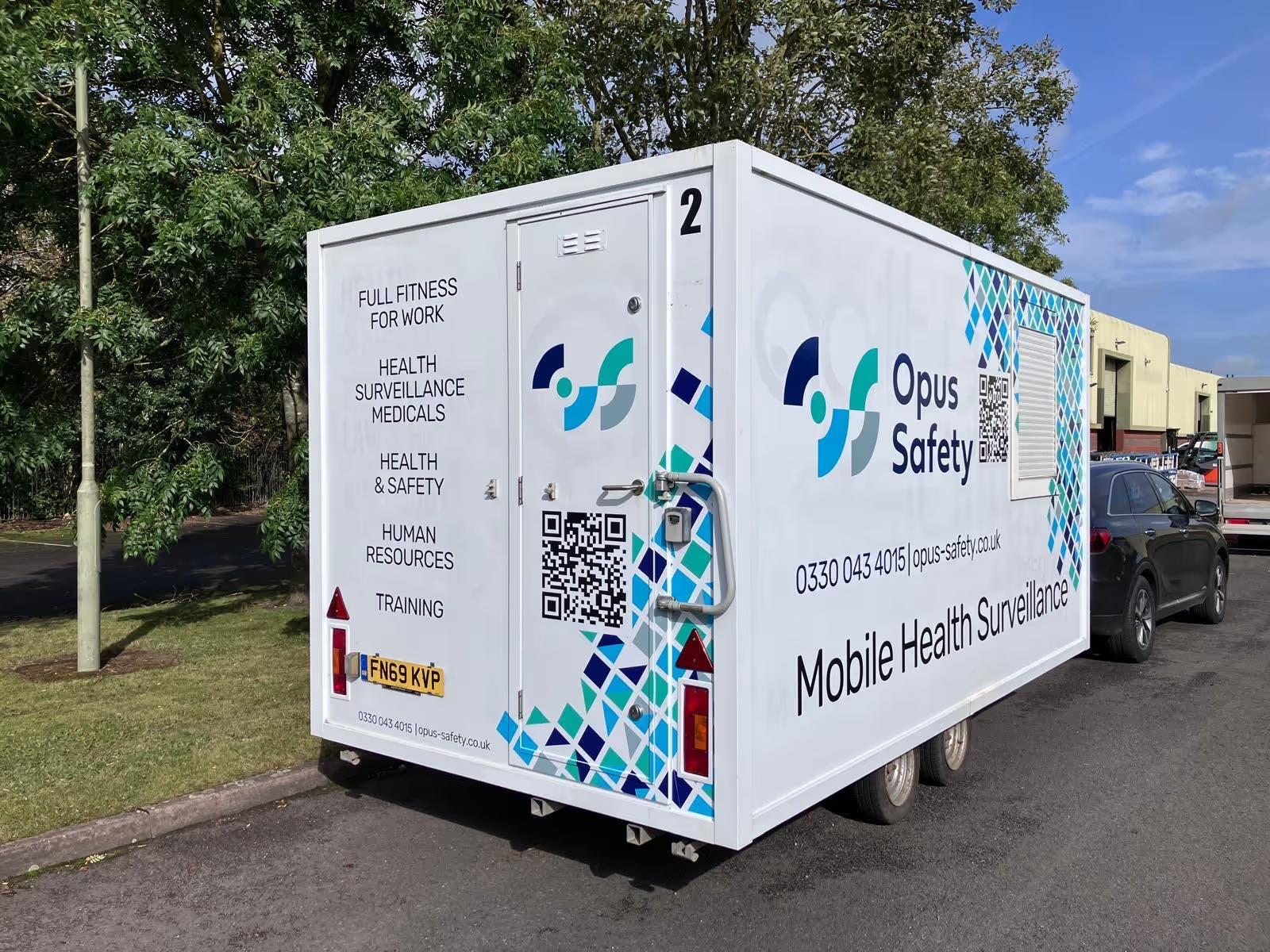
What a HAVS assessment includes
Health surveillance for everyone your risk assessment puts at risk from hand-arm vibration, run on your site, with clinical appointments only for the people who need them.
HSE's guidance on the Regulations, L140, sets out a tiered programme. Many people only ever complete the short questionnaires at Tiers 1 and 2. Anyone who reports symptoms goes on to a clinical assessment, and a doctor makes any diagnosis.
A HAVS assessment looks at people. Working out how much vibration each tool and task gives is the job of your vibration risk assessment under regulation 5 of the same 2005 Regulations, and our free HAVS calculator estimates daily exposure with HSE's points system.

Questionnaires on your site, at Tier 1 and Tier 2
Our occupational health technicians take each person through the HAVS questionnaire on your premises: Tier 1 before someone starts work with vibrating tools, and Tier 2 once a year for everyone under surveillance.

Clinical assessment when symptoms are reported
Anyone who reports symptoms is referred to an Occupational Health Advisor or Physician for a Tier 3 clinical assessment, and on to a doctor for a Tier 4 diagnosis where needed.

A fitness outcome for every person
Each person's result comes back to you as a fitness status, with any restriction or earlier recheck spelled out. Medical details stay with the occupational health professional unless the employee gives written consent.
The HAVS tiers, from questionnaire to diagnosis
L140 sets out five tiers. Tiers 1 and 2 are short questionnaires. A person goes on to Tier 3, and from there to Tier 4, only when something is found, and Tier 5 is optional.
Tier 1: initial assessment
A short questionnaire for anyone moving into work with vibrating tools. It picks up conditions that raise the risk, such as Raynaud's disease or carpal tunnel syndrome, and L140 expects you to have advice on fitness to work with vibration before the person starts.
Tier 2: annual screening
The same kind of short questionnaire, once a year, for everyone under surveillance. A "yes" to any question means a referral to Tier 3; it does not mean HAVS has been found.
Tier 3: clinical assessment
An occupational health professional asks about symptoms and examines the hands and arms. If they think vibration has caused HAVS or carpal tunnel syndrome, they advise on fitness for work and any restriction, and refer the person to Tier 4.
Tier 4: diagnosis
A doctor with appropriate expertise makes the formal diagnosis and confirms or changes the advice on fitness for work. Anyone diagnosed with HAVS is reassessed at regular intervals.
Tier 5 is optional: referral to a specialist centre for further tests, such as vibration and temperature perception thresholds. The final diagnosis still rests with the doctor.
What you have after a HAVS assessment
Everything you need to show who has been screened and who can keep working with vibration.
A fitness status for each person
With their tier classification and any restriction or earlier recheck.
A site report
Who was screened, and who has been referred on to Tier 3 or Tier 4.
What your health records need
Regulation 7(3) of the Control of Vibration at Work Regulations 2005 requires you to keep a health record for each person under surveillance, and L140 says an inspector is entitled to ask to see it. L140 expects it to hold each person's fitness for work with vibration and no confidential medical information, which is how our results are reported.
Advice on what happens next
For anyone affected: reduced exposure, alternative work or more frequent checks, as the occupational health professional advises.
What you should be able to show
These are the records that show your HAVS health surveillance is working. Could you put your hands on all six today?
- ✓A vibration risk assessment showing who is likely to be exposed at or above the exposure action value
- ✓A plan to reduce exposure for those people, and action taken straight away if anyone goes above the limit value
- ✓A Tier 1 result for each person, from before they started using vibrating tools or from when surveillance began
- ✓An up-to-date check for everyone under surveillance: within the last 12 months, or sooner where a clinician has set an earlier date
- ✓A health record for everyone under surveillance
- ✓Records showing your team has been told the symptoms and how to report them

What HAVS health surveillance costs
Price depends on a number of variables, including:
How many people are exposed, and across how many shifts
Everyone your risk assessment puts at risk needs a questionnaire, and a visit has to reach each shift.
New starters and existing users
People moving into work with vibrating tools need Tier 1 before they start, and everyone under surveillance has Tier 2 once a year.
How many go on to Tier 3 or Tier 4
Clinical appointments are booked only for people whose questionnaire answers call for one, so that number is known once screening is done.
How many sites
Moving between depots takes time, so it helps when people from nearby sites can come to one place.
You get a fixed quote before anything is booked. Regulation 7(6) of the Control of Vibration at Work Regulations 2005 has employees attend during working hours at the employer's cost, and L140 counts lost earnings and travel among those costs.
Two ways to work with Opus
Book a one-off service for a specific need, or take on a partnership for ongoing support. Either way, the work gets done by the same team.
Book a service
For a specific need - a single assessment, audit, or
on-site service with a clear deliverable.

Opus Safety Partnership
Ongoing support and consider-it-done compliance. For businesses that want compliance off their plate, not on their to-do list.

Not sure which fits? Speak to a consultant - no commitment required.
Kellaway


Why businesses bring HAVS health surveillance to Opus
HAVS screening is part of an occupational health programme, and that is how we run it. Our consultants include former HSE and local authority regulators, and our occupational health technicians run the screening on your site.
Screened where your people work, around their shifts
Including nights, weekends and seasonal peaks, so nobody loses a shift to travel.
One programme for the same people
The people who use vibrating tools are often the ones exposed to noise and dust, so where your risk assessments call for it the same programme can include hearing tests and lung function testing.
We will tell you when you need less
L140 says surveillance is not appropriate for someone who reaches the action value only on rare occasions, where the risk to their health is very low. Run your tools through the HAVS calculator first: 100 points a day is the action value, though someone with an existing hand or circulation problem may need surveillance below it.
HAVS assessments by sector


Builders Merchants
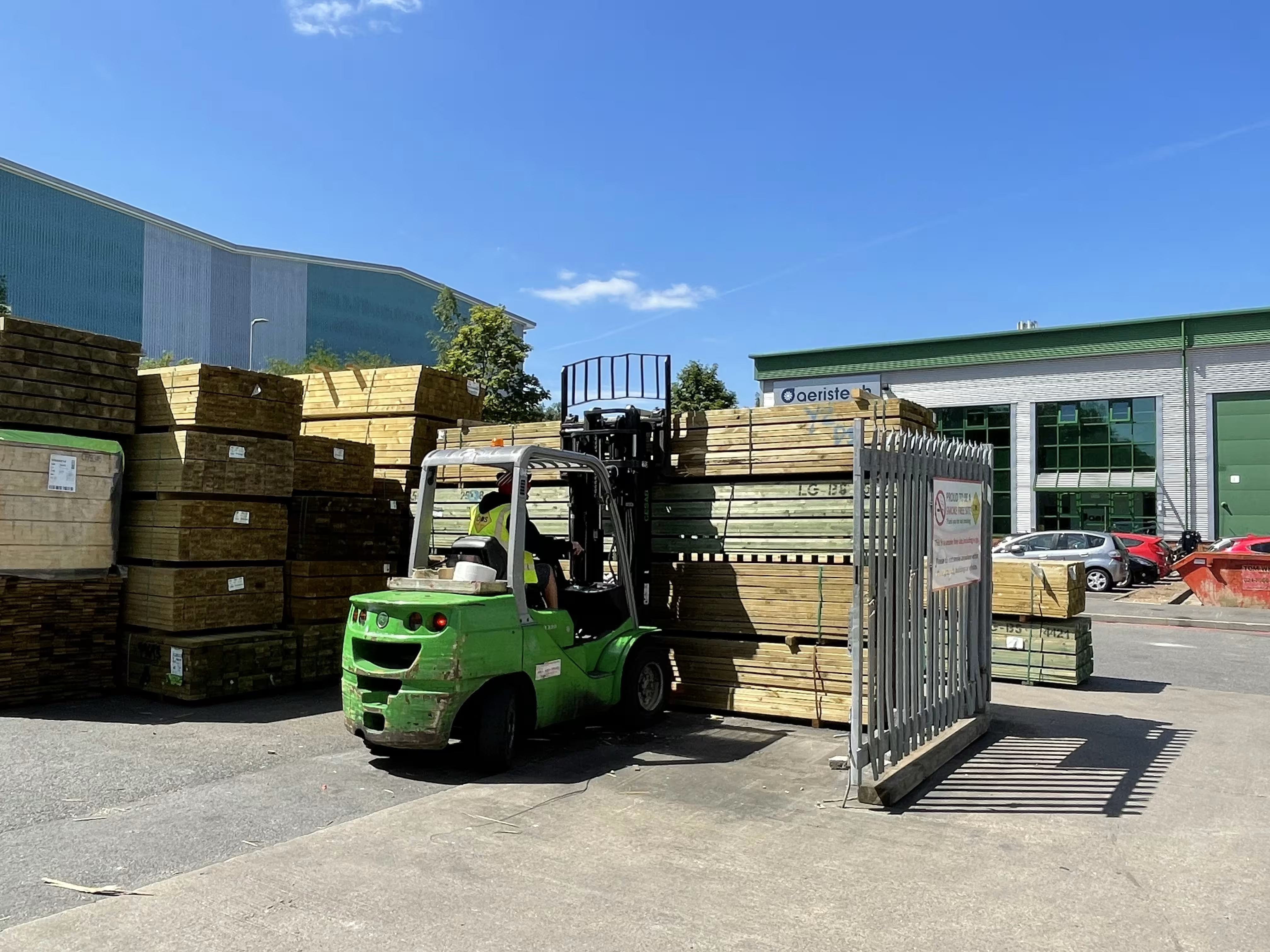
Where yard staff cut blocks or paving with cut-off saws or disc cutters, your risk assessment shows which of them use the tools regularly enough to need screening.

Warehousing & Logistics
Many warehouse jobs involve no hand-held vibrating tools at all. Maintenance staff who regularly use impact wrenches, hand-held grinders or hammer drills may need screening. Forklift drivers can be exposed to whole-body vibration, which has its own action and limit values under the same Regulations.

Manufacturing & Engineering
Grinding, sanding and needle scaling are regular sources of hand-arm vibration. So is holding a workpiece against a pedestal grinder or rotary polisher: HSE counts that too, and where it is a regular part of the job, HAVS diagnosed by a doctor is reportable under RIDDOR.

Garden Centres
Where staff maintain the grounds with strimmers, brush cutters, chainsaws or powered mowers, regular users start with a Tier 1 questionnaire before their first shift on the tools, seasonal staff included.

Metal Stockholders
Where staff cut and grind steel with hand-held grinders, the people your risk assessment shows are at risk are screened once a year, after a Tier 1 questionnaire when they start.

Childcare & Nurseries
Few nursery staff use vibrating tools. If a caretaker or maintenance worker uses them and your risk assessment shows they are at risk, they are screened like anyone else, and the rest of the team needs nothing.


Ready to book a HAVS assessment?
Tell us how many people use vibrating tools, which tools and for roughly how long each day, and which sites and shifts they work. We will quote for the screening, and by the end you will know who is fit to carry on, who needs a restriction and who needs a clinical appointment.
Frequently asked questions
What is a HAVS assessment?

Is HAVS health surveillance a legal requirement?
How often is HAVS health surveillance needed?
What are the symptoms of HAVS?
What is a Tier 3 HAVS assessment?
What happens at Tier 4 and Tier 5?
What are the exposure action and limit values for hand-arm vibration?
Do you have to report HAVS under RIDDOR?


