

Occupational health provider for employers, from surveillance to referral
Your noise assessment has found levels above the action value, or a manager is worried about an employee's health. Both are jobs for occupational health, and so is clearing a new starter before they drive a forklift.
An occupational health provider carries out the health surveillance your risk assessment calls for, assesses whether employees are fit for the work they do, and tells you what adjustments to make when they need them. Regulation 6 of the Management of Health and Safety at Work Regulations 1999 requires you to provide "such health surveillance as is appropriate having regard to the risks to their health and safety which are identified by the assessment".






What an occupational health provider does for you
Opus manages the full occupational health cycle on your site, from initial testing and health surveillance through to clinical follow-up and clear fitness-for-work outcomes.

Find the Occupational Health service you need


HAVS assessment
Tiered assessment for workers using vibrating tools, Tier 1 screening through Tier 4 referral.

Skin surveillance
Regular skin checks for workers in contact with chemicals, oils, cutting fluids, or wet work.


Driver medicals
HGV medicals to the DVLA Group 2 standard, and lift-truck and plant medicals to the standard HSE's L117 suggests.

Fitness to work medicals
Full medicals, Health Surveillance Medicals, and Fitness to Work Certificates and Letters.


Face fit testing (RPE)
Technical validation that tight-fitting RPE seals correctly for each individual wearer.

Musculoskeletal assessment
Proactive assessment for manual handling, repetitive tasks, and sustained physical postures.


Isocyanate testing
Urine analysis for workers exposed to isocyanates in spray painting or foam manufacturing.


Vision and colour vision testing
Screening for safety-critical roles requiring accurate visual acuity or colour discrimination.
Glucose and blood pressure screening
Targeted screening where sudden impairment could pose a safety risk at work.
Occupational health referrals: what happens after you make one
There are two kinds of referral. A testing referral starts when the occupational health technician picks up an abnormal result in health surveillance or a safety-critical medical. A case management referral starts when you are concerned about whether an employee is fit for their role, and you tell us what the job involves and what prompted it. Either way, the employee is told why they are being seen and consents before any information is shared.
An Occupational Health Advisor or Physician then reviews the case. What comes back to you is written for a manager to act on:
The diagnosis stays between the employee and the clinician.
That report also supports your decisions. Section 20 of the Equality Act 2010 places a duty on you to make reasonable adjustments for a disabled employee, and a clinician's recommendation helps you establish what is reasonable in that job.
Pre-employment medicals, and when you are allowed to ask
Section 60 of the Equality Act 2010 says an employer "must not ask about the health of the applicant" before offering work. There are narrow exceptions, the one that matters most being whether the applicant can carry out a function intrinsic to the job.
So the order is: make the offer, make it conditional on a medical where the role justifies one, then assess. A baseline test at the start of employment also gives you a reference point for later surveillance.
For drivers, the DVLA's medical standards place large lorries and buses in Group 2 and cars in Group 1, so an HGV driver is assessed to Group 2. Forklifts are different: L117, HSE's code of practice and guidance for rider-operated lift trucks, says no legislation deals directly with lift-truck medicals, and suggests a Group 1 equivalent for most work, moving towards Group 2 for demanding work such as night shifts or toxic loads.
What poor occupational health actually costs
1.9M
Working people in Britain with a work-related illness
511,000
Workers with a work-related musculoskeletal disorder
40.1M
Working days lost to work-related illness and injury
Source: HSE (Great Britain, 2024/25)
Why employers use Opus for occupational health

One provider from test to referral
A flagged result goes straight to clinical review, with no new supplier to brief.

We will tell you when you need less
If you have no hazards that trigger surveillance and only need a referral now and then, book the referral on its own. A programme would cost you more than the duty requires.

Kellaway


What it costs
Four things decide the price: how many people need testing, which tests each group needs, how many sites we visit, and how often. Surveillance repeats, so a programme is priced as a year.
You can book a single visit and pay per visit, or put surveillance under an Occupational Health Partnership for a fixed monthly fee. Either way you get a fixed quote before anything is booked.
What non-compliance actually cost your business
67%
Reduction in near-miss incidents
£28K
Saved on insurance premiums annually
6hrs
Audit prep time per branch

Two ways to work with Opus
Both routes use our specialist OH technicians. The difference is whether you book a single service or manage surveillance under a partnership.
Book a service
Pay per visit. Tests scoped to the need you have right now.
Occupational Health Partnership
Annual surveillance programme with a named Occupational Health contact, planned and managed for you.
Not sure which fits? Speak to a consultant - no commitment required.
Who we work with
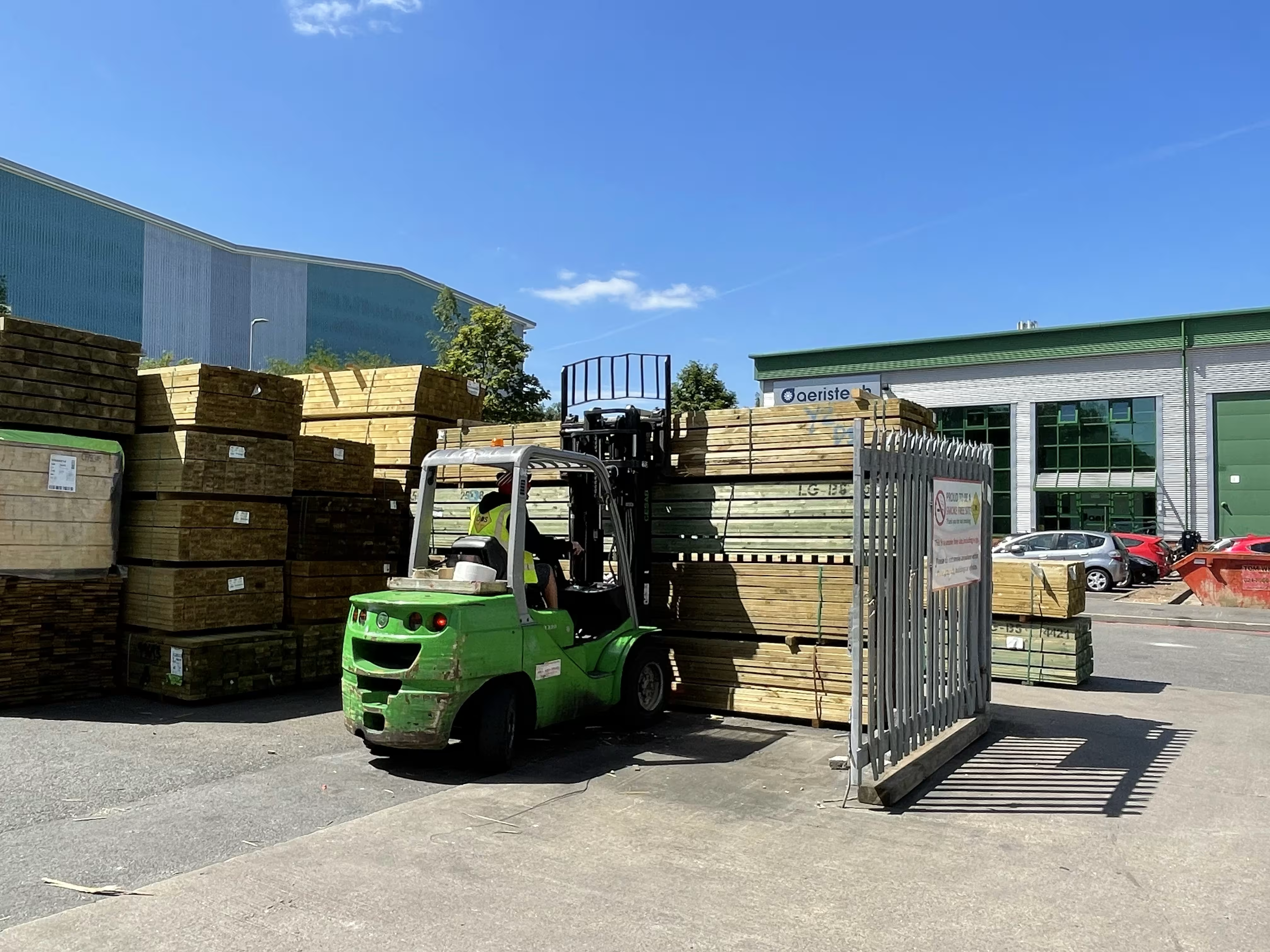
On-site surveillance suits sites where the hazards are physical: builders merchants, manufacturing and engineering, warehousing and distribution, food production, construction and metal stockholding. Testing comes to the factory floor or the yard, scheduled around your shifts, including nights and weekends.


Builders Merchants
Spirometry for timber dust exposure. Audiometry where machinery and mill noise exceeds 85dB. HAVS screening for staff using vibrating power tools. Driver medicals for FLT and wagon operators. Musculoskeletal assessments for physical loading and repetitive handling tasks.

Warehousing & Logistics
Musculoskeletal assessment for manual handling and repetitive picking tasks. Driver medicals for HGV drivers to DVLA Group 2, and for FLT operators to the standard L117 suggests. Skin surveillance where cleaning chemicals or irritants are handled regularly.

Manufacturing & Engineering
Respiratory surveillance for dust, fumes, welding fume, and isocyanate exposure. Audiometry where production noise exceeds action levels. HAVS monitoring for power tool users across fabrication, assembly, and finishing. Skin surveillance for workers handling cutting fluids and solvents.

Food & drink manufacturing
Respiratory surveillance for flour dust, grain dust, enzymes, and protein exposure. Skin surveillance for wet work, frequent handwashing, and cleaning chemical contact. Audiometry where bottling lines, mixers, and packaging exceed 85dB. MSK assessments for repetitive line tasks and heavy lifting.

Construction
Face fit testing for RPE worn in dusty and confined environments. Audiometry for workers exposed to power tool and plant noise. HAVS monitoring for sustained vibrating tool use. Spirometry where silica dust, concrete dust, or welding fumes are present.

Metal stockholders
Respiratory surveillance for welding fume, metal working fluid mists, and cutting and grinding dusts. Audiometry where welding and grinding exceed 85dB and plasma cutters push 100-115dB. Skin surveillance for cutting fluids, oils, and solvents. HAVS monitoring for grinder, sander, and pneumatic tool use.

Health & safety insights
Guidance, updates and practical advice for your sector.









How to tell whether a health and safety consultant is genuinely competent
What qualifications should a health and safety consultant have? What regulation 7 of the MHSWR 1999 asks, NEBOSH and IOSH levels, and how to check them.
What is COSHH? What the regulations cover and what they require
COSHH stands for Control of Substances Hazardous to Health. What the 2002 Regulations cover, the nine hazard symbols and each duty in order.
DSE assessments: the duty and doing it at scale
DSE means display screen equipment. What a DSE assessment must cover under the 1992 Regulations, home and hybrid workers, and doing it at scale.
Manual Handling Operations Regulations 1992: duties, assessment and TILE
The Manual Handling Operations Regulations 1992: avoid, assess and reduce hazardous handling. What TILE stands for, and whether a weight limit exists.
Duty to manage asbestos: who holds it, and what it requires
Whoever is responsible for maintaining or repairing non-domestic premises holds the duty to manage asbestos. What regulation 4 requires and when to survey.
Best occupational health providers for UK employers in 2026: six compared
Six UK occupational health providers compared by fit: national clinic networks, safety-critical medics, SME specialists and on-site surveillance.
What a retained health and safety service includes
A retained health and safety service means ongoing access to a competent person. What it includes, what it can exclude, and what stays your legal duty.
Outsourced health and safety or an in-house appointment?
Employ if you need someone present, retain if you need competence you lack. What decides it, what it costs, and why neither moves your legal liability.
PUWER and machinery guarding: the duty holder's guide
PUWER is the Provision and Use of Work Equipment Regulations 1998. Who the duty holder is, what regulation 11 requires for guarding, and the records to keep.
RIDDOR meaning: what is reportable, and what is not
RIDDOR stands for the Reporting of Injuries, Diseases and Dangerous Occurrences Regulations 2013. What you must report, by when, and what is excluded.
Talk to us about your sites
Tell us your sites, your headcount and the hazards your assessments have found. We will come back with the tests each group needs and a fixed quote.
IOSH Approved | 1,000+ UK businesses supported
Frequently asked questions
What does an occupational health provider do?

Is health surveillance a legal requirement?
What is an occupational health referral?
Can we ask job applicants about their health?
Do forklift drivers need a medical?
Will we see an employee's medical details?
Where do the tests take place?


