

Asbestos surveys for commercial and industrial premises
An asbestos survey finds out whether asbestos is present in a building, where it is and what condition it is in, so the risk can be managed. In Great Britain, regulation 4 of the Control of Asbestos Regulations 2012 requires the dutyholder for non-domestic premises to make sure a suitable and sufficient assessment is carried out of whether asbestos is or is liable to be present, taking account of the age of the premises and inspecting the parts that are reasonably accessible. HSE's Approved Code of Practice says that inspection will usually take the form of a survey. Our asbestos management surveys sample suspect materials, and the samples are analysed by UKAS-accredited laboratories. We also arrange refurbishment and demolition surveys before building work. Northern Ireland has its own 2012 Regulations.


What an asbestos management survey includes
Every reasonably accessible part of the building, surveyed and written up so you can manage what it finds.
HSG264 sets out two types of survey. A management survey is the standard survey: it locates, as far as reasonably practicable, the asbestos-containing materials that could be damaged or disturbed during normal occupancy, including foreseeable maintenance and installation, and assesses their condition. A refurbishment and demolition survey is needed before any refurbishment or demolition work, and is fully intrusive.

The inspection
The surveyor inspects every reasonably accessible area, including the places HSG264 lists such as ceiling voids, risers, service ducts, lofts and basements, using simple tools and minor intrusion. Any area that cannot be accessed is presumed to contain asbestos until it can be inspected.

Sampling and analysis
Suspect materials are sampled, and the samples are analysed by a UKAS-accredited laboratory. Regulation 21 of the same Regulations requires any employer who asks someone else to analyse a sample to make sure they are accredited to ISO/IEC 17025, and in Great Britain HSE recognises only UKAS accreditation. HSG264 allows materials to be presumed to contain asbestos instead of being sampled, but advises that default presumption be avoided where possible, because it can make managing asbestos more difficult.

The register and the plan
The survey report sets out each material found or presumed, where it is and its condition, in a table and on marked-up plans. HSG264 notes that the report is generally not itself the register: its findings are used to form the asbestos register, a key part of the written management plan that regulation 4 of the same Regulations requires wherever asbestos is or is liable to be present. Opus prepares both from the survey and what you tell us about how the building is used.
What lands on your desk afterwards
The survey report, the register and the plan you need to manage what the survey finds.
The survey report
The scope of the survey, the results with a material assessment for each item, conclusions and actions, and the laboratory's analysis results, as HSG264 sets out.
Marked-up plans
Where each asbestos-containing material is, and every area presumed to contain asbestos.
An asbestos register
Every identified or presumed material, its location, condition and risk rating, for anyone who may disturb it.
Prioritised actions and a written management plan
Whether each material should be repaired, sealed, removed or left in place and managed, ranked by risk, and the written plan regulation 4 of the Control of Asbestos Regulations 2012 requires.
What you should be able to show
These are the things the duty to manage and HSE's survey guide expect you to be able to show. Could you put your hands on all six today?
- ✓A recorded assessment of whether asbestos is or is liable to be present, reviewed when there is reason to doubt it or the premises change in a significant way
- ✓An asbestos register with the location and condition of every known or presumed asbestos-containing material, kept up to date
- ✓A written plan for managing each material: monitoring its condition, and maintaining it or removing it safely where necessary
- ✓Information on its location and condition given to anyone liable to disturb it, such as maintenance contractors, and made available to the emergency services
- ✓The plan reviewed at regular intervals, at least every 12 months under HSE's Approved Code of Practice, with the measures taken to put it into effect recorded
- ✓Where samples were taken, the certificate of analysis from a UKAS-accredited laboratory, which HSG264 expects in the survey report

What an asbestos survey costs
Price depends on a number of variables, including:
Floor area and the number of buildings
HSE's survey guide expects every non-domestic building to be surveyed on an individual basis.
How many samples are needed
Each sample is analysed by an accredited laboratory, so the number of materials to sample adds laboratory cost.
Access
Areas that cannot be reached are presumed to contain asbestos until they can be inspected, and HSG264 warns that restrictions on a survey make managing asbestos more complex and expensive.
What information already exists
Building plans, a previous survey and an existing register all help the surveyor plan the work.
Asbestos surveys are usually a one-off assessment, and can be built into an Opus Safety Partnership by agreement.
Two ways to work with Opus
Book a one-off service for a specific need, or take on a partnership for ongoing support. Either way, the work gets done by the same team.
Book a service
For a specific need - a single assessment, audit, or
on-site service with a clear deliverable.

Opus Safety Partnership
Ongoing support and consider-it-done compliance. For businesses that want compliance off their plate, not on their to-do list.

Not sure which fits? Speak to a consultant - no commitment required.
Kellaway


Why businesses bring asbestos surveys to Opus
A survey is the start of managing asbestos, and the register and plan come with it, so the next step is set out with the findings.
Samples analysed by UKAS-accredited laboratories
Every sample goes to a laboratory accredited to ISO/IEC 17025, as regulation 21 of the Control of Asbestos Regulations 2012 requires, and HSG264 expects the report to give that laboratory's accreditation number.
Consultants who include former regulators
Our team includes former HSE and local authority regulators.
Proportionate to the building
HSE's Approved Code of Practice says premises constructed after 2000 can be presumed asbestos free, with caution where they are built on existing basements or linked to adjoining structures, and that where the building's age or other information gives very strong evidence of no asbestos, recording why is enough.
Asbestos surveys by sector


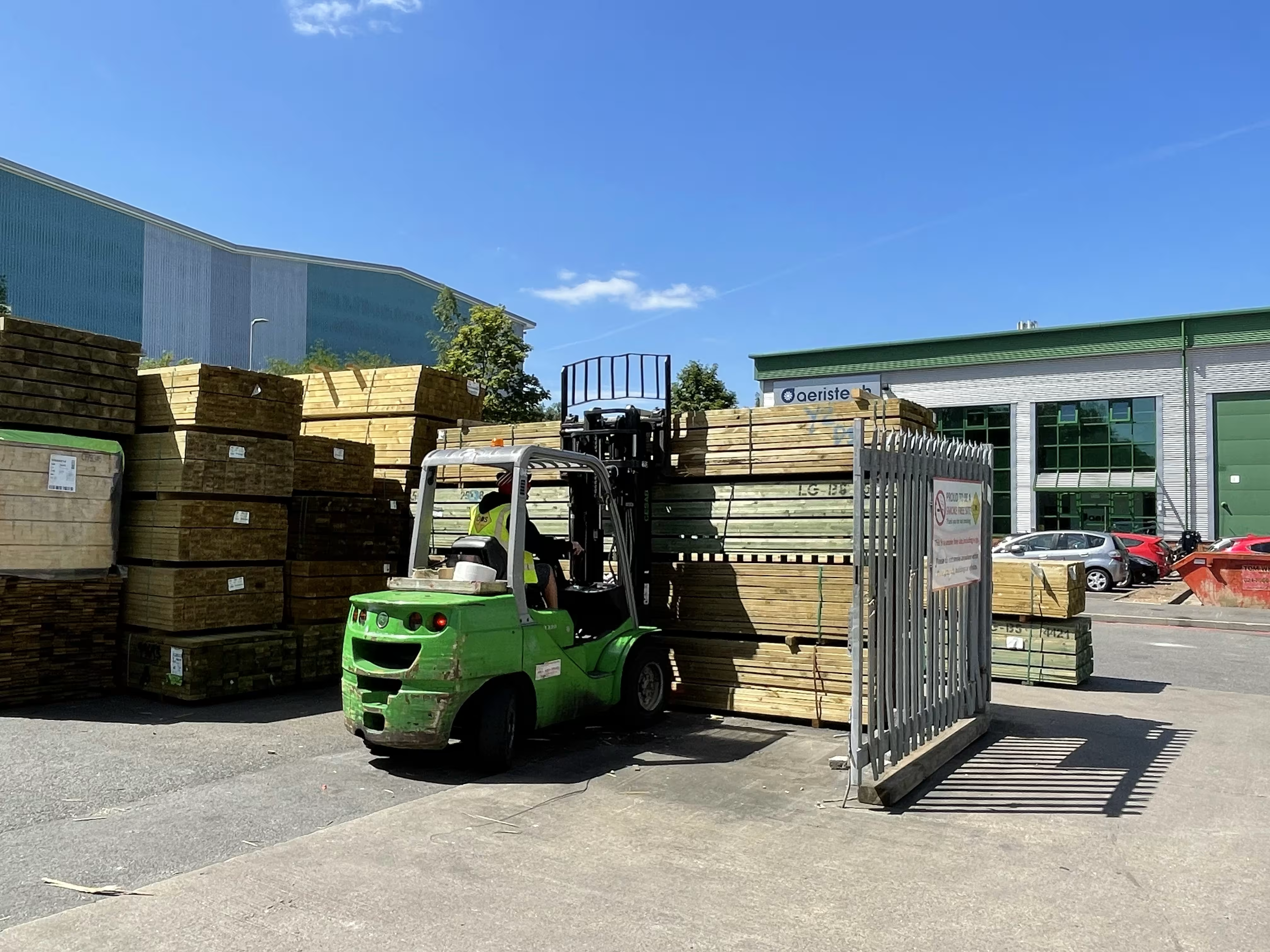
Builders Merchants
Many merchant branches trade from buildings put up or refurbished before 2000, which HSE's guidance says should be presumed to contain asbestos unless there is strong evidence they do not. The management survey locates it before routine maintenance disturbs it, and HSG264 says a fit-out needs a refurbishment survey of the areas it affects.

Warehousing & Logistics
Racking installation, roof repairs and new cabling all reach the building fabric. A management survey shows where asbestos is before routine work starts, and HSG264 says work that disturbs the fabric where the management survey was not intrusive needs a refurbishment survey of those areas.

Manufacturing & Engineering
Plant rooms, boilers, pipework and process plant are all inside the survey, as HSE's Approved Code of Practice expects, and HSE notes that old industrial equipment such as industrial ovens can contain asbestos even in a building put up after 2000.

Garden Centres
Older shop buildings, glasshouses and outbuildings are surveyed building by building, so the register shows which parts of the site contain asbestos and maintenance can plan around it.

Metal Stockholders
Sheds, offices and plant rooms are surveyed area by area. HSE's survey guide expects every non-domestic building to be surveyed individually, so each building on the site gets its own findings.

Childcare & Nurseries
Many nurseries operate from converted houses, churches or offices built before 2000, which HSE's guidance says should be presumed to contain asbestos unless there is strong evidence they do not. The survey tells you where it is before anyone drills or fixes, and HSG264 says a refit needs a refurbishment survey of the areas it affects.


Ready to book an
Asbestos Management Survey?
Tell us about your premises, when they were built and any survey you already have. We will quote for the work, and by the end you will know where asbestos is found or presumed, what condition it is in and how to manage it.
Frequently asked questions
Do I need an asbestos survey?

Who is the dutyholder for asbestos?
What is the difference between a management survey and a refurbishment and demolition survey?
Do asbestos samples have to go to an accredited laboratory?
What happens if part of the building cannot be accessed?
How often should an asbestos register and plan be reviewed?
Does asbestos have to be removed?
How much does an asbestos survey cost?


