

CDM regulations: duties by role, F10 notification and CDM consultancy
CDM stands for the Construction (Design and Management) Regulations 2015, the law that sets out who is responsible for health and safety on a construction project, from the client who commissions the work to the workers on site. The Regulations have applied in Great Britain since 6 April 2015 and cover all construction work, domestic projects included, whether or not the project is large enough to be notified to HSE. We support clients, principal designers and principal contractors through CDM 2015, from the F10 notification to the final site inspection.

What CDM covers, and when it applies
Regulation 2 of the Construction (Design and Management) Regulations 2015 defines construction work widely. It includes building something new; the alteration, conversion, fitting out, renovation, repair, redecoration, maintenance and demolition of a structure; site clearance and excavation; and installing or removing electrical, gas and similar services fixed to a structure. A structure includes a building, a road, a wall, a pipeline and fixed plant, and the scaffolding put up to do the work.
So a shop refit, a new canopy, a mezzanine floor or rewiring a warehouse is construction work, and the business that has it done is a commercial client with duties of its own. Northern Ireland has its own 2016 Regulations.
CDM duties by role
HSE lists seven kinds of duty holder. One person or business can hold several roles if they have the skills, knowledge, experience and, for an organisation, the organisational capability each one needs.
Commercial clients
A commercial client is anyone who has construction work done as part of a business, whether or not it trades for profit. Regulation 4 of the Construction (Design and Management) Regulations 2015 requires the client to make suitable arrangements for managing the project, with enough time and resources, and to keep them under review. As the client you must:
- appoint designers and contractors with the skills, knowledge and experience for the work, and take reasonable steps to check they have them
- give every designer and contractor appointed or being considered your pre-construction information, such as asbestos surveys, structural drawings and any existing health and safety file, as soon as practicable
- make sure a construction phase plan is drawn up before the construction phase begins, and that welfare facilities are provided
- where there is more than one contractor, appoint a principal designer and a principal contractor in writing, and take reasonable steps to make sure they carry out their duties
- notify HSE if the project is notifiable
- keep the health and safety file available, and hand it to whoever acquires the building if you dispose of it
If you appoint no principal designer or principal contractor, regulation 5 of the Construction (Design and Management) Regulations 2015 makes you carry out that role's duties yourself. Our guide to working with contractors covers what to check before you appoint one.
Domestic clients
A domestic client is someone having work done on their own home, or a family member's, that is unconnected with any business. Regulation 7 of the Construction (Design and Management) Regulations 2015 passes their client duties to the contractor on a single-contractor job, to the principal contractor where there is more than one, or to the principal designer under a written agreement. Landlords and housing associations are commercial clients, and so is a business attached to a home, such as a shop.
Principal designers
The principal designer is the designer the client appoints in writing, on a project with more than one contractor, to plan, manage, monitor and coordinate health and safety in the pre-construction phase. Regulation 11 of the Construction (Design and Management) Regulations 2015 requires them to identify and eliminate or control foreseeable risks, make sure the other designers meet their duties, help the client with the pre-construction information and liaise with the principal contractor. They also prepare the health and safety file. The role can go to an architect or engineer, a contractor that designs, or the client itself, as long as they have control over the pre-construction phase.
Designers
Anyone who prepares or modifies a design as part of a business is a designer, including contractors, tradespeople and clients who specify how something is built. Regulation 9 of the Construction (Design and Management) Regulations 2015 requires a designer to check the client is aware of its duties before starting, and in the design to eliminate, so far as is reasonably practicable, foreseeable risks to anyone carrying out or affected by the construction work, maintaining or cleaning the structure, or using it as a workplace. Where a risk cannot be eliminated, they reduce or control it and pass information about it to the principal designer and into the health and safety file.
Principal contractors
The principal contractor is the contractor the client appoints in writing to plan, manage, monitor and coordinate the construction phase where there is more than one contractor. Regulation 13 of the Construction (Design and Management) Regulations 2015 requires them to organise cooperation between contractors, make sure a suitable site induction is provided, take the necessary steps to keep unauthorised people off site and provide welfare facilities. They draw up the construction phase plan and keep it under review, and regulation 14 of the Construction (Design and Management) Regulations 2015 requires them to consult and engage with workers on their health, safety and welfare.
Contractors
A contractor is anyone who carries out, manages or controls construction work as part of a business, from a main contractor to a self-employed electrician. Regulation 15 of the Construction (Design and Management) Regulations 2015 requires every contractor to:
- plan, manage and monitor its own work
- employ or appoint only people who have the skills, knowledge, training and experience for their tasks, or are in the process of obtaining them
- give each worker appropriate supervision, instructions and information, including a site induction where the principal contractor has not provided one
Where there is more than one contractor, each follows the directions of the principal designer and principal contractor, and the parts of the construction phase plan that cover its work. A contractor working alone draws up the plan itself.
Workers
Workers are the people working for or under the control of a contractor on site, supervisors included. Regulation 8 of the Construction (Design and Management) Regulations 2015 requires them to report anything likely to endanger themselves or others.
The CDM construction phase plan and health and safety file
Every construction project needs a construction phase plan before work starts. The principal contractor draws it up, or the contractor where there is only one, and the client must make sure it exists.
Under regulation 12 of the Construction (Design and Management) Regulations 2015, the plan must set out the health and safety arrangements and site rules, taking account where necessary of the industrial activities taking place on the construction site. It must include specific measures for any work in the particular-risk categories the Regulations list, such as assembling or dismantling heavy prefabricated components. On a site that keeps trading, those activities can be your own forklifts or production line working where the contractors are.
HSE's guidance, L153, suggests the plan cover the project team, site rules, cooperation between contractors, worker involvement, induction, welfare and emergency procedures. It should stay proportionate, leaving out generic risk assessments and detailed method statements. Our guide to RAMS covers what a good method statement contains. For small, routine jobs, HSE publishes a short template, CIS80.
The health and safety file
Projects with more than one contractor also need a health and safety file, which holds the information someone will need to carry out later work on the structure safely, such as maintenance, refurbishment or demolition. Under regulation 12 of the Construction (Design and Management) Regulations 2015, the principal designer prepares it and keeps it up to date. At the end of the project the principal designer passes it to the client, or the principal contractor does if the principal designer's appointment has already ended. The client keeps it available, and passes it on if it disposes of the building. L153 suggests the file record safe working loads for floors and roofs, hazardous materials, significant services and as-built drawings, along with any hazards that were not designed out, such as asbestos.
F10 notification under CDM: when a project is notifiable, and who notifies
An F10 is HSE's online form for notifying a construction project. Regulation 6 of the Construction (Design and Management) Regulations 2015 makes a project notifiable if the construction work on site is scheduled to:
- last longer than 30 working days and have more than 20 workers working at the same time at any point in the project; or
- exceed 500 person days.
HSE counts every day on which construction work is likely to take place, weekends and bank holidays included, even if the work that day is short. The tests are separate. Eleven people working for 50 days make 550 person days, so that project is notifiable although it never has more than 20 workers on site. A two-week job with two contractors and six people needs no F10, though it still needs a principal designer and a principal contractor.
The client notifies, as soon as is practicable before the construction phase begins, and L153 says it may ask someone else to submit the notice on its behalf. Preparing and submitting it is part of our CDM service. For a domestic client, the contractor, principal contractor or principal designer who has taken on the client duties notifies.
The notice must contain the 15 particulars in Schedule 1 of the Construction (Design and Management) Regulations 2015, including the site address, the planned start date and a declaration signed by or for the client that it is aware of its duties. It has to be displayed in the site office and updated if necessary.
HSE takes notifications only through the online F10 form. For a notifiable project with one contractor, its guidance says to enter that contractor as both principal designer and principal contractor. If a project grows into the thresholds after it starts, L153 says the client must notify as soon as possible.

What our CDM consultancy includes
The duties stay with whoever holds them under the Regulations, and we do the work that lets them show the duties were met.
What our CDM consultancy includes
The duties stay with whoever holds them under the Regulations, and we do the work that lets them show the duties were met.

Pre-construction documentation
We explain the duties that come with your role under CDM 2015, prepare and submit the F10 where the project is notifiable, and draw up the construction phase plan for the principal contractor or contractor whose duty it is, covering the health and safety arrangements, site rules, risk controls and emergency procedures.

Site setup and live oversight
Welfare facilities, traffic management, pedestrian segregation, access control and signage are planned before the first day on site, and site rules and induction material go to everyone working there, translated where needed. We inspect the site regularly against the construction phase plan and HSE's guidance in L153.

Documented findings and corrective actions
Every inspection produces written findings with prioritised corrective actions. We handle regulatory queries and correspondence with HSE as the project goes on, and the construction phase plan is updated as the work changes.
What you should be able to show as a CDM client
These documents show that a client has met its CDM 2015 duties. Could you put your hands on all six today?
- ✓Written appointments of the principal designer and principal contractor, where there is more than one contractor
- ✓The pre-construction information you gave each designer and contractor, and when you gave it
- ✓Your checks that the designers and contractors you appointed had the skills, knowledge and experience for the work
- ✓A construction phase plan drawn up before the construction phase began
- ✓On a notifiable project, the F10, displayed in the site office and kept up to date
- ✓On a project with more than one contractor, the health and safety file, kept where anyone who needs it can find it
Our one-day CDM awareness course covers these duties and documents, and runs at your premises.
Speak with an expert
What CDM support costs
Price depends on the project. A two-week refit with one contractor needs less planning and fewer visits than a notifiable project running for months, and each extra contractor adds coordination to check. Every inspection is a site visit with written findings, so the number of visits is part of the price. An existing health and safety file, asbestos survey and site drawings shorten the pre-construction work.
Our outsourced health and safety service lists CDM support among what it covers, so a retained client can bring a project to the consultant who already knows the site.
Two ways to work with Opus
Book a one-off service for a specific need, or take on a partnership for ongoing support. Either way, the work gets done by the same team.
Book a service
For a specific need - a single assessment, audit, or
on-site service with a clear deliverable.

Opus Safety Partnership
Ongoing support and consider-it-done compliance. For businesses that want compliance off their plate, not on their to-do list.

Not sure which fits? Speak to a consultant - no commitment required.
Kellaway


Why businesses bring CDM to Opus
Our team includes former HSE and local authority regulators, and consultants who know construction. Tom Bradley was managing director of a contracting company for 12 years before moving into safety full time, and has particular experience in CDM and contractor management. David Clifton lists CDM and temporary works among his specialisms.
On a single-contractor job below the notification thresholds, the contractor writes the plan, and your part as client is mainly information, a competence check, welfare and enough time. If that describes your project, we will say so.
CDM support by sector


Builders Merchants
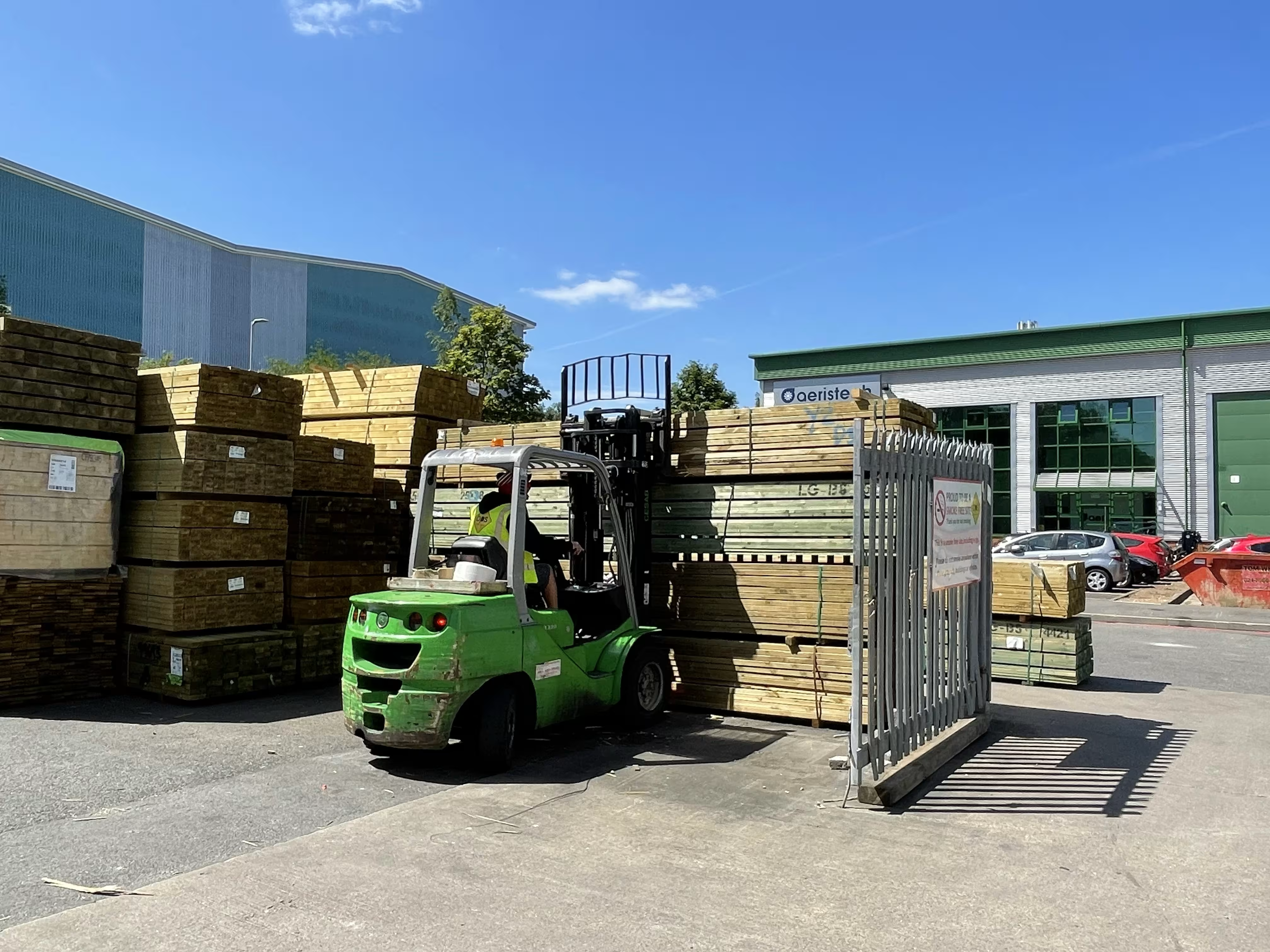
Commissioning a shop refit, a new canopy or a yard alteration makes you the client under CDM 2015. We prepare the F10 where one is needed, make sure a construction phase plan is in place and inspect the works while the yard keeps trading.

Warehousing & Logistics
Mezzanine floors and fit-outs are construction work, and the client duties stay with you when a contractor does the work. We plan the works around the operation and inspect against the construction phase plan.

Manufacturing & Engineering
Installing fixed plant or altering a factory makes you the client, often with a production line running alongside, and we manage that overlap. Where a new machine's safety depends on how it is installed, regulation 6 of the Provision and Use of Work Equipment Regulations 1998 also requires an inspection after installation and before it is first put into service, which our PUWER guide explains.

Garden Centres
If you build a café or refit the centre while it stays open to the public, the client duties are yours. We take you through them and plan the works around public access.

Metal Stockholders
A crane gantry install or yard resurfacing brings client duties under CDM 2015 that are easy to miss in a working yard. We coordinate the CDM side, from the F10 to inspections, around day-to-day materials handling.

Childcare & Nurseries
When a nursery has a fit-out or an extension built, the setting is the client under CDM 2015. We take you through the client duties and plan the works so they stay separated from children and staff.


Need CDM consultancy support?
Tell us about the work and who is doing it. We will tell you which duties fall to you and whether the project needs an F10, then quote for the support it needs.
Frequently asked questions
What does CDM stand for?

Does CDM apply to small projects?
When is an F10 required?
Do I need a principal designer and a principal contractor?
What is a CDM health and safety file?
We use our own maintenance team for building work. Does CDM still apply?


