%201.svg)
%201.svg)
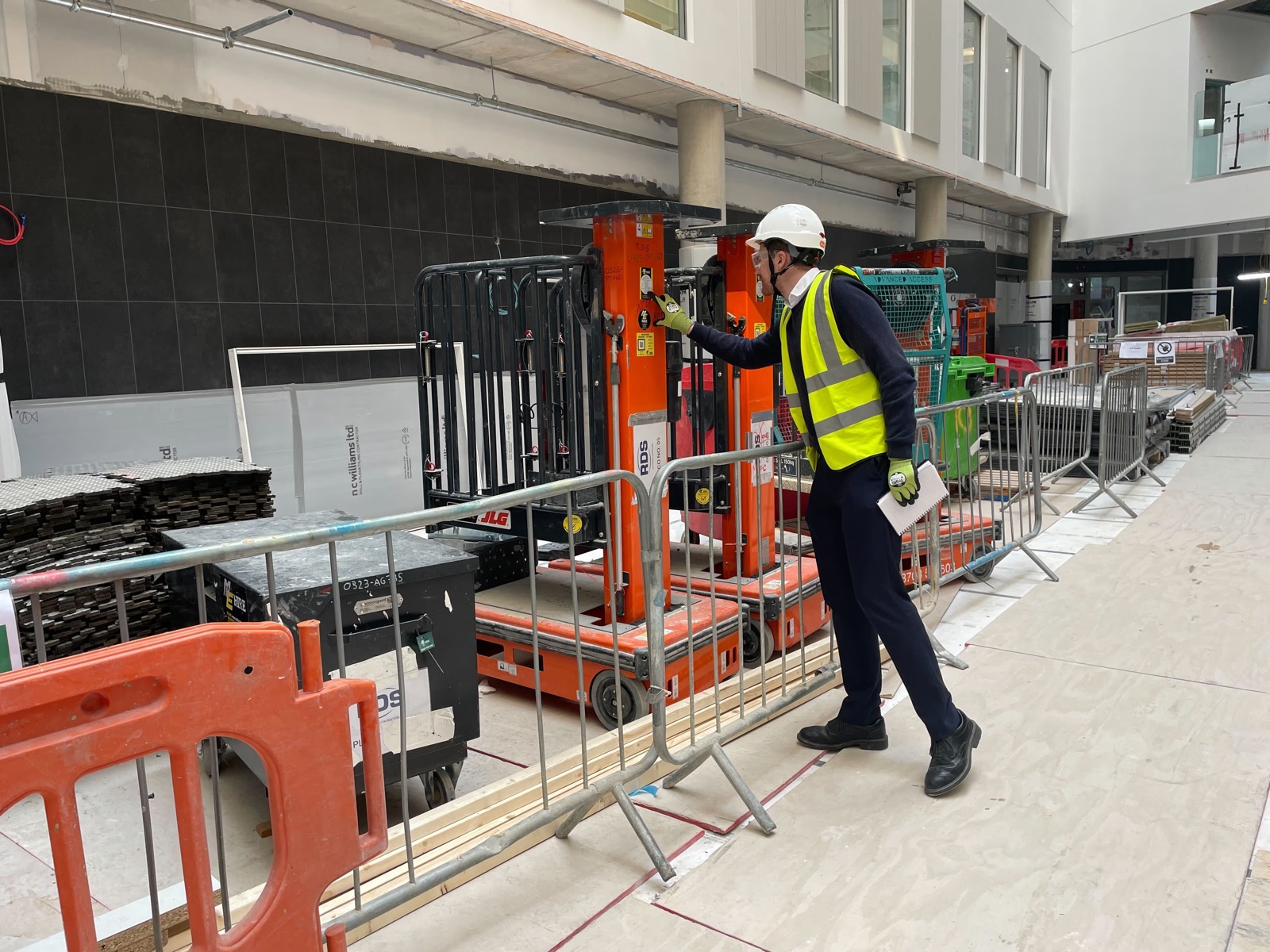
A method statement is a written description of how a particular job will be carried out safely: the steps in order, the hazards, and the controls taken from the risk assessment.
A method statement is a written description of how a particular job will be carried out safely: the steps in order, the hazards, and the controls taken from the risk assessment. RAMS is short for risk assessment and method statement, the two documents issued together for a job. HSE's construction guidance says that, outside a few cases such as demolition, method statements are not required by law, and calls them an effective and practical way to plan and manage the work. What the law does require, in Great Britain, is a suitable and sufficient risk assessment under regulation 3 of the Management of Health and Safety at Work Regulations 1999, and for some jobs a written plan under other regulations.
What does RAMS stand for?
RAMS stands for risk assessment and method statement. It is industry shorthand: HSE and the regulations write both out in full.
The two documents do different jobs. The risk assessment works out what could cause harm, who could be harmed and what controls are needed. The method statement takes those controls and sets out how the job will be done, step by step, so the people doing it know what is expected of them. In HSE's words, a method statement "draws together the information compiled about the various hazards and the ways in which they are to be controlled for any particular job from the conclusions of the risk assessments".
| Risk assessment | Method statement | |
|---|---|---|
| The question it answers | What could cause harm, to whom, how likely and how serious, and what controls are needed | How this job will be done safely, in what order, by whom and with what equipment |
| Legal basis | Required under regulation 3 of the 1999 Regulations; the significant findings must be recorded if you employ five or more people | Not named in any health and safety regulation; one way to record a safe system of work and the written arrangements some jobs need |
| Scope | Your work activities and the risks they create | One particular task or job |
| Who it is written for | The employer, to decide what controls are needed | "those carrying out the work and their immediate supervisors", as HSE puts it |
Is a method statement a legal requirement?
Not by name. No health and safety statute or regulation uses the phrase method statement, and none uses RAMS. HSE's guidance on construction paperwork says: "While not required by law, method statements are also prepared for many other construction activities and are proven to be an effective and practical way to help plan, manage and monitor construction work."
The law asks for the planning behind a method statement and, for some work, a written plan. These are the main cases:
| Situation | What the law requires | Where |
|---|---|---|
| Any work | A suitable and sufficient risk assessment, with the significant findings recorded if you employ five or more | Regulation 3 of the Management of Health and Safety at Work Regulations 1999 |
| Telling the team | Comprehensible and relevant information on the risks and the measures taken | Regulation 10 of the Management of Health and Safety at Work Regulations 1999 |
| Construction projects | A construction phase plan, drawn up by the principal contractor, or by the contractor where there is only one | Regulations 12 and 15 of the Construction (Design and Management) Regulations 2015 |
| Demolition or dismantling | The arrangements recorded in writing before the work begins | Regulation 20 of the Construction (Design and Management) Regulations 2015 |
| Work with asbestos | A suitable written plan of work, which HSE says is sometimes called a method statement | Regulation 7 of the Control of Asbestos Regulations 2012 |
| Entering a confined space | A safe system of work, which HSE's Approved Code of Practice says should be in writing | Regulation 4 of the Confined Spaces Regulations 1997 |
| Lifting operations | Every lifting operation involving lifting equipment properly planned by a competent person; HSE's Approved Code of Practice expects a written plan, where appropriate, when two or more items of lifting equipment lift a load together | Regulation 8 of the Lifting Operations and Lifting Equipment Regulations 1998 |
| Work at height | The work properly planned, including for emergencies and rescue | Regulation 4 of the Work at Height Regulations 2005 |
These are Great Britain regulations. Northern Ireland has its own versions, such as the Management of Health and Safety at Work Regulations (Northern Ireland) 2000.
A method statement is one way to meet several of these in practice; for demolition, HSE says the written record "is usually achieved by means of a method statement". Clients and principal contractors may also ask for RAMS before they let you on site, and HSE's guidance on planning construction work says: "Discuss proposed working methods with contractors before letting contracts."
What should a method statement include?
HSE publishes no general checklist (its roof work guide, HSG33, has one for roof work), but between them its guidance on construction, work at height, roof work and lifting describes these elements. A good method statement covers:
- What the job is, where it happens and the order of the steps. HSE describes a method statement as setting out "in a logical sequence exactly how a job is to be carried out in a way that secures health and safety and includes all the control measures".
- The hazards and the controls, taken from the risk assessment for this job.
- Who does the work, the training or competence the task needs, and who supervises it.
- The equipment. HSE's guidance on work at height says: "Equipment needed for safe working should be clearly identified and available before work starts."
- Emergency arrangements, including rescue where people work at height or in a confined space.
- How the work affects everyone else on site, whether other contractors, staff or members of the public, and what keeps them clear.
- What happens if the method has to change. The same HSE guidance says: "Workers should know what to do if the work method needs to be changed."
- Diagrams or simple sketches, where a picture makes the work clearer than words.
We would add two more that HSE's general descriptions of a method statement do not list: the personal protective equipment the job needs, and any permit to work that applies. A permit authorises the work and records the checks; the method statement describes how the work is done. Our permit to work course covers permits alongside risk assessments and method statements.
Keep it short. HSE's guidance is that a method statement "need be no longer than necessary" and "should not be overcomplicated".
How to write a method statement people will use
Start from the risk assessment and from the people who do the job. They know how the job is actually done, and HSE's risk assessment guidance makes the same point: "Involve your employees as they will usually have good ideas." Our risk assessment training covers producing the assessment the method statement depends on.
Make it specific to the site. HSE warns, about risk assessments, that copying an example and putting your company name on it "would not satisfy the law and would not protect your employees". The same reasoning applies to a method statement: a particular site can add hazards that a generic document misses, such as access, other trades or a live process next door. A standard method statement for routine work is fine as a starting point, and for routine lifting HSE's guidance expects "a simple plan, generic risk assessment and procedures". Adapt it to each site, and revise it when circumstances change markedly.
Brief it before the work starts. Regulation 10 of the 1999 Regulations requires you to give your employees comprehensible and relevant information on the risks and the controls, and on construction work each contractor must give its workers "appropriate supervision, instructions and information" under regulation 15 of the 2015 CDM Regulations. A short briefing on site, with the names of the people briefed, is a simple way to show it happened.
Then check the work matches the paper. HSE notes that checking the methods in the statement "are actually put into practice on site can also be a useful monitoring tool". Our post on planning new and non-routine work looks at the gap between the plan and what happens on the day.
How to check a contractor's RAMS
If you bring contractors onto your site, their RAMS tell you whether they have thought about your site or sent a document written for somewhere else. Before work starts, check:
- Is it about your site and this job? It should name the location, the access route and anything else happening nearby.
- Does the method match the risk assessment? Every control the risk assessment relies on should appear in the steps.
- Who is doing the work, and who supervises it? Look for named roles and the training or competence the task needs.
- Is the equipment right and in date? For lifting equipment, ask for the thorough examination reports.
- What happens in an emergency? Check this especially for work at height, in confined spaces or with hot work.
- Which of your permits apply? The contractor's method has to fit your own permit and isolation arrangements.
Our guide to working with contractors covers selection and supervision beyond the paperwork. On construction projects, the RAMS feed into the construction phase plan; our CDM services cover the duties of clients, principal designers and principal contractors.
If your own team produces RAMS regularly, Opus RAMS brings risk assessments, method statements, COSHH, manual handling, plant certificates, staff training records, inductions and sign-off sheets together into a single PDF, using live data from your account: people, training records, assets and documents. If you would like a second opinion on a method statement, or help writing them for a particular job, speak to our team.
Frequently asked questions
What is a method statement? A written, step-by-step description of how a particular job will be carried out safely, with the hazards and the controls taken from the risk assessment.
What does RAMS stand for? Risk assessment and method statement. It is industry shorthand for the two documents issued together for a job; HSE and the regulations write them out in full.
What is the difference between a risk assessment and a method statement? The risk assessment decides what could cause harm and what controls are needed; the method statement sets out how the job will be done with those controls in place. The risk assessment is a legal duty under regulation 3 of the Management of Health and Safety at Work Regulations 1999, and in construction a method statement is a widely used way to record and communicate the safe system of work that follows from it.
Is a method statement a legal requirement? Not by name. Regulation 20 of the Construction (Design and Management) Regulations 2015 requires the arrangements for demolition or dismantling to be recorded in writing before the work begins, and HSE says this "is usually achieved by means of a method statement". For other construction work, HSE's guidance says method statements are not required by law. Asbestos work also needs a written plan of work under regulation 7 of the Control of Asbestos Regulations 2012.
What is another name for a method statement? It depends on the job. HSE says the written record of a lifting plan "is sometimes known as a method statement", says the asbestos plan of work is "sometimes called a method statement", and also writes "safety method statement". Each is a written record of a safe system of work.
Who should write a method statement? Someone who understands the job and its risks, working with the people who will do it. For lifting operations, regulation 8 of the Lifting Operations and Lifting Equipment Regulations 1998 requires every lifting operation involving lifting equipment to be properly planned by a competent person, and on construction projects every contractor must plan, manage and monitor its own work under regulation 15 of the Construction (Design and Management) Regulations 2015.
How long should a method statement be? As short as it can be while still doing its job. HSE says it "need be no longer than necessary", and it is written for the people doing the work and their supervisors.
Do I need a new method statement for every job? Only where the job or the site changes the risk. HSE says that where a similar operation is repeated "the statement will be similar from job to job", and that it should be revised for each job when circumstances change markedly.

Last updated
October 12, 2026
Opus Safety
Health & safety insights
Guidance, updates and practical advice for your sector.




What is a hazard? Meaning, types and how to identify hazards at work
A hazard is anything that could cause injury or illness at work. What the word means, how it differs from risk, the main types and how to find them.
Planning new or non-routine work: When the job changes, so do the risks
When work changes location, equipment or method, the risks change too. How to spot the triggers for reassessment and plan non-routine work safely.
Working with contractors: Selection, safeguarding, and management
Bringing on external expertise requires a different level of safety management. Maximise productivity while reducing contractor-related risks.
Reducing delivery risks – a quick guide to crane safety
Lorry-mounted cranes can cause life-threatening injuries. Make sure workers, customers and the public stay safe with expert delivery guidance.
Opus RAMS: Your shortcut to site-specific Risk Assessment Method Statements
RAMS often take significant time and deliver little site-specific value. Opus RAMS removes the friction, creating tailor-made RAMS in minutes.
CDM-compliant shop refurbishments – how to control your contractors
Prevent accidents, injuries and HSE fines with our quick guide to CDM Regulations and responsible contractor management.

Why businesses choose
Opus Safety
We've worked across UK industry for years. The numbers show what our clients achieve when compliance becomes a strength, not a burden.


%201.svg)


