

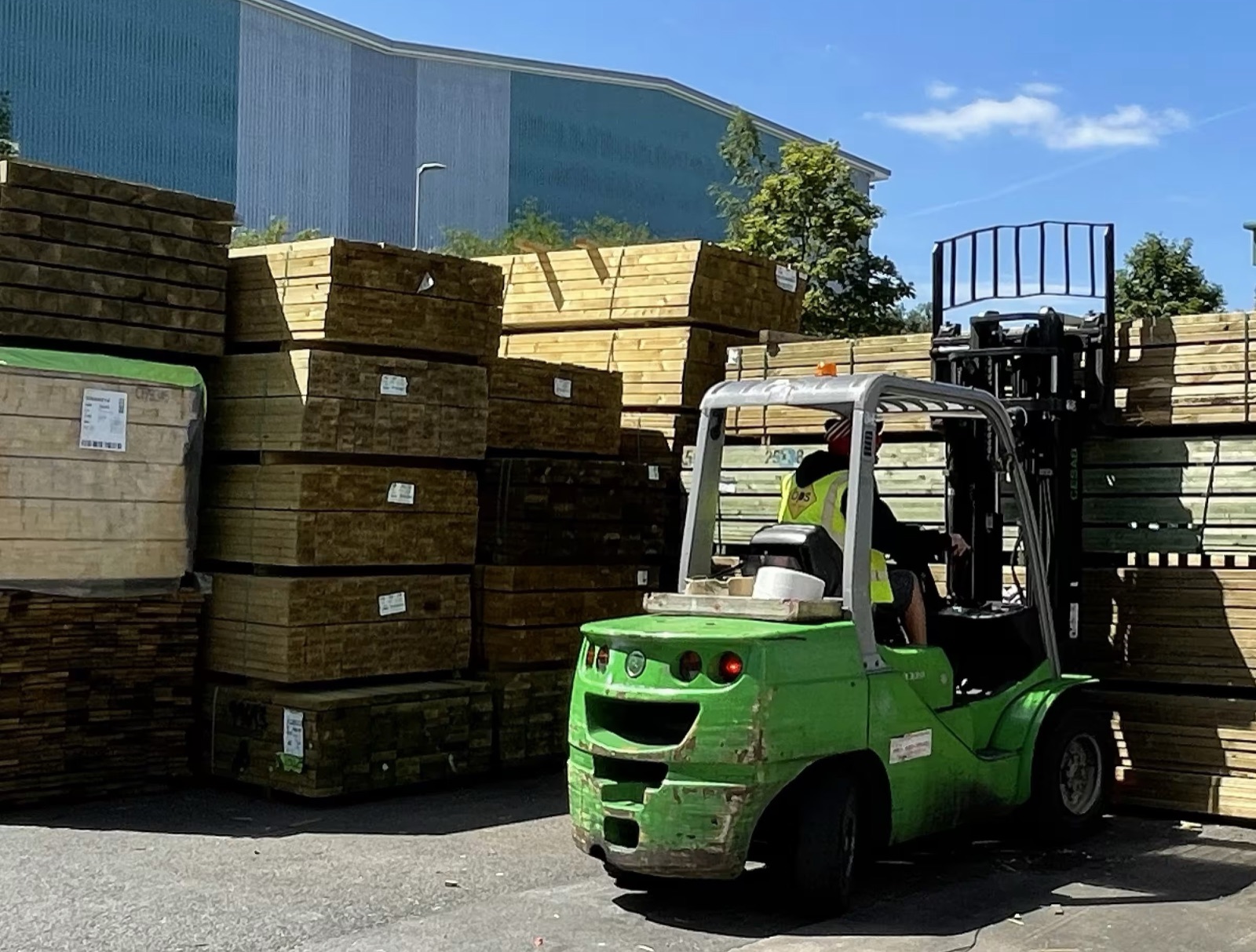
LOLER stands for the Lifting Operations and Lifting Equipment Regulations 1998. The LOLER regulations apply in Great Britain and put duties on whoever owns, operates or controls lifting equipment at work. Regulation 9 of LOLER 1998 requires a thorough examination by a competent person at least every 12 months, or at least every 6 months for lifting accessories and equipment that lifts people, unless an examination scheme sets other intervals.
LOLER stands for the Lifting Operations and Lifting Equipment Regulations 1998. The LOLER regulations apply in Great Britain and put duties on whoever owns, operates or controls lifting equipment at work. Regulation 9 of LOLER 1998 requires a thorough examination by a competent person at least every 12 months, or at least every 6 months for lifting accessories and equipment that lifts people, unless an examination scheme sets other intervals.
Northern Ireland has its own Regulations, made in 1999. Forklifts, telehandlers, lorry loader cranes, tail lifts and the slings and chains used with them are all lifting equipment, and LOLER covers both the equipment and every lift made with it.
What do the LOLER regulations require?
Regulation 3 of the Lifting Operations and Lifting Equipment Regulations 1998 puts the duties on employers, for lifting equipment their employees use at work, and on self-employed people within the scope of health and safety law, for equipment they use. They also fall on anyone who has control of lifting equipment, of the people who use or supervise it, or of the way it is used, to the extent of that control.
So the duty follows control. A hired-in telehandler, or a customer's crane your team operates, can bring LOLER duties with it.
Regulations 4 to 8 of LOLER 1998 cover the equipment and the lift:
| Provision | What it requires |
|---|---|
| Regulation 4 of LOLER 1998 | Lifting equipment is strong and stable enough for each load, including at its mounting or fixing point |
| Regulation 5 of LOLER 1998 | Equipment for lifting people prevents them being crushed, trapped, struck or falling from the carrier |
| Regulation 6 of LOLER 1998 | Equipment is positioned or installed to reduce, as low as is reasonably practicable, the risk of it or its load striking someone, and of the load drifting, falling freely or being released unintentionally |
| Regulation 7 of LOLER 1998 | Machinery and accessories are marked with their safe working load; where that varies with configuration, the machinery is marked for each one or the information is kept with it |
| Regulation 8 of LOLER 1998 | Every lifting operation is properly planned by a competent person, appropriately supervised and carried out in a safe manner |
Planning under regulation 8 of LOLER 1998 scales with the job. HSE's guidance says a routine lift by trained, competent people may need little more than on-the-job planning, and that a forklift does not need a formal plan for every lift. A complex lift needs detailed planning, and a significant change from standard practice may need more.
What counts as lifting equipment under the LOLER regulations?
Regulation 2 of LOLER 1998 defines lifting equipment as work equipment for lifting or lowering loads, including its attachments used for anchoring, fixing or supporting it. A load includes a person. Lifting accessories, the slings, chains and shackles that attach a load to the machine, are lifting equipment too.
HSE gives examples on each side of the line in its Approved Code of Practice and guidance, L113 and on its website. The ones below apply on warehouse, merchant and factory sites:
| Covered by LOLER | Outside LOLER, with PUWER still applying |
|---|---|
| Forklifts and telehandlers | Simple pallet trucks that lift the load just clear of the floor |
| High-lift pallet trucks, manual or powered, that can raise the forks above 300mm | Conveyor belts |
| Loader cranes fitted to lorries, and vehicle tail lifts | Tipper trucks |
| Goods lifts, scissor lifts, MEWPs and automated storage and retrieval systems | Roller shutter doors |
| Cranes, pull-lifts and vacuum lifting equipment | Winching where the load stays on the ground |
| Slings, chains, shackles, removable eyebolts and lifting beams | Pallets, stillages and skips carried as part of the load |
The pallet truck line turns on height. HSE treats a simple pallet truck as outside LOLER because a load falling from just above the floor has very low consequence. L113's guidance, amended in 2018, lists high-lift pallet trucks that can raise the forks above 300mm among its examples of lifting equipment.
Pallets and stillages normally count as part of the load when they are not permanently attached to the lifting machine.
How often does lifting equipment need a LOLER inspection?
Regulation 9 of LOLER 1998 uses two terms. HSE describes a thorough examination as a systematic, detailed examination by a competent person that ends in a written report. An inspection is a check by a competent person between thorough examinations, where one is appropriate.
The regulation requires a thorough examination at these points:
| When | What regulation 9 of LOLER 1998 requires |
|---|---|
| Before first use | A thorough examination, unless the equipment is new and has a declaration of conformity made no more than 12 months before it goes into service |
| After installation or assembly | A thorough examination where safety depends on the installation, and again at each new site or location |
| In service: lifting accessories, and equipment that lifts people | At least every 6 months |
| In service: all other lifting equipment | At least every 12 months |
| In service: under an examination scheme | At the intervals the scheme sets, in place of the 6 or 12 months |
| After exceptional circumstances | Each time something liable to jeopardise its safety has happened |
The in-service intervals apply to equipment exposed to conditions causing deterioration liable to result in danger, which HSE says covers most lifting equipment because of wear and tear. HSE's examples of exceptional circumstances are damage or failure, long periods out of use, and major changes such as modifications or repairs to critical parts.
Anyone with the necessary competence can draw up an examination scheme, including the user, owner or manufacturer. HSE's leaflet for employers, INDG422, says a longer interval than 6 or 12 months has to rest on a rigorous assessment of the risks.
On a forklift, HSE splits the work between two sets of regulations. The thorough examination covers the lifting parts: chains, forks, mast, cylinders and fork attachments. Brakes and lights are inspected under PUWER, and the whole truck is maintained under PUWER, with daily pre-use checks.
A service is a separate job from a thorough examination. The same leaflet says an examination may show up poor maintenance but is no substitute for maintaining the equipment, so do the maintenance without waiting for an examination.
Reports, defects and records
Regulation 10 of LOLER 1998 requires the examiner to tell you straight away about any defect that is or could become a danger, then send a written report as soon as practicable to you and to any company you hired or leased it from. Where a defect involves an existing or imminent risk of serious personal injury, a copy also goes to the enforcing authority, HSE or the local authority.
A defect that is a danger now means the equipment stays out of use until it is put right. For a defect that could become dangerous, the report sets a deadline, and the equipment cannot be used past it until the repair is done.
The report must contain the information in Schedule 1 to LOLER 1998, including the safe working load, any defects, the date of the examination and the latest date for the next one. Under regulation 11 of LOLER 1998, an in-service report is kept until the next one is made or for two years, whichever is later.
Separately, the collapse, overturning or failure of a load-bearing part of lifting equipment, other than an accessory, is a dangerous occurrence under Schedule 2 to RIDDOR 2013, and has to be reported.
Hired equipment
Regulation 9 of LOLER 1998 also requires equipment brought in from another business to come with physical evidence that its last thorough examination was done. HSE's guidance says the hire firm usually arranges the examinations, but the responsibility in law rests on the user, so ask for the current report when the equipment arrives.
Who can carry out a thorough examination?
A competent person, which the law does not define. HSE's Code of Practice describes someone with enough practical and theoretical knowledge and experience of that equipment to detect defects or weaknesses and judge how much they matter to its safe continued use.
HSE says the examiner must be independent and impartial enough to make objective decisions. It notes they are usually employed by a different company, though they can be on your own staff with genuine authority and independence. L113's guidance says they should not normally be the person who does the routine maintenance, except where the risk of injury to others is low.
This is a different role from the competent person you appoint under regulation 7 of the Management of Health and Safety at Work Regulations 1999 to help you meet your health and safety duties generally.
What is the difference between PUWER and LOLER?
PUWER, the Provision and Use of Work Equipment Regulations 1998, covers all work equipment. Its guarding, training and duty-holder rules are in our PUWER guide. LOLER adds duties for equipment that lifts or lowers loads, and HSE's position is that most lifting equipment is also work equipment, so both apply.
| PUWER 1998 | LOLER 1998 | |
|---|---|---|
| Applies to | All work equipment | Lifting equipment and lifting operations |
| Periodic check | Inspection at suitable intervals you justify from the risk | Thorough examination at a maximum of 6 or 12 months, or under an examination scheme |
| On a forklift | Maintenance of the whole truck and inspection of parts such as brakes and lights | Thorough examination of chains, forks, mast, cylinders and attachments |
Frequently asked questions
What does LOLER stand for? The Lifting Operations and Lifting Equipment Regulations 1998. The LOLER regulations came into force on 5 December 1998 and apply in Great Britain.
How often is a LOLER inspection required? A thorough examination is due at least every 12 months for most lifting equipment, and at least every 6 months for lifting accessories and equipment that lifts people. Those are the intervals in regulation 9 of LOLER 1998, and an examination scheme can set different ones. Inspections between thorough examinations, where they are needed, happen at suitable intervals.
Does a forklift need a LOLER thorough examination? Yes. The chains, forks, mast, cylinders and fork attachments need one at least every 12 months, or every 6 months if the truck lifts people, unless an examination scheme sets the interval.
Are pallet trucks covered by LOLER? A simple pallet truck that lifts the load just clear of the floor falls under PUWER instead. HSE's L113 guidance lists a high-lift pallet truck that can raise its forks above 300mm among the equipment LOLER covers.
Who can carry out a LOLER inspection? A competent person with the practical and theoretical knowledge to find defects in that type of equipment and judge how serious they are, and normally someone other than the person who maintains it.
What happens if a thorough examination finds a defect? The examiner tells you immediately and confirms it in the report. A dangerous defect takes the equipment out of use until it is put right, and the examiner also reports a serious one to the enforcing authority.
How long do you keep LOLER records? An in-service thorough examination report is kept until the next report is made or for two years, whichever is later, under regulation 11 of LOLER 1998. Inspection records are kept until the next one is made.
Where to start
Pull the latest thorough examination report for every lifting item on site, hired trucks included. Check the date by which the next examination must be carried out, and check that any defect with a deadline was put right inside it.
Many of our consultants are former HSE and local authority regulators. On warehousing and distribution and builders merchant sites, a named consultant works through these duties with you, site by site.

Last updated
October 19, 2026
Opus Safety
Health & safety insights
Guidance, updates and practical advice for your sector.





PUWER and machinery guarding: the duty holder's guide
PUWER is the Provision and Use of Work Equipment Regulations 1998. Who the duty holder is, what regulation 11 requires for guarding, and the records to keep.
Builders merchant hazards: nine risks, and what fixes each
The nine health and safety hazards in a builders merchant, from yard traffic and forklifts to wood dust, with the law behind each and what fixes it.
Recent prosecutions: Warehouse worker loses both legs in forklift truck incident
A haulage firm’s forklift truck practices have cost an employee the use of his legs. Learn the simple safety measures that could have protected him.
Recent prosecutions: Manufacturing company fined £500,000 for forklift-related fatality
A manufacturer was fined £500,000 following the death of a forklift driver. Learn why mandatory seat belt use could have made all the difference.
Forklift truck safety: Your back-to-basics guide
A rise in lift truck accidents means courts are cracking down on common compliance issues. Get a refresher on the fundamentals of forklift safety.
Recent prosecutions: Business fined £1.6m after fatal crushing incident
A company’s poor lifting practices cost a young man his life. Get a snapshot of legal essentials for safe lifting, equipment checks, and staff training.

Why businesses choose
Opus Safety
We've worked across UK industry for years. The numbers show what our clients achieve when compliance becomes a strength, not a burden.


