%201.svg)
%201.svg)

Recent prosecutions: Warehouse worker loses both legs in forklift truck incident
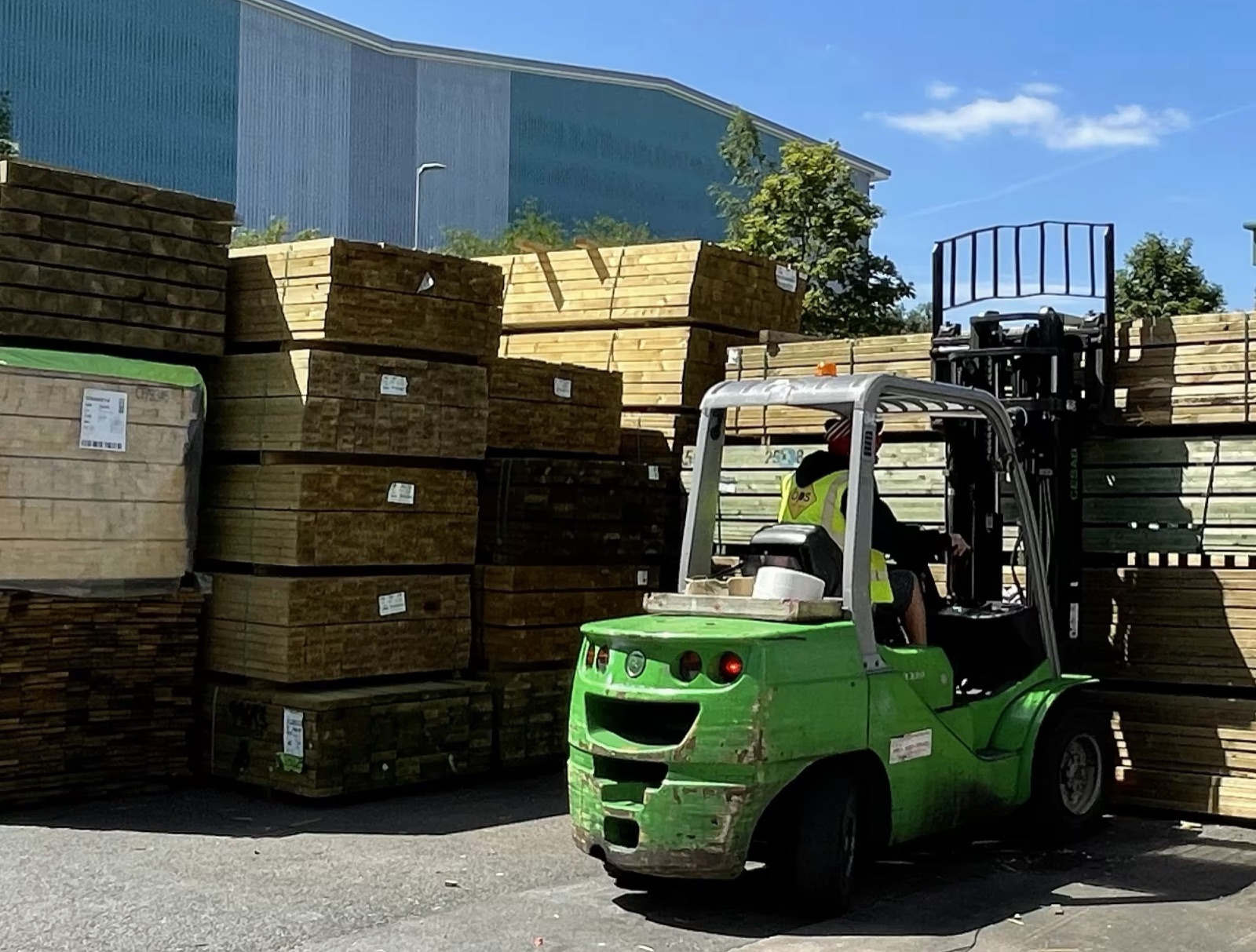
A haulage business received a £160,000 fine after an employee sustained life-changing injuries while picking orders in the company's warehouse.
The man was working near a forklift truck (FLT), which was loading pallets of slate tiles onto another vehicle. The upper pallet was not adequately secured and fell onto the employee's legs when the driver turned the FLT.
Following the incident, the worker had to have both legs amputated below the knee. He now uses a wheelchair and can no longer drive or climb stairs, requiring extensive adaptations to his family home.
An investigation by the Health and Safety Executive (HSE) showed that his employer failed to ensure that warehouse vehicles and pedestrians were suitably segregated and that loads were secured so far as was reasonably practicable.
In addition to the six-figure fine, the firm was ordered to pay £4,478 in costs.
After the hearing, the HSE Inspector said: "The company failed to implement a safe system of work for loading and unloading activities, thereby exposing employees, and others, to the risk of being struck by loads or workplace vehicles."
Safety best practice: Separating drivers and pedestrians
According to RIDDOR statistics, almost half (43%) of forklift truck incidents involve collisions with another person. Among those affected, 65% were carrying out unrelated tasks, 20% were coworkers, and 15% were delivery drivers.
Creating segregated spaces for vehicles and pedestrians is your first line of defence. By law, pedestrians and vehicles must be able to use a traffic route without causing danger to the health or safety of people working near it. This means that roadways and footpaths should ideally be separate.
If it's not possible to prohibit pedestrians from areas where lift trucks operate, you should assess the risks and provide ways to control them. These measures might include:
- Safe systems of work (SSW) that outline how drivers and pedestrians should perform their tasks in line with the risk assessment, adhere to site rules, and maintain a safe distance.
- Adequate protection, such as safety boots, hard hats, and hi-vis clothing, for people who work near vehicle routes.
- Physical barriers to separate pedestrian activities from truck operation areas.
- Clearly marked pedestrian routes and crossing places. Consider accident hotspots like aisle ends, entrance and exit doors, and battery charging stations.
- Warning signs alerting people to the presence of forklift trucks.
- Notices instructing operators to sound horns at appropriate locations.
- Audible and visible warnings, such as reversing bleepers, flashing warning beacons, convex mirrors, and CCTV.
- Presence-sensing equipment that sounds an alert when an object or person is detected.

Last updated
August 30, 2024
Opus Safety
Health & safety insights
Guidance, updates and practical advice for your sector.



LOLER regulations: lifting equipment duties explained
LOLER stands for the Lifting Operations and Lifting Equipment Regulations 1998. What the LOLER regulations cover, inspection intervals and who examines.
Recent prosecutions: £85,000 fine following fatal forklift truck accident
A company was hit with a substantial fine after failing to enforce seatbelt and vehicle safety rules. Learn to reduce the risks on your site.
Forklift truck safety: Your back-to-basics guide
A rise in lift truck accidents means courts are cracking down on common compliance issues. Get a refresher on the fundamentals of forklift safety.
Recent prosecutions – worker loses fingers to unguarded machinery
Inadequate training, supervision and safety controls caused career-limiting injuries for a machine worker – and a £66,000 fine for his employer.

Why businesses choose
Opus Safety
We've worked across UK industry for years. The numbers show what our clients achieve when compliance becomes a strength, not a burden.


%201.svg)


