%201.svg)
%201.svg)
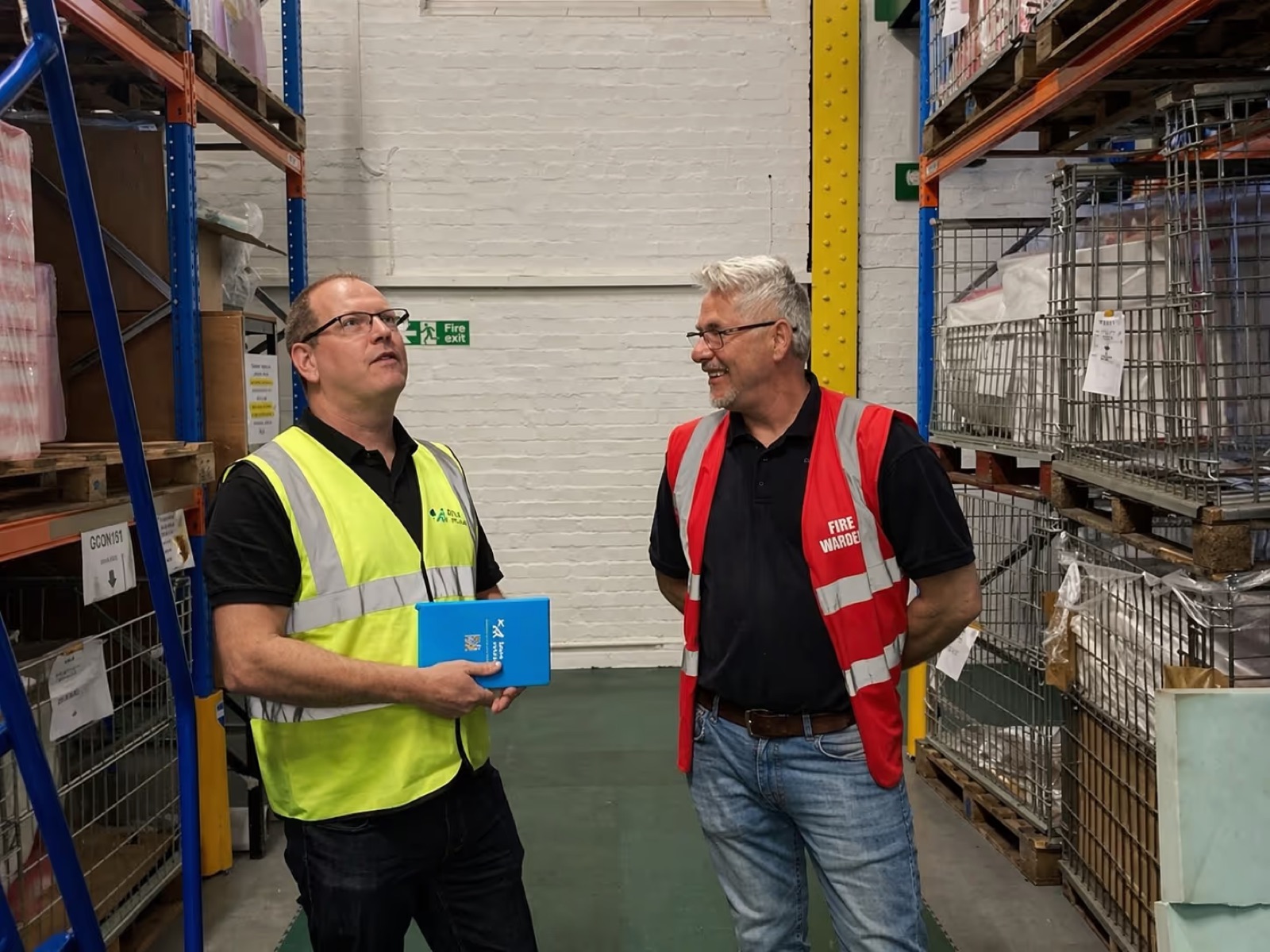
Hire a health and safety consultant when your business grows, your team is stretched, your risks get more complex, or you receive an enforcement notice. The duty to manage risk applies to every employer, so support suits any size, from sole traders to nationwide operators.
The five clearest triggers:
- An incident or notice - an accident, near miss, or improvement notice means your risk assessment needs reviewing.
- A stretched team - your competent person can't give safety the time it needs alongside the day job.
- Growth - new staff, sites, or bigger projects bring risks your current approach wasn't built for.
- New sectors - unfamiliar processes, equipment, or materials carry hazards your controls may not cover.
- Changing regulations - you have a legal duty to keep your arrangements current.
When choosing a partner, look past price: competence and accreditation (OSHCR, IOSH, NEBOSH), flexible services, partnership, cultural fit, and long-term value.
As your business develops, your health and safety challenges evolve too. New equipment introduces new hazards. Bigger teams mean higher illness, injury, and absence risks. And updated legislation demands different procedures and practices.
To protect your operations for the long-term, safety strategies need to be scalable and future-proof - built to support your organisation through growth, change, and challenges. Too often, companies don't realise their programme is unfit for purpose until it's too late.
The scale of the risk is clear. In 2024/25, an estimated 1.9 million working people in Great Britain were suffering from a work-related illness, 124 workers were killed in work-related accidents, and 40.1 million working days were lost to work-related ill health and injury (HSE, 2024/25). The Health and Safety Executive (HSE) continues to prosecute companies for poor safety practices, with the courts imposing substantial fines. However, most of these incidents are wholly preventable. With a trusted safety partner, you can avoid costly breaches through proactive planning, targeted controls, and compliance programmes that progress with your company. For a fuller breakdown of what the latest figures mean for employers, see our annual HSE statistics summary.
But when should you make the move from in-house safety management to a specialist consultant? And are H&S partnerships suitable for every size of employer?
You should consider hiring a health and safety consultant when your business grows, your in-house team lacks the time or expertise, your risks become more complex, or you receive an enforcement notice. H&S support suits employers of every size, from sole traders to nationwide operators, because the legal duty to manage risk applies regardless of headcount.
This article shares the stops on your safety journey that warrant external expertise - and explains how structured support can reduce accident and incident rates, strengthen your H&S culture, and keep your business consistently compliant.
Your Legal Responsibilities
Alongside the overarching duties of the Health and Safety at Work etc. Act 1974, the Management of Health and Safety at Work Regulations 1999 require every employer to make a suitable and sufficient assessment of the risks to their employees, and to control those risks through essential tasks like assessments, training, and emergency procedures. This duty applies to all employers, regardless of size or sector. The Health and Safety Executive (HSE) sets out the minimum steps you must take.
For a full breakdown of what this means in practice, read our guide to employer health and safety responsibilities, or explore our full range of health and safety services.
This begins with appointing a competent person, which Regulation 7 of the same regulations requires every employer to do - an individual with the necessary skills, knowledge, and experience to oversee and carry out health and safety duties on your behalf. Your competent person can be a business leader, internal staff member, or an external health and safety consultant. Their remit will differ depending on your sector, size, and risk profile, but key responsibilities include:
- Carrying out suitable and sufficient risk assessments, and recording the significant findings if you employ five or more people
- Implementing clear procedures for safety incidents and emergencies
- Delivering staff training and information on workplace risks and safety controls
- Providing employee health surveillance to track health risks over time
Not sure who holds that responsibility in your organisation? Read our guide on who is responsible for health and safety.
When to Consider Working with a Health and Safety Consultant
Many times, engaging a safety specialist is a reactive decision, prompted by a compliance breach or complaint. The HSE or local authority investigates the incident and identifies weaknesses in current safety controls. In response, the business appoints an external provider, generally based on cost alone.
While cost is a critical consideration, choosing your safety partner should be a front-footed process, prompted by key milestones in your organisation's development. Recognising the right time to review or outsource your safety programme is essential to maintaining compliance and a strong safety culture.
It Could Be Time to Partner with an External Provider If:
You've had a workplace accident, near miss, or an improvement notice
Specialist expertise can pinpoint the reasons behind incident rates, shaping bespoke controls and implementing improved systems to prevent future incidents. Under the Management of Health and Safety at Work Regulations 1999, employers must review their risk assessment whenever there is reason to suspect it is no longer valid, which a workplace accident or improvement notice clearly signals. Without dedicated root-cause analysis, the same failures tend to recur.
Ask yourself: Do we have the skills to identify root causes and prevent recurrences?
Your team is overwhelmed and overstretched
If your in-house competent person combines health and safety duties with a demanding day job or struggles to manage increasingly complex compliance requirements, they may benefit from working in tandem with an external safety expert. Regulation 7 requires the competent person assisting you to be given enough time and means to carry out their role properly; stretching that responsibility across an already-demanding job increases the risk of gaps.
Ask yourself: Do our internal resources have sufficient time and capacity to manage health and safety effectively?
Your business is getting bigger
If your organisation is expanding, taking on new staff, or winning significantly larger projects, cohesive cross-company safety support - including regular audits, tech-enabled tools, and proactive gap analysis - ensures you remain safe and compliant across multiple sites and scaled-up operations. When your operations change significantly, the law requires your risk assessment to be reviewed and updated to reflect the new risks. Scaling up safety with proper consultant support is essential for growth.
Ask yourself: Has our expansion introduced different risks, and can our current approach address them as we grow?
You're exploring different sectors
Upgraded services, processes, equipment, and technologies can involve unexpected hazards. New processes, equipment, or materials introduce hazards your existing controls may not cover, so each should be risk-assessed before work begins. Working with an industry specialist can raise risk awareness among staff, implement customised controls, and help you confidently and compliantly enter new markets.
Ask yourself: Do we fully understand the health and safety risks associated with these unfamiliar segments and activities?
Compliance regulations are changing
As an employer, you're legally obliged to stay current with safety legislation affecting your sector. Employers have a legal duty to keep their arrangements up to date with current health and safety legislation, so your safety consultant will keep pace with regulatory updates, flagging new requirements and ensuring your compliance programme remains aligned with advancing sector standards.
Ask yourself: Are we certain that our policies and procedures reflect the latest legal and industry requirements?
What to Look for in a Health and Safety Partner
An external safety provider brings a fresh perspective to your operations, contributing vital knowledge of current best practices and regulatory target areas. A crucial differentiator is how deeply your partner knows your business - and the time they invest to understand your unique challenges.
Do they visit your sites to listen to staff concerns? Conduct regular, proactive risk assessments? Create a bespoke safety strategy based on your specific pressures and objectives? Whether you're a small start-up or a nationwide operator, your consultant should act as an extension of your existing team, working towards a clear vision and common compliance goals.
Five Essential Metrics to Find the Right Fit
Competence and a credible track record
Your partner should hold the relevant qualifications, industry accreditations, and practical experience to expertly support your sector and help you stay current with evolving legislation and best practices. A reliable benchmark is the Occupational Safety and Health Consultants Register (OSHCR), a register supported by the HSE whose members hold chartered-level professional membership, carry professional indemnity insurance, and commit to continuing professional development. Look for recognised qualifications such as those awarded by the Institution of Occupational Safety and Health (IOSH) or NEBOSH. Consider their client retention rate, practical experience, and whether they view health and safety in a commercial context.
Flexible services that fit your business
Every employer has different safety needs, budgets, and targets. Look for a partner you can grow with, with broad expertise to support current and future safety requirements. Key services should cover competent person support, risk assessment, occupational health, training, fire safety, and employee wellbeing. Additional support may include policy design and development, incident investigations, and strategic planning.
Partnership approach
Long-term relationships create safer, more resilient companies. Align your business with a partner who earns your trust, delivers consistent support, and shapes solutions to fit your specific goals and challenges.
Cultural compatibility
Your partner should know your business inside and out, shaping solutions that address your individual challenges. Choose a provider that can connect and communicate with teams at all levels - from the shopfloor to the C-suite - to raise standards and embed compliance into your daily operations.
Value for money
When it comes to compliance, the cheapest option isn't always the most cost-effective. A quality safety specialist can prevent the high price of non-compliance by proactively reducing the odds of accidents, enforcement action, project delays, increased insurance premiums, and reputational damage. If you're a smaller company concerned about initial investment, partner with a consultant who offers flexible support packages aligned with your budget and business needs, allowing you to establish solid compliance foundations and expand your programme as you grow.
Is It Time to Outsource Your Safety Support?
If it feels like your H&S goalposts are moving, talk to us. We'll help you assess the right support to suit both your compliance needs and your commercial realities - for today and tomorrow.
At Opus, we're proud to hold over 400 partnerships with companies across the UK, earning 98% client retention through a range of flexible safety solutions - including gap analysis, cloud-based compliance software, staff training, HR services, and occupational health support.
Find out how we can scale your H&S programme to tackle new challenges, solve costly compliance issues, and build an engaging, effective safety culture. Reach out on 0330 043 4015 or email hello@opus-safety.co.uk.
Health and safety consultant FAQs
What is a competent person in health and safety?
A competent person is an individual with the suitable training, knowledge, and experience to oversee health and safety duties on your behalf. This can be an internal staff member or an external consultant. Regulation 7 of the Management of Health and Safety at Work Regulations 1999 requires every employer to appoint one or more competent persons.
When should a small business hire a health and safety consultant?
Small businesses should consider external support when their in-house capacity is stretched, compliance requirements become complex, the business is expanding, or after a safety incident or regulatory notice.
How much does a health and safety consultant cost?
Costs vary based on your business size, sector, and the scope of support needed. Many consultants offer flexible, scalable packages that grow with your business rather than requiring a large upfront investment.
Can a health and safety consultant help prevent HSE enforcement action?
Yes. A proactive consultant can identify compliance gaps, implement proper controls, and maintain an up-to-date safety programme, significantly reducing the risk of enforcement action. At Opus Safety, our competent health and safety consultants, including former enforcement officers, do exactly this for businesses across the UK.
What's the difference between occupational health and health and safety consulting?
Health and safety consulting focuses on compliance, risk management, and workplace procedures. Occupational health addresses employee health monitoring, preventative health measures, and managing health-related workplace issues.
How do I know if my current safety programme is adequate?
A gap analysis or audit by a qualified consultant can identify weaknesses in your current approach and recommend improvements aligned with your sector and business size.

Last updated
June 26, 2026
Opus Safety
Health & safety insights
Guidance, updates and practical advice for your sector.

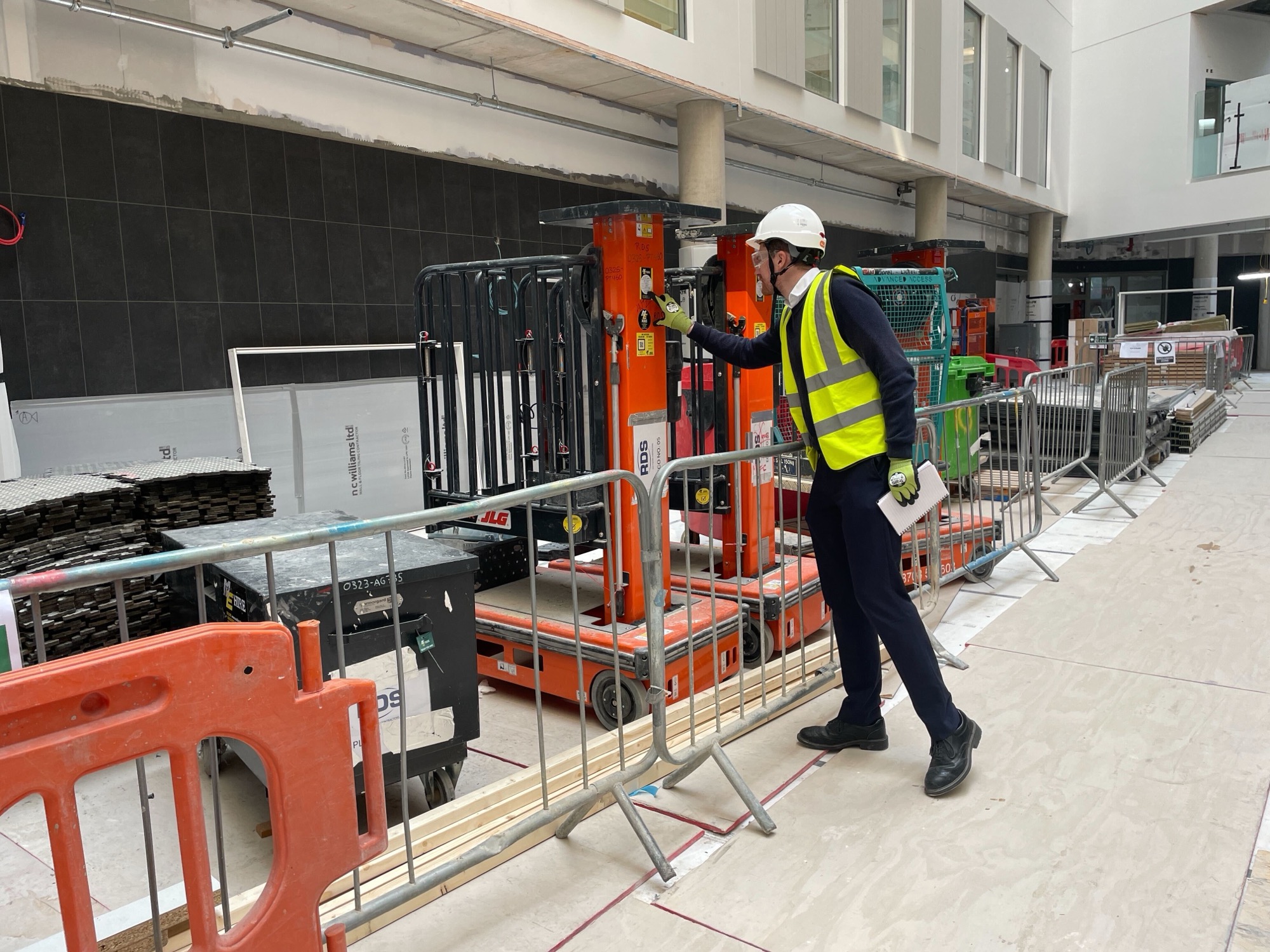


What health and safety actually requires of a UK employer
What is health and safety? In law it is a duty on you as the employer to assess risks, control them and prove it. What that means in practice, and when.
Do I need a competent person if I have no in-house H&S expert?
Yes. Every UK employer must appoint one under Regulation 7. What happens if you do not, and how to appoint an external consultant.
Consultant Q&A: Sector safety challenges and solutions for 2026
Our consultants share clients' top sector safety concerns, plus practical tips to maintain strong standards in a challenging business environment.
Recent prosecutions – plant hire company fined for poor work at height and welfare practices
Hefty penalties can be levied even in the absence of an accident. Get specialist advice to reduce your risk of harm and prevent falls from height.

Why businesses choose
Opus Safety
We've worked across UK industry for years. The numbers show what our clients achieve when compliance becomes a strength, not a burden.


%201.svg)


