%201.svg)
%201.svg)
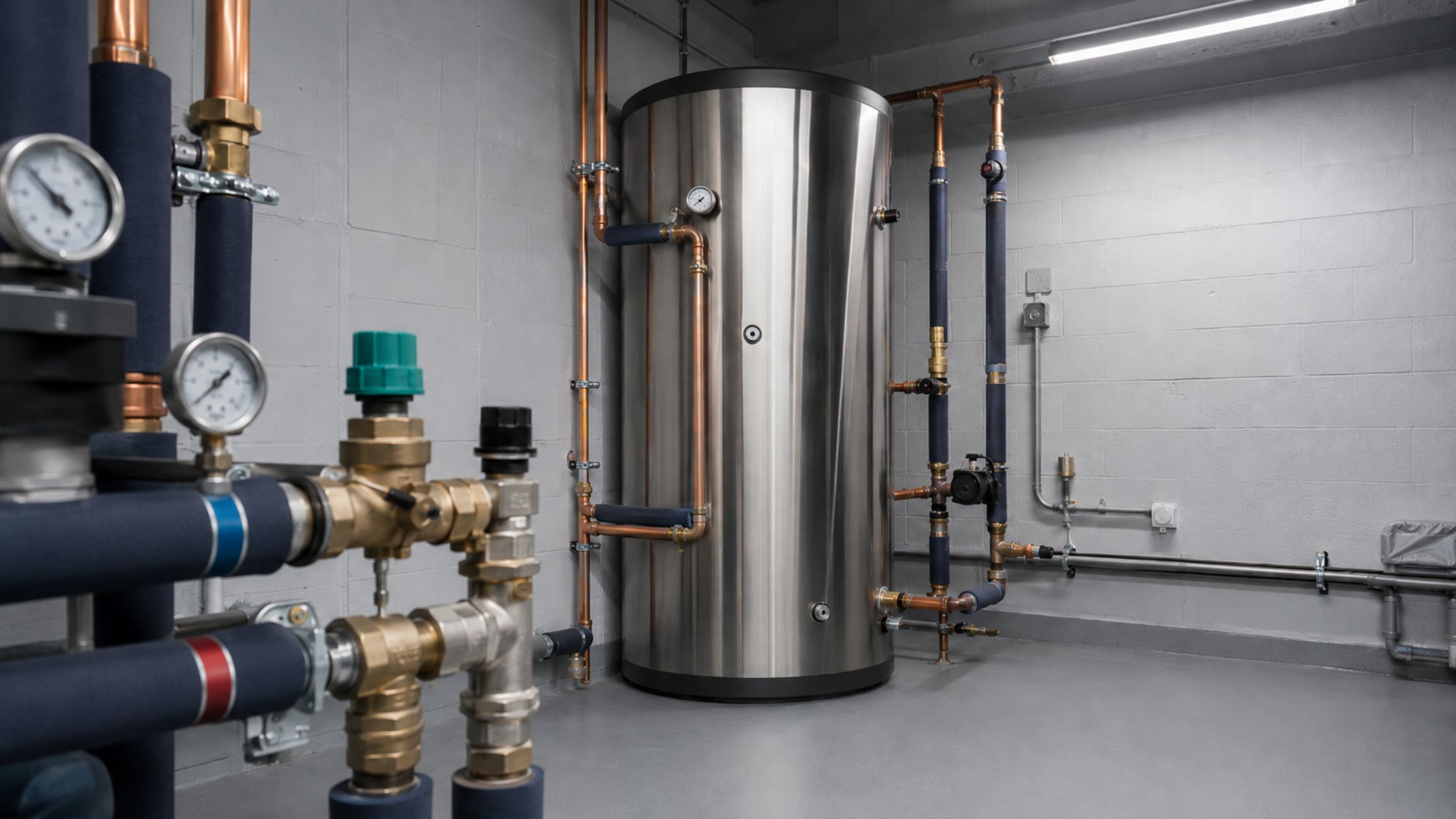
In most UK workplaces, the duty holder (typically the employer, landlord, or person in control of the premises) is legally responsible for managing Legionella risk and must appoint a competent person to assess and control it.
Legionnaires' disease is a potentially fatal form of pneumonia, caused by inhaling small droplets of water contaminated with Legionella bacteria. The bacteria develop in water temperatures between 25-40°C and are commonly found in purpose-built systems and fixtures, such as taps and shower heads, cooling towers, storage tanks, wet or hybrid system air conditioning units, spa pools, and ornamental water features.
According to UKHSA surveillance data (Legionellosis in residents of England and Wales: 2024, gov.uk/government/statistics/legionellosis-in-residents-of-england-and-wales-2024), legionellosis cases in England and Wales fell from 609 in 2023 to 472 in 2024, with a case fatality rate of 2.8%. Despite the decline, HSE's public register of convictions shows that prosecutions and penalties have continued across multiple sectors. Organisations as varied as prisons, hospitals, manufacturing sites, and rail transport providers have faced legal action for failing to control Legionella risks. In one high-profile case, a care home was fined £3 million for causing the death of a resident after neglecting to flush and disinfect pipes following refurbishment work. An appeal ruling later reduced the penalty to £1.5 million.
Anyone on your premises is susceptible to Legionella infection - but more so individuals with diabetes, impaired immune systems, or lung, heart, and kidney disease - so it's essential to implement effective prevention and management measures. This article explains your legal obligations and provides practical measures to maintain clean, compliant water systems.
Who is legally responsible for Legionella control?
The duty holder is legally responsible for Legionella control. This is usually the employer, landlord, or person in control of the premises. Under health and safety law, duty holders (including employers) are required to reduce the risks of Legionella exposure. You must appoint a competent person to assess, manage, and prevent Legionella risks within your water systems. This can be a suitably trained staff member or a qualified health and safety practitioner.
Three roles sit at the heart of Legionella accountability:
The competent person's duties will involve:
- Assessing your risks - conducting a Legionella risk assessment of your water systems.
- Managing bacterial threats - introducing controls to prevent or minimise growth, such as controlling temperature or eliminating stagnant water.
- Maintaining water systems - ensuring water frameworks remain clean, serviced, and in proper condition.
- Monitoring and recording results - performing regular checks and documenting their outcomes.
- Staying current - updating risk assessments and control measures when systems change or following a safety incident.
Legionella risks are governed by a number of health and safety regulations. The Approved Code of Practice (ACOP) L8 outlines your key responsibilities, providing practical guidance on managing and controlling Legionella risks. While ACOP L8 is not strictly a law, non-compliance can be used against you during legal proceedings.
Other relevant legislation includes:
- The Health and Safety at Work etc Act (HSWA) requires employers to take reasonable steps to protect the health, safety, and welfare of their employees and others affected by their work.
- The Management of Health and Safety at Work Regulations (MHSWR) provides a broad framework for controlling workplace health and safety.
- The Control of Substances Hazardous to Health Regulations (COSHH) imposes duties to assess, prevent, or control bacterial risks and take appropriate precautions.
- The Notification of Cooling Towers and Evaporative Condensers Regulations 1992 requires you to tell your council in writing if you have a cooling tower or evaporative condenser under certain conditions.
What does a Legionella risk assessment involve?
A Legionella risk assessment identifies where Legionella bacteria could grow, who may be exposed, and what controls are needed to reduce the risk. Your starting point for compliance is a comprehensive Legionella risk assessment, carried out by a competent person or a trained health and safety consultant.
When working with a trusted safety partner, an experienced Legionella specialist will visit your site to identify and assess sources of risk, producing a practical action plan to minimise and control bacterial growth.
Your Legionella risk assessment should be compliant with the L8 Approved Code of Practice and analyse:
- Water storage and circulation - does your system recirculate water or house any stored water?
- Temperature range - are there any areas within your water system where temperatures remain between 20-45°C?
- Nutrient availability - could the conditions in your system support bacterial growth?
- Vulnerable individuals - are any staff, visitors, or residents considered higher risk due to age, lifestyle factors, or underlying health conditions?
Following your assessment, you'll receive a site-specific remedial action list, ranked by urgency - detailing priorities for the week, the month, the quarter, and beyond. If it's not possible to eradicate Legionella hotspots by upgrading your processes or equipment, a range of targeted controls can be used to limit bacteria growth. These prioritised actions may include:
- Insulation - correctly insulated pipes maintain safe water temperatures, keeping hot water hot and cold water cold. This avoids the at-risk temperature range (20-45°C) where Legionella bacteria thrive and multiply.
- Cleaning programmes - regularly cleaning and disinfecting tanks, pipes, cooling systems, and outlets rids your infrastructure of the sludge, scale, and nutrient build-up that support Legionella bacteria.
- Ultraviolet filters - UV treatments enhance other controls by neutralising Legionella bacteria as water passes through your system.
- Infrastructure modifications - removing redundant pipework (also known as dead legs), shortening pipe runs, and improving system design stops water from pooling and standing, making it harder for Legionella bacteria to reproduce.
The duty holder, or the appointed competent person, should keep these records as evidence of ongoing compliance. Record-keeping is a core element of your Legionella safety strategy, providing proof of compliance and supporting effective ongoing risk management. As part of your written scheme of control, you should track:
- The significant findings of your Legionella risk assessment.
- Written details of your controls and a monitoring scheme, which may include temperature testing, cleaning, sampling, and water hygiene testing.
- Results of your monitoring scheme and recommended solutions for any issues.
Where does Legionella grow? High-risk water systems
Certain man-made water systems pose a higher risk for Legionella bacteria, making effective monitoring and control essential. The table below summarises the main hotspots and key controls:
Practical detail for each:
- Hot and cold water systems - All hot and cold water outlets should be flushed every week. This rolling maintenance routine will prevent water from stagnating and discourage bacterial build-up. Further HSE guidance is available here.
- Air conditioning units - Units that use water sources can produce aerosols, which disperse invisible water droplets (possibly containing Legionella bacteria) into the surrounding environment. Water trapped in condensate trays, humidifier fittings, and evaporative cooling sections can become a breeding ground for bacteria, so regularly check for biofilm, algae, and sludge build-up and frequently flush out lesser-used outlets.
- Commercial spa pools and hot tubs - If not properly maintained, spa pools and hot tubs can pose serious Legionella concerns. They not only produce potentially contaminated aerosols, but also store and recirculate water within the at-risk temperature range of 25-40°C. Key controls include maintaining bromine/chlorine levels (3-5 ppm) and pH (7.0-7.6), daily backwashing, regular shock dosing with a high, controlled dose of disinfectant, continuous filtration, and mandatory quarterly Legionella testing. You can find additional HSE guidance here.
- Cooling towers and evaporative condensers - These specialist pieces of equipment should already have safe systems of work in place. This means that qualified individuals should perform key checks and servicing, and that chemical supplies must be maintained in the correct amounts. Core controls include a comprehensive cooling water treatment programme, regular inspection, cleaning, and disinfection, and routine water monitoring and analysis. Further HSE guidance is available here.
Frequently asked questions about Legionella responsibilities
Below are clear answers to common questions about who is responsible for Legionella risk assessments and control.
Who is responsible for Legionella risk assessment? Under UK law, the duty holder - usually the employer, landlord, or person in control of the premises - is legally responsible. The duty holder must appoint a competent person, either a suitably trained staff member or a qualified consultant, to carry out the assessment. Failing to assess Legionella risks can result in prosecution under the Health and Safety at Work etc Act.
Who can carry out a Legionella risk assessment? A Legionella risk assessment must be carried out by a competent person with sufficient training, knowledge, and experience of water systems. This can be an internal staff member who has completed approved training, but most organisations appoint a qualified external health and safety consultant. The competent person must understand HSG274 guidance and how it applies to your specific water systems.
Do landlords need a Legionella risk assessment? Yes. Under the Health and Safety at Work etc Act, landlords are duty holders for the rental properties they let and must assess and manage Legionella risks for their tenants. For most domestic rental properties the assessment is relatively simple, but it must still be carried out by a competent person, kept up to date, and reviewed when significant changes are made to the water system. Larger or higher-risk premises - such as HMOs or properties with stored water tanks - may require more detailed assessment.
How often should a Legionella risk assessment be reviewed? Risk assessments should be reviewed regularly, and whenever there is reason to believe the original assessment is no longer valid. In practice, that means reviewing at least every two years, but updating immediately following changes to the water system, refurbishment work, a safety incident, a change in the building's use, or the arrival of vulnerable residents or staff.
Can I do my own Legionella risk assessment? You can carry out your own Legionella risk assessment if you are competent to do so - meaning you have appropriate training, knowledge of water systems, and a working understanding of the relevant HSE guidance. For simple low-risk systems this may be possible internally. For complex systems, sites with vulnerable individuals, or where you lack in-house expertise, the safer route is to appoint a qualified external Legionella specialist.
What is ACOP L8 and is it a legal requirement? ACOP L8 is the Approved Code of Practice issued by the Health and Safety Executive, titled "Legionnaires' disease: The control of legionella bacteria in water systems." It is not itself a law, but it carries special legal status: if you are prosecuted for a Legionella-related breach of health and safety law, any failure to follow ACOP L8 can be used against you in court as evidence that you have not met your statutory duty. In practice, compliance is the simplest way for duty holders to demonstrate that they have done what is reasonably practicable.
Trust your Legionella strategy to a safety specialist
The Opus Safety team helps you make sense of Legionella, with L8-compliant risk assessments, tailored action plans, and ongoing monitoring and follow-up support.
To discuss compliance solutions for your business or to book a bespoke Legionella risk assessment, get in touch on 0330 043 4015 or email hello@opus-safety.co.uk.

Last updated
May 18, 2026
Opus Safety
Health & safety insights
Guidance, updates and practical advice for your sector.



COSHH assessment: what it is and how to do one properly
A COSHH assessment records the health risk from each hazardous substance you use, and the controls for it. What Regulation 6 requires, and the six steps.
Who can act as a competent person for a small business?
Small businesses can appoint the owner, a trained employee or an external consultant. How to choose, and what the law requires.
What Law Regulates Workplace Health and Safety? DSEAR Explained
What law regulates workplace health and safety? A clear guide to the HSWA, DSEAR and whether your business needs a DSEAR risk assessment.
Annual HSE statistics explained: Key takeaways and priorities for 2026
Get headline insights from the HSE’s health and safety at work figures for 2024/25 – alongside practical guidance for your 2026 compliance programme.

Why businesses choose
Opus Safety
We've worked across UK industry for years. The numbers show what our clients achieve when compliance becomes a strength, not a burden.


%201.svg)


