%201.svg)
%201.svg)

Reviewed by Ian Dunsford, CertISOH. Last reviewed: 23 April 2026.
Manual handling covers any activity that involves lifting, lowering, pushing, pulling, carrying or holding a load by hand or bodily force. It also includes certain repetitive tasks (e.g. small parts assembly, supermarket scanning, etc.) UK employers have a legal duty to avoid, assess and reduce manual handling risks so far as is reasonably practicable.
Manual handling is a workplace-wide risk
Manual handling risks exist in every workplace – from schools to shops to construction sites. Most jobs involve tasks like lifting, lowering, pushing, pulling, carrying, and holding. However, these everyday manual handling tasks are linked to 27% of the UK’s job-related injuries and long-term musculoskeletal disorders (MSDs) that cost 7.1 million working days each year. (Health and Safety Executive, 2025)
What MSDs are and what causes them
MSDs typically affect the back, joints, and limbs. Ranging from carpal tunnel syndrome to tendonitis and chronic back or knee pain. MSDs can be difficult to treat because they develop gradually, particularly when workers ignore early symptoms because they’re ‘just part of the job’. MSDs are typically caused by improper manual handling techniques, awkward postures, and repetitive actions, and can be made worse by poor working conditions and task organisation, such as a cold warehouse or a long shift with few breaks.
Why it matters for employers
With employees losing an average of 14 days to MSD issues annually, it pays to recognise the risks within your sector and site. Positively, manual handling hazards – and their associated health and productivity issues – are easily managed with straightforward safety solutions.
Understanding your legal requirements
UK employers have a legal duty of care to avoid, assess and reduce manual handling risks so far as is reasonably practicable. These legal responsibilities sit under the Manual Handling Operations Regulations 1992 (MHOR) and the Health and Safety at Work etc. Act 1974.
First, it’s important to be aware of the laws associated with manual handling. As an employer, it’s your responsibility to actively reduce manual handling risks within your business to the ‘lowest level reasonably practicable’. This means pinpointing hazards and taking practical, feasible steps to control them.
The Manual Handling Operations Regulations (MHOR) establish your legal duty to avoid, assess, and reduce the risk of injury from manual handling.
- For businesses, they set out key requirements including risk assessments, staff training, task modification, and equipment provision.
- For employees, they outline essential responsibilities like following safe systems of work, reporting concerns, and taking reasonable care on the job.
MHOR works hand in hand with other health and safety legislation, including the Health and Safety at Work etc. Act 1974 (HSWA), the Provision and Use of Work Equipment Regulations 1998 (PUWER), and the Lifting Operations and Lifting Equipment Regulations 1998 (LOLER).
Reducing manual handling risks
MHOR’s risk-management framework has three steps: avoid manual handling where possible, assess the risk when it is unavoidable, then reduce it with practical controls such as ergonomic equipment, training and load weight limits.
A vital part of manual handling safety is avoiding hazardous activities altogether – either through redesigning tasks or using equipment to bear the load. Your site layout and work systems play a critical part, so aim to ‘build in’ safety from design stage, considering how trolleys, pallet trucks, hoists, and other mechanical aids can minimise the need for manual handling.
As a starting point, MHOR features the three-step ‘Avoid, Assess, Reduce’ methodology – a specific framework for managing manual handling risks.
Avoid
Before moving any load by hand, aim to eliminate the need for manual handling by asking some key questions. For example:
- Does the load genuinely need to be moved?
- Can it be transported without hands-on contact?
- Can automated or mechanical aids be used instead?
Assess
If manual handling can’t be avoided, carry out a comprehensive risk assessment of the task. Consider health and safety concerns at every stage of the job, including:
- The task: Has it been clearly defined and demonstrated? What kind of physical movement is involved – twisting, bending, reaching overhead?
- The load: Is it heavy, cumbersome, or awkward to move?
- The working environment: Does the route feature trip hazards, blind spots, or confined spaces?
- Individual capacity: Are your workers fit to move the load? Do they have any health and/or physical limitations? Are they showing signs of overexertion?
- Job organisation: How could you share or stagger the effort?
- Pace: Do you have enough time to complete the task safely?
- Frequency: Is this a one-off job or repetitive activity? How often does it need to happen?
- Duration: Could the task cause cumulative health issues over time?
Together, these factors form the TILE (or TILEO) assessment used by many UK health and safety practitioners - task, individual, load, and environment (with “Other” factors for TILEO).
Reduce and control
When manual handling is the only option, use proactive safety measures to avoid immediate injuries and protect your team’s long-term health. Ensure your risk assessment drives safe working methods by including these essential questions:
- Can manual handling aids lighten the load? If so, do workers know how to use them?
- Can we break the load into smaller quantities?
- Can we create a safer environment by clearing routes, making space, improving lighting, and changing the temperature?
- How can we reduce risks in our working patterns? Think job rotation, regular breaks, and adjusted shift lengths.
- Do we need PPE in addition to all other controls? Consider safety boots, head protection, and gloves once all other measures are in place.
- Do your staff have the right skills and knowledge? Your team should receive training on manual handling risks, the use of lifting aids, correct handling techniques, safe systems of work (specific to your site), and what to do if conditions change.
Advanced ways to improve manual handling safety
Once the basics of MHOR are in place, further ergonomic controls - task-led training, risk filters, and safety-focused tech - help prevent workplace injuries, MSDs, and repetitive strain.
With the fundamentals of safe manual handling in place, you’re free to build on best practice with next-level compliance measures. As part of a broader safety management programme, these proactive efforts help to prevent workplace injuries and MSDs and protect your business against enforcement action, financial penalties, and reputational damage.
- Task-led training. Do your employees understand how manual handling safety applies to their specific role? While every worker needs basic manual handling awareness, a task-focused approach provides the particular skills they need to stay safe in their job. A trusted training provider can develop customised courses highlighting the unique risks of your workplace and processes – helping staff visualise daily safety controls in action. The results are higher safety standards, stronger engagement with compliance protocols, and earlier detection of MSDs and manual handling-related health concerns.
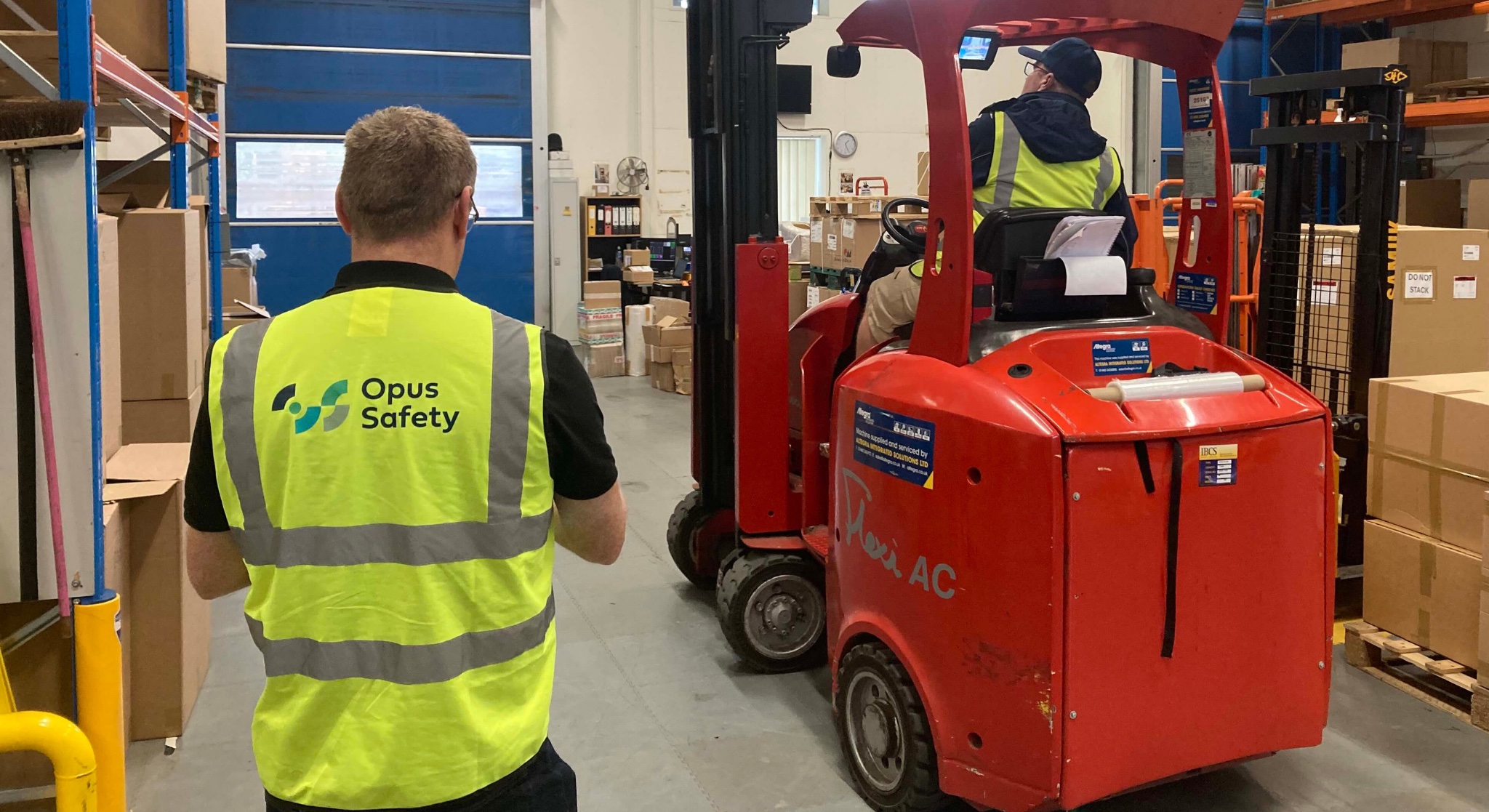
- Risk filters. Risk filters help you evaluate the risk levels of individual tasks. They’re simple first-stage screening tools to determine if you need a more detailed investigation. While they don’t replace your full risk assessment, risk filters help you prioritise hazards by spotting known manual handling concerns. They’re typically carried out by trained employees or health and safety professionals and track an activity in real time using a structured checklist. For example, watching a worker move stock from your storage area to the shop floor could highlight injury triggers like heavy loads, repetitive lifting, and uneven flooring.
- Safety-focused tech. Beyond more obvious tech-led solutions like conveyors, mechanical lifts, and automated handling systems, wearable health and safety tools provide an integrated layer of protection for your workers. Worn directly on the body, solutions like smart belts and shoulder sensors track movement, detect issues, and alert workers to ‘red flag’ activities – helping to correct poor manual handling practices before they cause health problems. They also gather data to help you monitor and modify high-risk tasks.
Manual handling FAQs
What is manual handling?
Manual handling is any activity that involves lifting, lowering, pushing, pulling, carrying or holding a load by hand or bodily force. It covers everything from moving boxes in a warehouse to supporting a patient in a care setting. In the UK, manual handling is regulated under the Manual Handling Operations Regulations 1992 (MHOR).
What are an employer’s legal responsibilities for manual handling?
UK employers have a duty of care to avoid, assess and reduce manual handling risks so far as is reasonably practicable. These legal responsibilities sit under MHOR, the Health and Safety at Work etc. Act 1974 (HSWA), and related work regulations including PUWER and LOLER. Employers are expected to provide health and safety training, conduct risk assessments, and supply appropriate lifting equipment.
What does MHOR require?
MHOR requires employers to follow a three-step framework: avoid manual handling where practical, assess the risks of any unavoidable tasks using the TILE approach (task, individual, load, environment), and reduce those risks through controls such as mechanical aids, job rotation, and training. Employees are expected to follow safe systems of work and take reasonable care on the job.
How can employers reduce manual handling risk?
Employers can reduce manual handling risk by redesigning tasks to eliminate hazardous lifts, using mechanical aids such as trolleys and hoists, training staff in safe techniques, and enforcing load weight limits. Advanced controls include task-led health and safety training, risk filters, and wearable safety tech that monitors posture and repetitive strain in real time.
Cost-effective ways to control manual handling hazards
At Opus, we work with businesses across the UK to reduce manual handling risks, provide tailored employee training, and boost overall compliance performance.
For practical guidance on manual handling risk assessments, bespoke risk reduction measures, and staff-focused training solutions, speak to the Opus team at hello@opus-safety.co.uk or 0330 043 4015.

Last updated
April 29, 2026
Opus Safety
Health & safety insights
Guidance, updates and practical advice for your sector.








Why Was the Health and Safety at Work Act Introduced?
Why was the Health and Safety at Work Act introduced? The disasters, the Robens Report and the duties the HSWA still places on UK employers today.
What Law Regulates Workplace Health and Safety? DSEAR Explained
What law regulates workplace health and safety? A clear guide to the HSWA, DSEAR and whether your business needs a DSEAR risk assessment.
Hot weather health and safety: six essential questions
Six essential questions to keep your team safe in hot weather – heat stress, hydration, PPE, first aid and driving – with practical steps for summer working.
HSE prosecutions: Workplace fatalities and seven-figure fines
Four recent HSE prosecutions – from a £1m refinery gas leak to fatal and life-changing injuries – and the simple controls that would have prevented them.
Maintain momentum with a mid-year health and safety check
Use the mid-year point to take stock of your health and safety: risk assessments, training, PPM and agency staff. A practical checklist to keep momentum through summer.
Why Health and Safety Matters: When to Hire a Consultant
Hire a health and safety consultant when you grow, your team is stretched, risks get complex, or you receive an enforcement notice - whatever your size.
On the Radar: Local Authority Enforcement Priorities (2026–2029)
The HSE's LAC 67/2 strategy sets council inspection priorities for 2026-2029, shifting towards health risks. What local-authority-regulated businesses should check now.
HSE prosecutions: The cost of poor compliance
Four recent HSE prosecutions - occupational asthma, severed fingers, a lost leg and a fall from height - and the basic controls that would have prevented each.
The RIDDOR public consultation: What it means for you
The HSE's 2026 RIDDOR consultation proposes five reforms to incident reporting. What the changes mean for duty holders, and what to do before it closes on 30 June.
How to Report Health and Safety Incidents Involving Employees Under RIDDOR
How to Report Health and Safety Concerns under RIDDOR, including reportable incidents, key deadlines and compliant recordkeeping.

Why businesses choose
Opus Safety
We've worked across UK industry for years. The numbers show what our clients achieve when compliance becomes a strength, not a burden.


%201.svg)


