


A safe system of work (SSoW) is a planned way of doing a job safely: the steps in order, with the precautions, people and equipment each step needs, built from your risk assessment. Section 2(2)(a) of the Health and Safety at Work etc. Act 1974 requires employers to provide and maintain systems of work that are, so far as is reasonably practicable, safe and without risks to health. A permit to work is the formal, written form of a safe system of work for high-risk, non-routine jobs such as hot work, tank entry and maintenance that needs plant isolated.
A safe system of work (SSoW) is a planned way of doing a job safely: the steps in order, with the precautions, people and equipment each step needs, built from your risk assessment. Section 2(2)(a) of the Health and Safety at Work etc. Act 1974 requires employers to provide and maintain systems of work that are, so far as is reasonably practicable, safe and without risks to health. A permit to work is the formal, written form of a safe system of work for high-risk, non-routine jobs such as hot work, tank entry and maintenance that needs plant isolated.
The Health and Safety at Work etc. Act 1974 and the regulations in this guide apply in England, Wales and Scotland. Northern Ireland has its own equivalent legislation.
What is a safe system of work?
A safe system of work turns the controls your risk assessment identified into a method people follow for a particular job. For a daily task that can be a short, briefed routine. For a welder working inside a tank it is a signed permit, a gas test and a rescue plan.
The duty sits in section 2 of the Health and Safety at Work etc. Act 1974, whose subsection (2)(a) includes "the provision and maintenance of plant and systems of work" in the employer's general duty to employees. The Act leaves the term undefined. For a particular job, a safe system of work settles six things:
| Element | What it settles |
|---|---|
| Task | What is being done, where, and where the job stops |
| Hazards and controls | From the risk assessment, removing any hazard you can first |
| Sequence | The steps in order, from making the area safe to returning it to use |
| People | Who does the work, who supervises, and the competence each role needs |
| Equipment | What is needed, including protective equipment |
| Emergencies | What happens if it goes wrong, including rescue |
How formal it needs to be depends on the risk. In HSE's words, "Instructions or procedures are adequate for most work activities, but some require extra care." For confined spaces, HSE's Approved Code of Practice, L101, says the system should be in writing, and "will only ever be as good as its implementation".
What the law requires
Section 3(1) of the Health and Safety at Work etc. Act 1974 extends the employer's duty to people outside its employment who may be affected, including contractors on your site.
Regulation 3 of the Management of Health and Safety at Work Regulations 1999 requires a suitable and sufficient risk assessment to identify the measures you need. Specific regulations add requirements for particular work:
| Work | Regulation |
|---|---|
| Entering a confined space | Regulation 4 of the Confined Spaces Regulations 1997: no entry unless it is not reasonably practicable to achieve the purpose without it, then, so far as is reasonably practicable, only under a system of work that, in relation to any relevant specified risks, renders the work safe and without risks to health. Regulation 5 of the Confined Spaces Regulations 1997: suitable and sufficient rescue arrangements prepared first |
| Maintaining machinery | Regulation 19 of the Provision and Use of Work Equipment Regulations 1998: where appropriate, suitable means to isolate equipment from all its sources of energy, and measures so reconnecting the energy exposes no one using the equipment to risk |
| Dangerous substances | Schedule 1 to the Dangerous Substances and Explosive Atmospheres Regulations 2002: written instructions, and permits to work for hazardous places or activities. Regulation 6(8) of the Dangerous Substances and Explosive Atmospheres Regulations 2002 requires these measures so far as is reasonably practicable and consistent with the risk assessment |
| Vehicles in a yard | Regulation 17 of the Workplace (Health, Safety and Welfare) Regulations 1992: pedestrians and vehicles able to circulate safely, with sufficient separation on shared routes |
How do you write a safe system of work?
- Start from the risk assessment for the task.
- Remove what you can. Work from outside the tank, schedule maintenance for planned downtime, or cut cold where heat would create a fire risk.
- Walk through the job with the people who do it. HSE's permit guidance, HSG250, warns that systems imposed without consultation make procedural violations more likely.
- Write the steps in order, in short sentences that say who does what and when, and who supervises.
- Brief it, then check the work matches the paper.
- Review it when the job or the equipment changes, and retrain the people who use it. Regulation 13 of the Management of Health and Safety at Work Regulations 1999 requires adequate training when employees face new or increased risks because a system of work is introduced or changed.
Risk assessment, method statement and permit to work
| Document | What it does | Required? |
|---|---|---|
| Risk assessment | Identifies the hazards and the measures needed | Yes, under regulation 3 of the 1999 Regulations, with significant findings recorded if you employ five or more |
| Safe system of work | Puts those measures into practice as a method | Yes, under section 2(2)(a) of the 1974 Act, so far as is reasonably practicable |
| Method statement | One way to write a safe system of work down | Not by that name; see our guide to RAMS and method statements |
| Permit to work | Authorises named people to do specific work at a set place and time, and records the checks | Where the risk assessment calls for one; see below |
HSE says a permit can help bring the risk assessment "to life" at the sharp end, and is no replacement for one.
Safe system of work examples from five sites
Vehicle movements in a builders merchant's yard
Routine work, with no permit. The system keeps people and vehicles apart: a one-way route, marked walkways, a fixed place for drivers to wait during loading, and reversing kept to marked areas. HSE's workplace transport guidance, HSG136, says many deaths and serious injuries involving vehicles at work happen during reversing, and that a banksman should be used only when all other options have been exhausted. Where customers walk the yard, the system depends on staff actively directing vehicles and people, which takes discipline to introduce and keep going.
Repairing damaged pallet racking in a warehouse
A repair brings a contractor, work at height and trucks into one aisle. The system starts with reporting. HSE's warehousing guide, HSG76, asks for damage to be reported immediately to the person responsible for racking safety, and for red risk damage to be offloaded and isolated from use until repaired. Then offload and cordon the bay, keep trucks out of the aisle, and replace damaged components on the manufacturer's advice. Two groups co-ordinating, with work at height, is the kind of job HSG250 lists as suited to a permit.
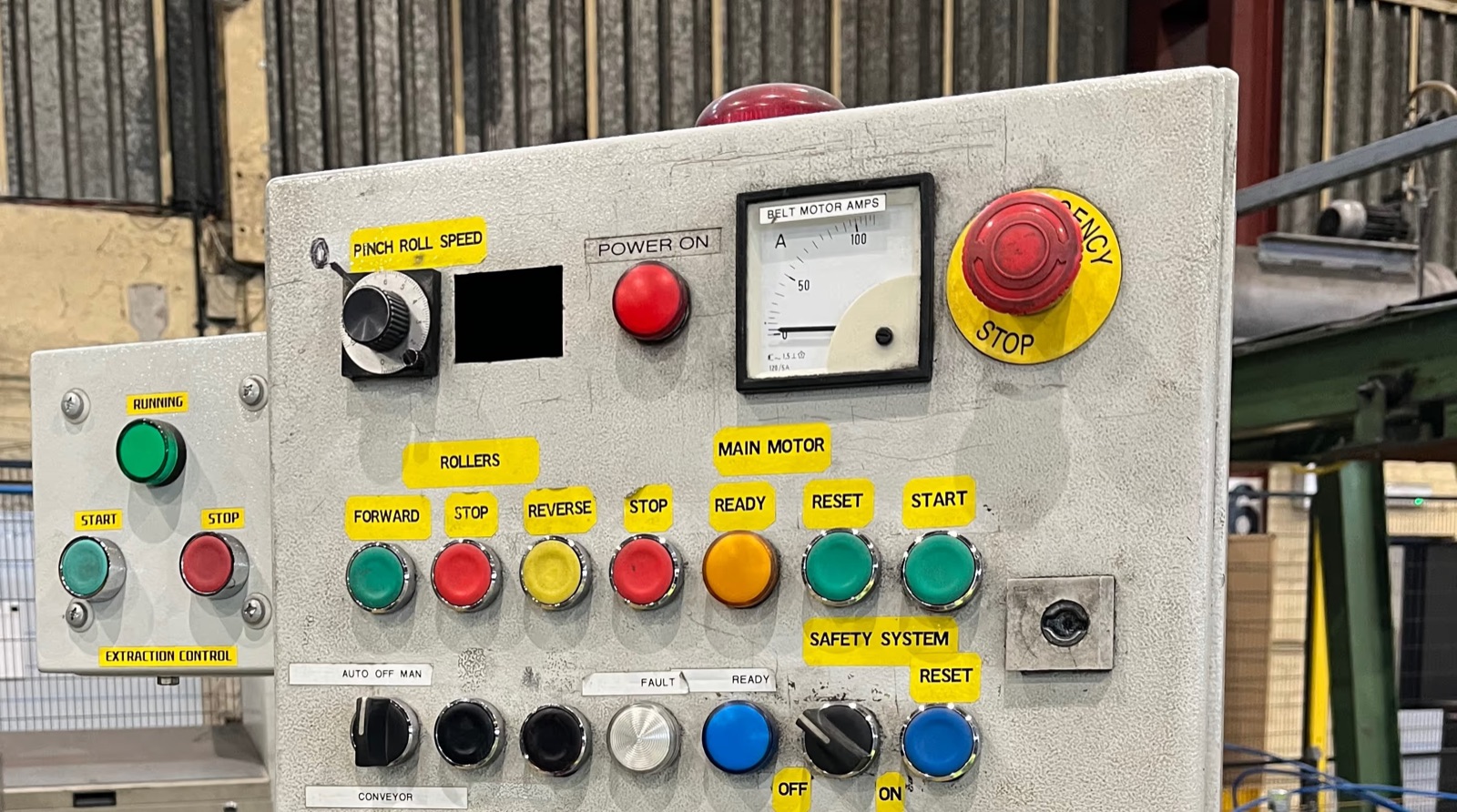
Isolating a machine for maintenance or to clear a jam
For a metal stockholder's bandsaw or a factory conveyor, HSE's maintenance guidance sets out the core: make sure moving plant has stopped, isolate electrical and other power supplies, lock off where the power could be switched back on, release stored energy such as hydraulic pressure, and support parts that could fall. Where several people work on one machine, HSE's electrical guidance, HSG85, describes a multiple locking hasp, on which everyone fits their own lock and keeps the key.
HSE describes a worker who suffered crush injuries when a hoist started up during maintenance. The power supply had not been isolated, because workers lacked adequate training in safe isolation, and the interlocked gates could be bypassed. For a single machine, a written isolation routine with personal locks can be the whole system. Large, complex machinery may need an isolation certificate alongside a permit. Our guide to PUWER covers the wider duties.
Hot work in a fabrication shop or on a forecourt
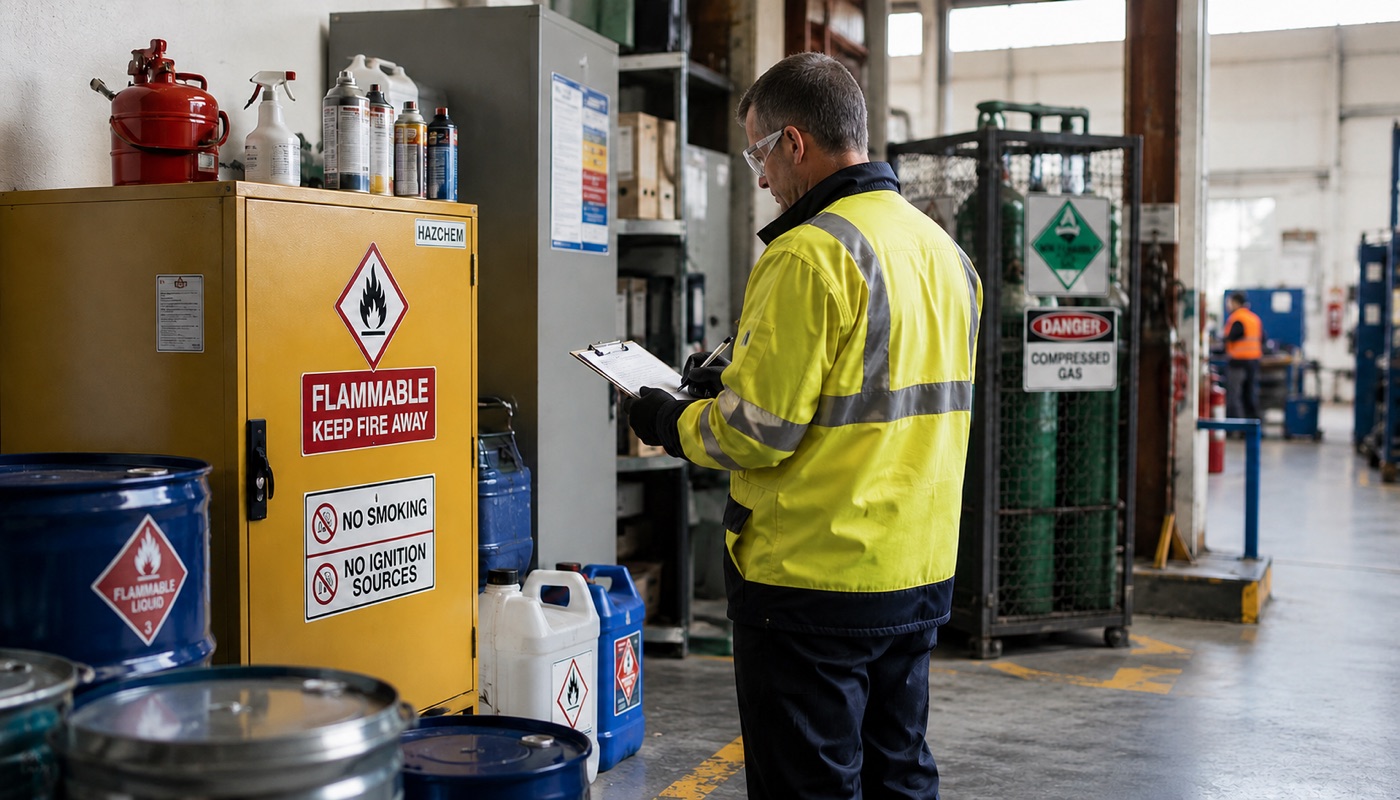
HSG250 says hot work permits are normally used for welding, flame cutting and spark-producing tools where there may be a risk of fire or explosion. Clear combustible material first. Where the work cannot be done in a safe area, or combustibles cannot be removed, HSE's welding guidance calls for a fire watch during the work and for at least 30 minutes after, which may need to extend to 60 minutes where an ignition may be difficult to detect or slow to develop. Clean and purge any drum that may hold flammable residues before heating it, or cut it cold. On a petrol forecourt, Schedule 1 to the Dangerous Substances and Explosive Atmospheres Regulations 2002 lists permits for work in hazardous places, issued before work begins by a person responsible for that function. The site's DSEAR risk assessment is where those hazards are assessed.
Entering a tank or pit
A tank, pit or silo is a confined space under regulation 1 of the Confined Spaces Regulations 1997 when its enclosed nature creates a reasonably foreseeable specified risk, such as losing consciousness from gas, fume or lack of oxygen. HSE warns that welding gases such as argon can pool in vehicle inspection pits. First ask whether anyone needs to go in. If they do, L101's list of what to consider includes atmosphere testing, ventilation, isolation from flowing materials and machinery, communications, and rescue. It says a permit is usually required where there is a reasonably foreseeable risk of serious injury, as an extension of the safe system of work. Our confined space awareness course is for staff and supervisors on these sites; entry needs further training.
When do you need a permit to work?
HSE's guidance on permit to work systems describes a permit as "a more formal system stating exactly what work is to be done and when, and which parts are safe". Its examples are hot work such as welding, vessel entry, cutting into pipework carrying hazardous substances, and work needing electrical or mechanical isolation. HSG250 says permits are normally most appropriate to:
- non-production work such as maintenance, repair, inspection, testing and cleaning
- non-routine operations
- jobs where two or more individuals or groups need to co-ordinate to complete the job safely
- jobs where work and responsibility pass from one group to another
It also warns that applying permits to every activity can weaken their effectiveness.
What goes on a permit to work?
HSG250 lists what a permit form should contain:
- title, reference number, and cross-references to related permits or isolation certificates
- job location and plant identification
- the work and its limits
- hazards, including residual hazards and those the work creates
- precautions, signed by whoever carried them out, and emergency actions
- protective equipment
- dated and timed signatures for issue, acceptance, shift handover, hand-back and cancellation
The permit cycle
- Isolate and prepare. Whoever makes the isolations signs that the precautions are in place.
- Issue. The issuer checks the site and signs with the date, time and duration. Nobody should issue a permit to themselves, and where the potential for harm is particularly high a second person should authorise it first.
- Accept. The person in charge of the work signs that they understand the hazards and precautions and have briefed everyone working under the permit.
- Work, with a copy displayed at the job. A suspended permit stays live until cancelled, so isolations may still be in place.
- Hand back. The person in charge signs the work complete; the issuer confirms the plant is safe, isolations removed, and ready for testing.
- Cancel, once the plant has been tested and recommissioned.
Where permit systems fail
HSE is clear that "the issue of a permit does not, by itself, make a job safe". HSG250's case studies show the gaps:
| What happened | The check that catches it |
|---|---|
| Permits covered two preparatory jobs and none covered the job itself. Five people died | The permit describes the actual task |
| A permit said a line had been cleared; its pressure had not been vented | Whoever did each isolation signs for it, and the issuer checks the site before issue |
| One fitter handed the permit back while another was still working on the open pipe | A signed hand-back by the person in charge of the work |
| A vessel entry permit system had fallen into disuse | Monitoring by supervisors and regular audit |
Training for people who issue and work under permits
Section 2(2)(c) of the Health and Safety at Work etc. Act 1974 requires the information, instruction, training and supervision necessary for health and safety, so far as is reasonably practicable. Regulation 9 of the Provision and Use of Work Equipment Regulations 1998 covers employees who supervise or manage the use of work equipment. HSG250 says permit signatories should have specific training and authorisation from the company, and describes the common practice of having trainee issuers' permits countersigned by experienced issuers for a period.
Our one-day permit to work course is for supervisors, managers and permit issuers. We run it at your premises for up to eight delegates, using your own permit forms and the hot work, confined space, working at height and isolation jobs you control. Authorising someone to issue permits stays a decision under your own procedures.
Frequently asked questions
What does SSoW stand for? Safe system of work: the planned, step-by-step method for doing a job safely.
Is a safe system of work a legal requirement? Yes. In England, Wales and Scotland, section 2(2)(a) of the Health and Safety at Work etc. Act 1974 requires employers to provide and maintain safe systems of work, so far as is reasonably practicable.
What is the difference between a safe system of work and a risk assessment? The risk assessment decides what measures you need; the safe system of work is the method that puts them into practice.
What are some safe system of work examples? Locking off a machine before clearing a jam, a one-way yard route, cordoning a damaged racking bay, a hot work permit with a fire watch, and a confined space entry procedure.
When is a permit to work required? When your risk assessment shows a high-risk, non-routine job needs formal authorisation, pre-work checks and a controlled hand-back. HSE's examples include hot work, vessel entry and work needing isolation.
Is a permit to work a legal requirement? For some work. Where dangerous substances such as flammable liquids and gases or combustible dusts are present, Schedule 1 to the Dangerous Substances and Explosive Atmospheres Regulations 2002 lists permits for hazardous places and activities, required so far as is reasonably practicable and consistent with the risk assessment. For confined spaces, L101 says a permit is usually required where there is a reasonably foreseeable risk of serious injury. Elsewhere, your risk assessment decides.
Who can issue a permit to work? Someone your organisation has trained and authorised, who knows the hazards of the plant concerned. HSG250 says nobody should issue a permit to themselves.
Where to start
List your high-risk and non-routine jobs, check each has a written system, and find out when someone last watched a permit job from issue to hand-back.

Last updated
November 2, 2026
Opus Safety
Health & safety insights
Guidance, updates and practical advice for your sector.




Confined space regulations: what a confined space is and what the law requires
The confined space regulations require you to avoid entry, use a safe system of work and plan rescue first. What counts as a confined space, with examples.
Electricity at Work Regulations 1989: PAT testing and live work
The Electricity at Work Regulations 1989 require systems to be maintained to prevent danger. They set no PAT testing interval; HSE suggests where to start.
What is a method statement? RAMS explained, and what a good one contains
A method statement sets out how a job will be done safely. What RAMS means, when the law expects a written plan and what a good one contains.
PUWER and machinery guarding: the duty holder's guide
PUWER is the Provision and Use of Work Equipment Regulations 1998. Who the duty holder is, what regulation 11 requires for guarding, and the records to keep.
Planning new or non-routine work: When the job changes, so do the risks
When work changes location, equipment or method, the risks change too. How to spot the triggers for reassessment and plan non-routine work safely.
What Law Regulates Workplace Health and Safety? DSEAR Explained
What law regulates workplace health and safety? A clear guide to the HSWA, DSEAR and whether your business needs a DSEAR risk assessment.
Working with contractors: Selection, safeguarding, and management
Bringing on external expertise requires a different level of safety management. Maximise productivity while reducing contractor-related risks.
Forklift truck safety: Your back-to-basics guide
A rise in lift truck accidents means courts are cracking down on common compliance issues. Get a refresher on the fundamentals of forklift safety.

Why businesses choose
Opus Safety
We've worked across UK industry for years. The numbers show what our clients achieve when compliance becomes a strength, not a burden.


