

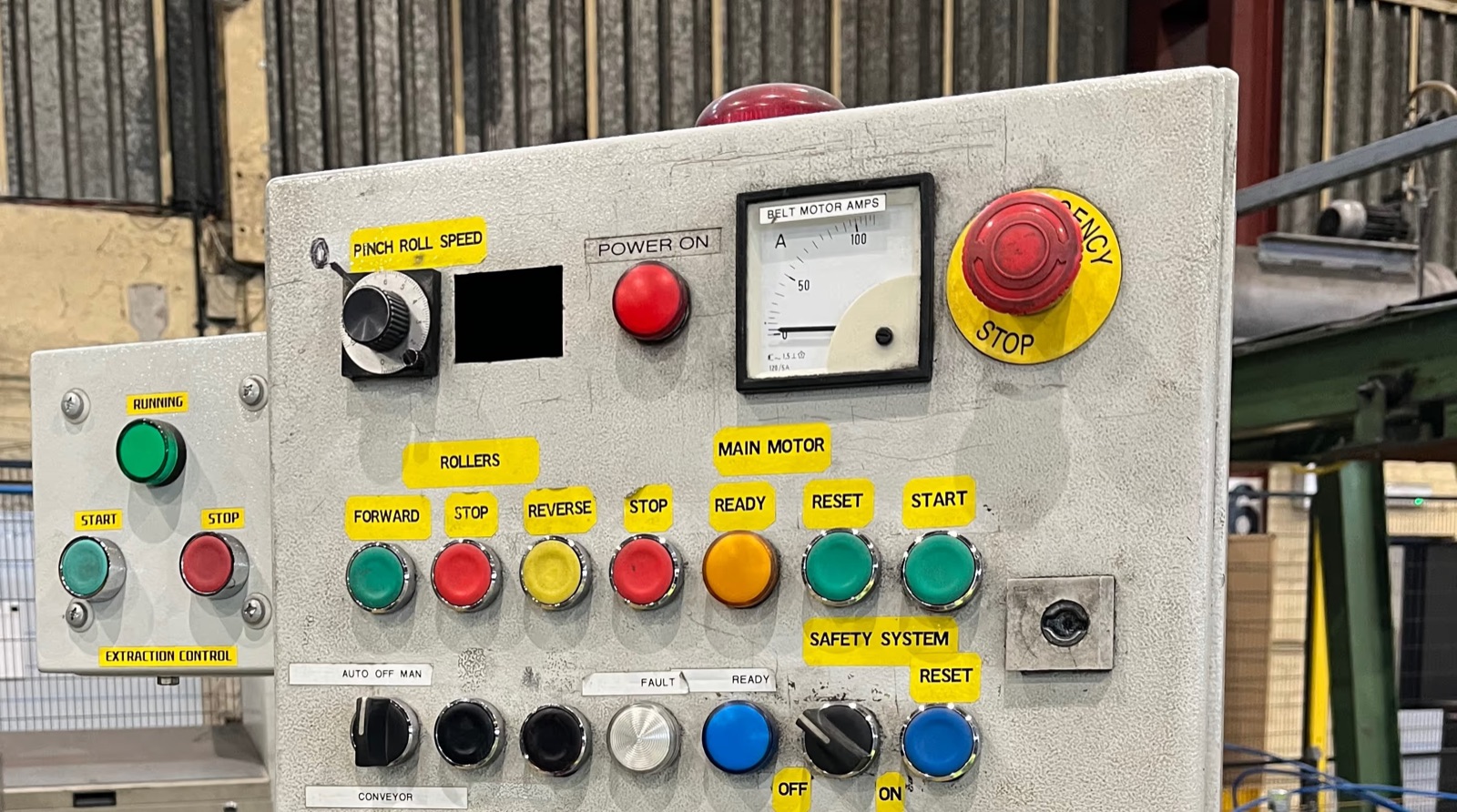
The Electricity at Work Regulations 1989 control electrical risk at work in Great Britain. Regulation 4 of the Electricity at Work Regulations 1989 requires electrical systems to be built and maintained, and any work on, with or near them to be carried out, so as to prevent danger so far as is reasonably practicable.
The Electricity at Work Regulations 1989 control electrical risk at work in Great Britain. Regulation 4 of the Electricity at Work Regulations 1989 requires electrical systems to be built and maintained, and any work on, with or near them to be carried out, so as to prevent danger so far as is reasonably practicable. They set no PAT testing interval. HSE's guidance says the regulations "do not specify what needs to be done, by whom or how frequently", so the maintenance regime is yours to set from the risk. Northern Ireland has its own equivalent, the Electricity at Work Regulations (Northern Ireland), SR 1991 No. 13.
What do the Electricity at Work Regulations 1989 require?
They reach every electrical system at work and everything connected to it. Regulation 2 of the Electricity at Work Regulations 1989 defines a system as equipment connected, or able to be connected, to a common source of electrical energy, together with that source. So the duty runs from the incoming supply and the distribution boards to the kettle in the canteen and the extension lead at goods-in. Injury, in the same regulation, includes death or personal injury from a fire or explosion started by electrical energy, so a fire from an overloaded socket is inside the regulations as firmly as a shock.
Regulation 3 of the Electricity at Work Regulations 1989 puts the duties on employers and the self-employed for matters within their control. Employees must co-operate with their employer and comply on matters within their own control, so a maintenance electrician on your payroll holds duties alongside yours.
The main provisions, numbered as in the Electricity at Work Regulations 1989:
| Regulation | What it requires | How strict |
|---|---|---|
| 4(1) | Systems built to prevent danger | So far as is reasonably practicable |
| 4(2) | Systems maintained, as necessary, to prevent danger | So far as is reasonably practicable |
| 4(3) | Work activities, including use, operation and maintenance of a system and work near one, carried out without giving rise to danger | So far as is reasonably practicable |
| 4(4) | Protective equipment suitable for its use, maintained and properly used | Absolute, with the due diligence defence |
| 12 | Suitable means to cut off the supply and isolate equipment, where necessary to prevent danger | Absolute, with the due diligence defence |
| 13 | Adequate precautions to stop equipment made dead from becoming charged during the work | Absolute, with the due diligence defence |
| 14 | No work on or so near a live conductor that danger may arise, unless three conditions are all met | Absolute, with the due diligence defence |
| 16 | Technical knowledge or experience for the work, or appropriate supervision | Absolute, with the due diligence defence |
A qualified duty lets you balance the risk against the money, time and trouble of controlling it. Where there is no qualifier the duty is absolute, and regulation 29 of the Electricity at Work Regulations 1989 gives a defence: that you took all reasonable steps and exercised all due diligence to avoid the offence. HSE's guidance on the regulations, HSR25, adds that where the risk is very often death and the precautions are simple and cheap, insulation being its example, even the qualified duty "approaches that of an absolute duty".
Is PAT testing a legal requirement?
No. HSE's PAT guidance answers it directly: "The law simply requires an employer to ensure that their electrical equipment is maintained in order to prevent danger. It does not say how this should be done or how often."
That duty is regulation 4(2) of the Electricity at Work Regulations 1989, and HSE's guidance confirms it covers fixed and portable equipment alike. Portable appliance testing is one way to meet it. HSE's guidance HSG107 builds a maintenance plan in three layers:
- a check by the user before use, looking at the lead, the plug and the casing for damage or signs of overheating;
- a formal visual inspection by a competent person, which can include taking the plug cover off to check the fuse and the wiring;
- where necessary, a combined inspection and test, also known as a portable appliance test (PAT), by someone electrically competent.
HSE says most electrical safety defects can be found by visual examination, but "some types of defect can only be found by testing". HSE's leaflet INDG236 recommends a test on earthed (Class I) equipment "to ensure the earth connection is sound". Double insulated (Class II) equipment "will not need a portable appliance test", though user checks and visual inspections still apply, because an intact casing is one of its main safety features.
Labels and test records are optional in law. Both help you show that a scheme exists, and records show where faults keep appearing. If you do label equipment, HSG107 says the label should carry no next test date, because the person doing the test should not decide when the next one is due. The duty holder decides that, on a risk assessment.
The fixed wiring falls under the same maintenance duty. HSE's advice is to have it inspected and tested by a competent person, usually an electrician, often enough that there is little chance of the installation deteriorating to the point of danger. HSR25 says compliance with BS 7671, the IET Wiring Regulations, "is likely to achieve compliance with relevant aspects" of the 1989 Regulations.
How often should equipment be tested under the Electricity at Work Regulations?
The regulations set no interval. HSE suggests starting points, from Table 1 of HSG107, and says they "are not legal requirements".
| Equipment or environment | User checks | Formal visual inspection | Combined inspection and test |
|---|---|---|---|
| Heavy industrial, or high risk of equipment damage (not construction) | Daily | Weekly | 6 to 12 months |
| Light industrial | Yes | Before initial use, then 6-monthly | 6 to 12 months |
| Equipment hire | Not applicable | Before issue and after return | Before issue |
| Office IT that is rarely moved, such as desktop computers and photocopiers | No | 2 to 4 years | No if double insulated, otherwise up to 5 years |
| Earthed (Class I) equipment, such as kettles and some floor cleaners | Yes | 6 months to 1 year | 1 to 2 years |
| Hand-held double insulated (Class II) equipment, such as some floor cleaners | Yes | 6 months to 1 year | No |
| Cables, leads and plugs on Class I equipment, extension leads and battery charging equipment | Yes | 6 months to 4 years, depending on what it is connected to | 1 to 5 years, depending on what it is connected to |
| Battery operated equipment under 40 volts | No | No | No |
Where HSE gives a range, the shorter interval is for more demanding conditions of use. Then let the results move the intervals. HSG107 says few faults may justify longer ones, and common faults shorter ones or other action. If you test a mixed group in one visit, use the shortest interval in the group.
HSG107 says more than one inspection and test regime may apply in premises where high-risk and low-risk areas sit side by side. In a builders merchant, the PCs on the trade counter and the equipment in the timber cutting service belong in different rows. If the branch hires out tools, HSE strongly recommends that suppliers formally inspect and test equipment before each hire. In a warehouse, plug-in battery chargers and leads at goods-in are likely to take harder use than the office upstairs, and HSE's own comparison is that equipment in a heavy steel fabrication workshop needs much more frequent inspection than computers in an office.
When can electrical work be done live, and who is competent to do it?
Where danger could otherwise arise, HSR25 says it is always preferable to work on equipment dead. Regulation 12 of the Electricity at Work Regulations 1989 requires suitable means to cut off the supply to equipment and isolate it, where necessary to prevent danger. Regulation 13 of the Electricity at Work Regulations 1989 requires adequate precautions so that equipment made dead stays dead while the work is done.
HSR25 says that duty "may apply during any work, be it electrical or non-electrical", so it covers a mechanical fitter working inside a machine cabinet next to its wiring as well as an electrician. It prefers a means of locking off the isolator, and says conductors must be proved dead at the point of work before the task starts. A machine is also work equipment, so the guarding and maintenance duties in our PUWER guide apply alongside these.
Regulation 14 of the Electricity at Work Regulations 1989 allows work on or so near a live conductor that danger may arise only where all three of these hold:
- it is unreasonable in all the circumstances for the conductor to be dead;
- it is reasonable in all the circumstances for the person to be at work on or near it while it is live;
- suitable precautions, including protective equipment where necessary, are taken to prevent injury.
HSR25 treats live testing as live work, which covers the maintenance electrician fault-finding in a control panel on a production line. It also says: "Although live testing may be justifiable it does not follow that there will necessarily be justification for subsequent repair work to be carried out live."
Regulation 16 of the Electricity at Work Regulations 1989 bars anyone from work where technical knowledge or experience is needed to prevent danger or injury, unless they have it or are under appropriate supervision. HSR25 includes in that knowledge an understanding of the system and its hazards, and "the ability to recognise at all times whether it is safe for work to continue". HSE treats a completed electrical apprenticeship with some post-apprenticeship experience as a good way of demonstrating competence for general electrical work.
HSE's guidance note GS6 applies regulation 14 of the Electricity at Work Regulations 1989 to working so near live overhead lines that there is a risk of injury. For a builders merchant, that includes a driver unloading with a lorry-loader crane near overhead lines. HSE says to take advice before working under overhead lines where equipment such as a crane jib could come within 6 metres of them, and to speak to the line owner before any work begins. We have written up the case of a scaffolding company fined after a scaffold tube struck an overhead line. The company had not contacted the network operator first.
Frequently asked questions
What are the Electricity at Work Regulations 1989? The Great Britain regulations, SI 1989/635, that control the risk of injury from electricity at work. They came into force on 1 April 1990 and apply to every work activity involving electrical equipment.
Is PAT testing a legal requirement? No. The law requires equipment that could cause danger to be maintained to prevent it, so far as is reasonably practicable. HSE says not every item needs a PAT, and those that do may not need one every year.
How often should PAT testing be done? As often as the risk requires. HSE suggests starting intervals, such as 6 to 12 months for a combined inspection and test in industrial settings and 1 to 2 years for earthed equipment like kettles, then adjusting by the faults you find.
Does PAT testing have to be done by an electrician? No. INDG236 says a portable appliance test "does not need to be carried out by an electrician", but the person needs the right equipment and must know how to use it and interpret the results.
Do I have to keep PAT records or label tested equipment? There is no legal requirement to do either. HSR25 says maintenance records "can aid demonstration of compliance", and they show you where faults recur.
Does new equipment need a PAT test? No formal test is needed. HSE says new equipment should be supplied in a safe condition and recommends a simple visual check for damage.
Do the regulations cover equipment employees bring from home? Yes, if they use it at work. INDG236 includes equipment your employees use at work "whether it is their own or supplied by you".
Where to start
List what you have and where it is used, then match each item to a row of the HSE table and name who checks it. If the current arrangement is a contractor testing everything once a year, check whether that interval came from the risk.
Opus Safety was founded by former HSE and local authority regulators. A gap analysis audit measures your documents against the law and your sites against your documents, so a maintenance scheme that exists only on paper comes to light. See how we work with builders merchants, warehousing and logistics and manufacturing and engineering sites.

Last updated
October 19, 2026
Opus Safety
Health & safety insights
Guidance, updates and practical advice for your sector.





What is a hazard? Meaning, types and how to identify hazards at work
A hazard is anything that could cause injury or illness at work. What the word means, how it differs from risk, the main types and how to find them.
PUWER and machinery guarding: the duty holder's guide
PUWER is the Provision and Use of Work Equipment Regulations 1998. Who the duty holder is, what regulation 11 requires for guarding, and the records to keep.
Winter safety: Ensuring compliant working conditions, indoors and out
In wintry weather, a safe and comfortable workplace temperature is a priority. Practical tips to keep teams protected outdoors or in the office.
Winter safety checklist: A practical guide for yards, warehouses, and outdoor workers
Cold weather compliance guidance for yards, warehouses and outdoor workers, from gritting strategies through to suitable PPE.
Recent prosecutions: Firm fined £10,000 for safety offences after surprise HSE visit
Learn to avoid regulatory penalties – and prevent serious workplace health issues – with forward-looking assessments and monitoring.
Recent prosecutions: Company fined £50,000 following electric shock incident
A business received a £50,000 penalty and its director a suspended prison sentence after failing to protect workers from high-voltage hazards.

Why businesses choose
Opus Safety
We've worked across UK industry for years. The numbers show what our clients achieve when compliance becomes a strength, not a burden.


