

A hot work permit is a signed, time-limited authorisation for work that uses or produces heat, flames or sparks, such as welding, flame cutting, grinding and torch-applied roofing, in a place where that work could start a fire or an explosion. It records the job, the place, the hours it covers, the precautions to take before, during and after the work, and who issued and accepted it.
A hot work permit is a signed, time-limited authorisation for work that uses or produces heat, flames or sparks, such as welding, flame cutting, grinding and torch-applied roofing, in a place where that work could start a fire or an explosion. It records the job, the place, the hours it covers, the precautions to take before, during and after the work, and who issued and accepted it.
In Great Britain the duty behind it comes from regulation 3 of the Management of Health and Safety at Work Regulations 1999, which requires you to assess the risks of the work, and from the fire safety law for your premises. HSE's construction fire guidance, HSG168, states the practical rule: where you cannot avoid hot works, use a formal system of management such as a permit-to-work system.
When do you need a hot work permit?
A hot work permit is one type of permit to work. HSE's permit guidance, HSG250, describes a permit system as a formal recorded process for controlling work identified as potentially hazardous.
The first question is whether the job needs heat at all. HSG168 says hot works should be designed out where practicable and substituted with cold methods. Where heat cannot be avoided, HSG250 says hot work permits are generally applied to any work involving actual or potential sources of ignition in an area where there may be a risk of fire or explosion.
| Work | What makes it hot work |
|---|---|
| Welding, flame cutting and heating with oxy-fuel gas | Heat, sparks, and drips of metal and slag |
| Grinding and cutting metal with power tools | Sparks that can travel a considerable distance |
| Torch-applied roofing | A naked flame on the roof |
| Heat guns and soldering irons | Heat applied directly to materials |
| Electrical equipment that is not intrinsically safe or of a suitably protected type | An ignition source where a flammable atmosphere may be present |
| Heat applied to tanks, drums or pipework that hold or have held flammable material | Vapour inside can ignite and explode |
Is a hot work permit a legal requirement?
The law sets duties, and a hot work permit is a practical way to show you have met them for hot work. These apply in England, Wales and Scotland unless the table says otherwise.
| Duty | Where it comes from |
|---|---|
| Assess the risks of the work | Regulation 3 of the Management of Health and Safety at Work Regulations 1999 |
| Provide and maintain systems of work that are, so far as is reasonably practicable, safe and without risks to health | Section 2(2)(a) of the Health and Safety at Work etc. Act 1974 |
| England and Wales: assess the fire risks and take general fire precautions, which include measures to reduce the risk of fire on the premises | Articles 8 and 9 of the Regulatory Reform (Fire Safety) Order 2005 |
| Scotland: assess the fire risks and take the fire safety measures needed | Sections 53 and 54 of the Fire (Scotland) Act 2005 |
| Where a dangerous substance is or may be present, assess the risks, including maintenance work and ignition sources, and use permits to work for work in hazardous places | Regulations 5 and 6 of, and Schedule 1 to, the Dangerous Substances and Explosive Atmospheres Regulations 2002 |
| On a construction site, take suitable and sufficient steps to prevent, so far as is reasonably practicable, the risk of injury from fire or explosion | Regulation 29 of the Construction (Design and Management) Regulations 2015 |
Of these, DSEAR alone names permits to work. Paragraph 6 of Schedule 1 to the Dangerous Substances and Explosive Atmospheres Regulations 2002 lists a system of permits to work, issued before the work starts by a person with responsibility for this function, for work in hazardous places or involving hazardous activities. Regulation 6(8) of DSEAR requires that measure so far as is reasonably practicable and consistent with your risk assessment. On a petrol forecourt, or in a builders merchant holding LPG and flammable stock, hot work near those substances belongs in your DSEAR risk assessment as well as the premises fire risk assessment.
Northern Ireland has its own equivalent legislation, including the Fire Safety Regulations (Northern Ireland) 2010.
Your insurer may add conditions of its own. Zurich's guide to hot works safety says a hot work permit system is required in most property insurance policies, and that many public liability policies include a hot works warranty with minimum requirements such as fire extinguishers and fire detection. Read your policy schedule before booking the job, and ask the contractor for theirs.
Who issues and signs a hot work permit?
HSG250 sets out the roles. On a small site one person may hold several of them. On any site, a person should not issue a permit to themself.
| Role | Who it usually is | What they sign for |
|---|---|---|
| Issuing authority | A manager or supervisor your procedures authorise | The site has been examined and the precautions taken, and the permit's date, time and duration |
| Permit authoriser | A second, more senior person | A further check before issue, where the potential for harm is particularly high |
| Performing authority | The person in charge of the work, such as the contractor's supervisor | They understand the work, hazards and precautions, and have explained them to everyone working under the permit |
HSG168 says only people with clearly assigned authority should issue or close a permit. HSG250 says those signing permits should have specific training and authorisation from the company. Our one-day permit to work course is for the supervisors, managers and permit issuers who issue and sign off permits. We run it at your premises for up to eight delegates, on your own permit forms, and hot work is one of the permit types it covers.
Contractors on your site come under your permit system. HSG250 gives everyone working on a site responsibilities under it, and asks for a formal handover if a permitted job runs into the next shift, with the incoming issuing authority signing to continue it. A suspended permit stays live until it is cancelled. Our guide to safe systems of work explains where a permit sits among the other ways of controlling a job.
What should a hot work permit include?
The table combines HSG250's essential elements of a permit form with HSG168's list for hot work.
| Section | What it should record |
|---|---|
| Reference | A permit number, plus any other permits or isolations it relies on, such as a fire alarm zone isolated for the work |
| Location and nature of the work | Exactly where, on what, and with what equipment. HSG168 rules out blanket authorisations for hot work anywhere on site |
| Hazards | What could ignite, including material beneath the work and on the other side of a wall, floor or ceiling |
| Precautions before work | Combustibles removed or covered with non-combustible board, openings protected, gas tested where a flammable atmosphere is possible, and at least two suitable fire extinguishers within reach |
| Valid from and to | The date and hours it covers, with every signature dated and timed |
| Emergencies | How to raise the alarm, and what to do if a fire starts |
| Fire watch | Who keeps it, where, and for how long after the work stops |
| Hand-back and close | The person in charge of the work confirms it is finished. The issuer inspects the area, checks isolated fire detection is back on, and closes the permit |
HSG168 asks for a visit to the hot work area as part of the assessment, especially in refurbishment, where existing materials may be unknown. Aviva's guidance says the permit should be issued after an inspection of the equipment and the area immediately before the work starts.
How long should a fire watch last after hot work?
Fire can start well after the welding stops. HSE's welding guidance warns that heat, sparks and drips of metal and slag can start fires in adjacent rooms, and HSG168 notes that some materials can smoulder for a significant period before they ignite. The guidance sets different fire watch periods for different settings.
| Source | Setting | Fire watch after the hot work ends |
|---|---|---|
| HSE, Safety risks from welding | Where hot work cannot be done in a safe area, or combustibles cannot be removed | At least 30 minutes, extended to 60 where an unintended ignition may be difficult to detect or slow to develop |
| HSE, HSG168 | Construction sites | Continuous for at least an hour, then at least one more check two hours after the work ends |
| Aviva policy conditions on the use of heat, June 2022 | Premises whose policy carries them | A minimum one-hour fire watch, completed and recorded |
| Zurich hot work permit form | Sites using that form | At least 60 minutes, or 120 for torch-applied hot work |
Use the longest period that applies to your site, and write it on the permit. HSG168 says hot works on construction sites should be finished two hours before the end of the working day, to allow for the fire checks.
The watch runs during the work too, including breaks, and HSG168 extends it to any area the work might reach through a wall, floor or ceiling. Aviva's guidance says the fire watcher should have the authority to stop work, know where the fire alarms are, and be trained to use the extinguishers provided. Opus runs fire extinguisher training at your premises, on your own extinguishers.
Frequently asked questions
What jobs need a hot work permit? In HSG250's words, any work involving actual or potential sources of ignition in an area where there may be a risk of fire or explosion. HSE's examples include welding, flame cutting, grinding, torch-applied roofing and heating tanks or pipework that have held flammable material.
Who fills out a hot works permit? The issuing authority, a manager or supervisor authorised under your procedures, issues it after checking the area and the precautions. The person in charge of the work signs to accept it. A person should not issue a permit to themself.
What are the types of hot work? HSG250 notes that some sites divide them into two groups. High-energy sources, such as naked flames, welding and spark-producing grinding wheels, are almost certain to ignite a flammable atmosphere. Low-energy sources, such as hand tools and non-sparking portable electrical equipment, are likely to cause ignition only if there is a fault.
What is the difference between a hot and cold work permit? A hot work permit covers work involving a source of ignition. A cold work permit covers other potentially hazardous activities, and HSG250 says each site should define which ones. HSG250 suggests red or red-edged forms for hot work, and blue or blue-edged for cold.
How long is a hot work permit valid for? For the job and the time period written on it. HSG168 says it should end once the activity at that location is complete or the time period has ended.
Can a contractor issue their own hot work permit? On your site, the permit comes from your system. HSG250 places overall responsibility for the permit system on the employer or site occupier, with the contractor's management accepting permits as performing authority. Zurich's guide describes two school fire claims in which the contractor was managing the permit without proper oversight.
Do you need a hot work permit in a welding bay? HSG168 says a fully documented permit system may be unnecessary where the risks from hot work are low, for example in an area designed for hot work. A fire extinguisher and fire watching arrangements are still required.
Can one permit cover hot work in a confined space? HSG250 says a confined space entry certificate may be detailed on a hot work permit. Our confined space guide covers the duties that apply before anyone enters.

Last updated
November 20, 2026
Opus Safety
Health & safety insights
Guidance, updates and practical advice for your sector.



What is a toolbox talk? How to run one, with topics for your site
A toolbox talk is a short safety briefing on one topic, given where the work happens. How to run one, what to record, and topics for your site.
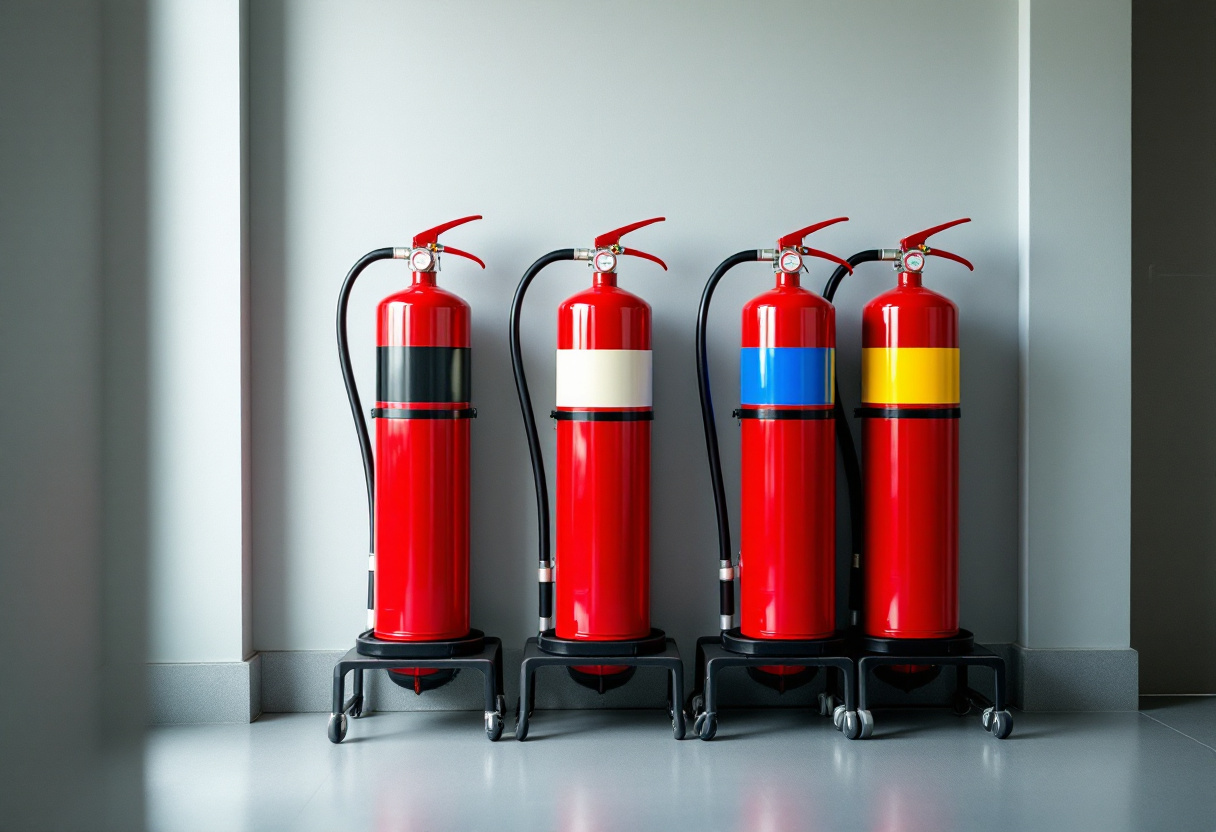
Fire extinguisher types and colours: what each one is for
Fire extinguisher colours in the UK: red water, cream foam, blue dry powder, black CO2 and yellow wet chemical, and which fire each one is for.
Who can carry out a DSEAR risk assessment?
Anyone competent can carry out a DSEAR risk assessment. What competence means, when your own staff can do it, and when to bring in a specialist.
Safe system of work (SSoW): meaning, examples and when you need a permit to work
SSoW means safe system of work: a planned way of doing a job safely, step by step, built from your risk assessment. Five examples and when to use a permit.
Confined space regulations: what a confined space is and what the law requires
The confined space regulations require you to avoid entry, use a safe system of work and plan rescue first. What counts as a confined space, with examples.
Fire risk assessments: Safety basics and best-practice guidance
Fire safety begins with a solid risk assessment. Get a rundown of FRA fundamentals and seven critical actions to protect your people and premises.

Why businesses choose
Opus Safety
We've worked across UK industry for years. The numbers show what our clients achieve when compliance becomes a strength, not a burden.


