


A health and safety consultant for a food or drink manufacturer protects the people on the line: machinery, dust, noise, wet floors and forklifts. HACCP, allergens and BRCGS audits are food safety, a separate service with a separate regulator, and Envesca on this list sells both. For occupational health and safety, Safety Management Ltd suits retained support on a food, milling or animal feed site, Finch Consulting suits machinery and process safety on a new or changing line, SOCOTEC suits dust and noise monitoring alongside advice, and Citation suits HR and health and safety together with a 24/7 phone line. Opus Safety wrote this list and sits last on it. We suit a manufacturer that wants a named competent person and occupational health from the same team, plus their food safety needs covered.
A health and safety consultant for a food or drink manufacturer protects the people on the line: machinery, dust, noise, wet floors and forklifts. HACCP, allergens and BRCGS audits are food safety, a separate service with a separate regulator, and Envesca on this list sells both. For occupational health and safety, Safety Management Ltd suits retained support on a food, milling or animal feed site, Finch Consulting suits machinery and process safety on a new or changing line, SOCOTEC suits dust and noise monitoring alongside advice, and Citation suits HR and health and safety together with a 24/7 phone line. Opus Safety wrote this list and sits last on it. We suit a manufacturer that wants a named competent person and occupational health from the same team, plus their food safety needs covered.
Food safety or health and safety: which are you buying?
A food safety consultant protects the people who eat your product, through HACCP, allergen controls, labelling and certification audits. A health and safety consultant protects the people who make it: the guarding on the conveyor, the flour dust at the tipping station, the forklift at the loading bay.
They answer to different regulators. HSE's own food and drink manufacture pages say food hygiene and food safety standards are overseen by the Food Standards Agency and enforced in food factories by local authority environmental health officers. In Scotland the food regulator is Food Standards Scotland. In Great Britain, the duties to your workers sit under the Health and Safety at Work etc. Act 1974 and its regulations. In January 2026 HSE began a series of inspections at large bakeries across Great Britain, checking how employers control flour dust.
If the job is a HACCP plan or a certification audit, you need a food safety consultancy, and Envesca and Opus Safety, below, sell both. The rest of this page compares health and safety consultancies.
What a food and drink manufacturer needs from a consultant
Use this table as the interview. Each row comes from HSE's food and drink pages or its January 2026 bakery release. For more depth, HSE describes its guidance A recipe for safety (HSG252, 2015) as a one-stop reference for the industry.
| Area | Ask the consultant | Why it matters |
|---|---|---|
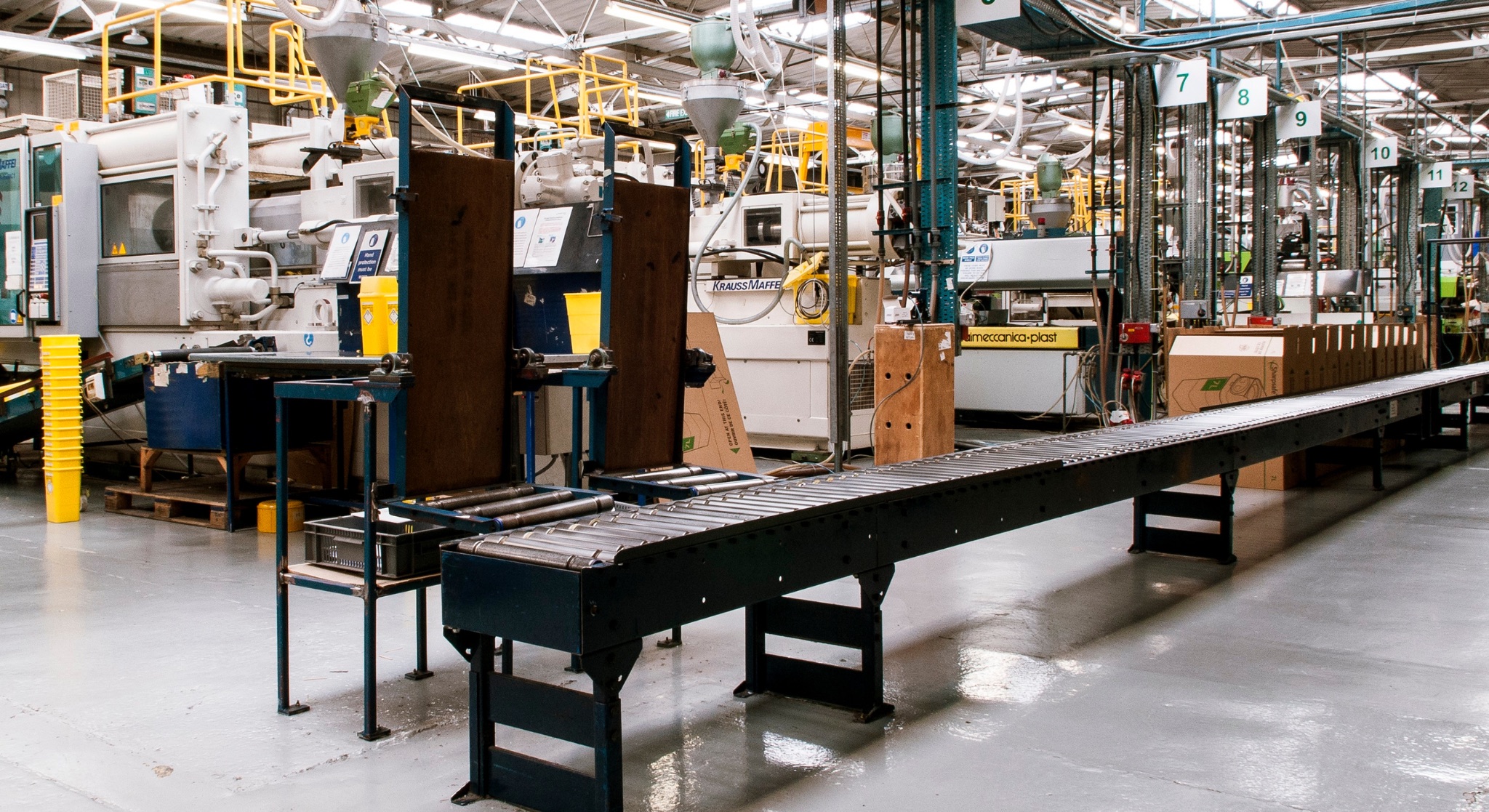
| Conveyors, packing machines and cleaning | How will you check the guarding, and the safe system for cleaning the line? | HSE says conveyors are involved in more machinery accidents in the industry than any other type of machine, and that daily hygienic cleaning needs a safe system of work. Regulation 11 of PUWER 1998 requires effective measures to prevent access to dangerous parts of machinery, or to stop their movement before any part of a person enters a danger zone |
| Flour and other dusty ingredients | Will you assess dusty tasks in order of control, and is health surveillance in place? | HSE calls flour dust one of the most common causes of occupational asthma in Great Britain. Regulation 11 of COSHH 2002 requires suitable health surveillance where it is appropriate for exposed employees |
| Combustible dust | Have flour, sugar and other powders been assessed for explosion risk? | Regulation 5 of DSEAR 2002 requires a risk assessment wherever a dangerous substance is or is liable to be present, and HSE names flour as a dust that needs assessing |
| Noise | When was noise last measured on the bottling, packing and milling lines? | HSE says most food and drink industries have processes exceeding 80 and 85 dB(A). For daily or weekly personal exposure, those are the lower and upper exposure action values in regulation 4 of the Control of Noise at Work Regulations 2005 |
| Wet floors | Will you look at the floor surface, the cleaning regime and the footwear together? | HSE calls slips and trips a major cause of accidents in the industry, and says most slips happen on floors wet with water or food product |
| Forklifts and loading bays | Will the assessment cover vehicles, pedestrians, reversing and the bay edge? | HSE names workplace transport as one of the highest causes of fatal injury in food and drink manufacture |
Repetitive line work and skin are the other two to raise. HSE links upper limb disorders to packing and cutting on production lines, and dermatitis to wet work, detergents and contact with ingredients such as flour and dough.
The law cited on this page applies in England, Wales and Scotland. Northern Ireland has its own equivalents under the Health and Safety at Work (Northern Ireland) Order 1978.
How this list was put together
We read each provider's own website on 2 November 2026 and describe only what those pages say. A provider qualified if it publishes a health and safety offer that names food or drink manufacturing. Firms whose food pages describe food safety work alone were left out. So were a consultancy whose food page is written for the Irish market, one whose food page spans processing to cafés and lists only general services, and one firm whose website would not load that day.
The list is grouped by what you are buying and carries no ranking. Opus Safety wrote it and is on it for that reason. We do work in food manufacturing, although our health and safety pages do not name it. We have put ourselves last and said where another provider fits better.
We did not test these services or survey their clients. Prices, client names, client numbers, review scores, outcome figures and claims about other firms' staff are left out.
1. Safety Management Ltd, for retained support on a food, milling or feed site
Safety Management Ltd (SML) is an independent consultancy founded in 1989 and based in Daventry, supporting clients nationwide. Its manufacturing page names food, milling and animal feed among the manufacturers it works with.
The work it describes matches a food site closely: guarding, isolation and safe use of production equipment; how risk changes between production, cleaning, maintenance and changeover; COSHH, dust and fumes; and explosive atmospheres where combustible dusts are present. It also covers contractor control, permits and isolation during shutdowns and major plant work.
SML offers retained support, working as an extension of the client's team, and says it can provide competent person support.
It suits a site that wants one consultancy across the machinery, the dust and the shutdown programme. Ask who your consultant would be, and how often they would be on your floor.
2. Finch Consulting, for machinery and process safety on a new or changing line
Finch Consulting, based in Ashby de la Zouch in Leicestershire, has a food and drink sector page built around processing and packaging plant. It works from the buying and specification stage with suppliers and machine builders, validates safety systems to SIL and PL, runs factory and site acceptance tests, and reviews the layout of plant, equipment and transport systems.
Its process safety team covers DSEAR, HAZOP studies and hazardous area classification. Finch publishes a process safety guide for food and drink that deals with combustible dusts such as flour and sugar, and with ammonia refrigeration. It also investigates serious incidents and provides expert witness services.
Bring Finch in when you are commissioning a line, buying second-hand plant, or facing an explosion or refrigeration question that needs an engineer. Ask what ongoing support looks like if you also want somebody for the routine work.
3. SOCOTEC, for dust and noise monitoring alongside advice
SOCOTEC's food and beverage page lists health and safety consultancy, occupational hygiene and legionella risk assessment, and refers to managing dusts, fumes, wastewater and biological agents. Its manufacturing page includes food and beverage production, processing, preserving and packaging in the work it covers, lists noise monitoring and dust monitoring, and offers provision of a competent person.
Measurement matters on a food site, because whether health surveillance is appropriate under COSHH turns on the exposure, and the noise regulations work from exposure action values. A provider that measures as well as advises gives you numbers to act on.
Ask how often a named consultant would visit, and who interprets the monitoring results with you.
4. Envesca, for food safety and health and safety from one provider
Envesca is based in Gloucester and has traded since 1996. It sells food safety and health and safety consultancy, training and compliance software.
Its food and drink manufacturing page covers both disciplines: support towards what its page calls British Retail Consortium (BRC) accreditation, food safety and health and safety management systems, risk assessments, fire risk assessments, and support after a visit from an environmental health officer or HSE. Ongoing support is sold as a service called Safeguard.
The fit is a manufacturer whose technical manager also holds the health and safety brief and wants one supplier for both. Ask who covers each discipline, and whether the same consultant walks the line for both.
5. Citation, for HR and health and safety from one supplier
Citation's manufacturing page lists food and beverage production facilities among the manufacturers it supports. The page describes risk assessments for production processes and machinery, COSHH assessments, manual handling guidance for repetitive production line tasks, and help with shift patterns, casual workers and seasonal demand.
Citation sells HR and employment law alongside health and safety, with 24/7 phone support and its Atlas software. It describes itself as an Associate Member of Scotland Food & Drink, and a page for that organisation's members offers quotes with a member benefit and discounts, so members should ask what the current offer includes.
Choose Citation if your first need is someone to ring, with HR from the same supplier. Ask about visit frequency, and whether your consultant has worked on a food production line.
6. Opus Safety, for a named competent person with occupational health from the same team
This is us. We have no page written specifically for food manufacturers, so judge us on our manufacturing and engineering work: machine guarding and PUWER, COSHH exposure, lock-out tag-out and changeovers, and forklifts sharing floor space with production lines. A named consultant acts as your competent person and visits as set in your contract, typically two to four times a year. Your business stays the duty holder. Our team includes former health and safety inspectors, and we also offer food safety and HACCP support to manufacturers.
For a food site the useful part is that occupational health comes from the same team, on your site and around night shifts: spirometry for staff exposed to flour and other dusts, and health surveillance that includes hearing tests and skin checks for wet work. Our DSEAR risk assessments cover flour and sugar dust, and we run Highfield food safety courses on site, with a manufacturing version.
Envesca publishes support towards BRC accreditation, and our service pages do not cover it. Finch is the specialist for safety validation and HAZOP on a new line, and Citation advertises the 24/7 phone line.
How to choose between them
Is anyone competent in-house? Regulation 7(8) of the Management of Health and Safety at Work Regulations 1999 says that where there is a competent person in your employment, you must appoint that person in preference to one from outside. If your engineering or technical team has that competence, buy specialist help for the gaps.
Is the problem a line or a system? A new filler, a second-hand oven or a dust extraction upgrade is a project for a specialist. Recurring injuries on cleaning shifts point to a system problem, and that needs somebody who keeps coming back.
Do you know your exposures? If nobody has measured dust at the tipping station or noise on the packing line, start with monitoring.
HSE's guidance on getting the right help says advice should be specific to the risks in your workplace and based on knowledge of your industry and processes. So ask each shortlisted provider what they would look at first during a hygiene clean, and listen for an answer about your line.
Frequently asked questions
Do I legally need a health and safety consultant for a food factory? No. Regulation 7 of the Management of Health and Safety at Work Regulations 1999 requires you to appoint one or more competent persons, and to appoint from your own employment where there is a competent person in it. HSE's guidance on using a consultant says you may need outside help if your business is large, complex or high risk, or lacks the competence in-house.
Is a food safety consultant the same as a health and safety consultant? No, they do different jobs. Food safety covers HACCP, allergens and certification audits, and is regulated by the Food Standards Agency (Food Standards Scotland in Scotland), with local authority environmental health officers enforcing food hygiene in most food factories. Health and safety covers the risks to your employees, under the Health and Safety at Work etc. Act 1974 in Great Britain. Some firms sell both, so ask which discipline each consultant covers.
Do bakery workers need health surveillance for flour dust? Usually, yes. HSE's advice for bakers is that you need regular health surveillance. Regulation 11 of COSHH 2002 makes it a duty where it is appropriate, and treats it as appropriate where an identifiable disease or adverse health effect may be related to the exposure, there is a reasonable likelihood that it may occur under the particular conditions of the work, and there are valid techniques for detecting it that are of low risk to the employee. HSE's 2026 bakery inspections include a check that health surveillance is in place for workers exposed to dusty ingredients.
How much does a health and safety consultant cost for a food manufacturer? It depends on the number of sites and lines, whether the work is a one-off assessment or a retainer, whether health surveillance and monitoring are included, and how much of your system already exists. Ask each provider for the basis of the fee and the number of visits before you compare figures.
Can a consultant take on my legal responsibility? The duty stays with you. HSE's guidance says that as the employer, managing health and safety will still be your legal duty even if you use someone from outside your business. A consultant can be your appointed competent person and do much of the work.
Where to start
Read HSE's guidance for your part of the industry, shortlist two providers whose model matches your answers above, and ask both what they would change on your line. If a named competent person with occupational health on site is the shape you need, tell us about your site and we will tell you what we would look at first.

Last updated
November 9, 2026
Opus Safety
Health & safety insights
Guidance, updates and practical advice for your sector.


Health and safety consultants for manufacturers: 7 compared
Seven health and safety consultants for manufacturers, separated by delivery model. Machinery assessment, testing, retained support or an embedded person.
PUWER and machinery guarding: the duty holder's guide
PUWER is the Provision and Use of Work Equipment Regulations 1998. Who the duty holder is, what regulation 11 requires for guarding, and the records to keep.
What Law Regulates Workplace Health and Safety? DSEAR Explained
What law regulates workplace health and safety? A clear guide to the HSWA, DSEAR and whether your business needs a DSEAR risk assessment.
Spirometry: A proactive approach to employee lung health
Regular lung health screening can prevent life-threatening illness and the penalties that follow. How spirometry safeguards people and productivity.
Dust exposure: How to protect your workers’ lung health
Inhaling sawdust, concrete dust, and other debris can lead to serious long-term health problems. Get expert guidance on proven safety controls.

Why businesses choose
Opus Safety
We've worked across UK industry for years. The numbers show what our clients achieve when compliance becomes a strength, not a burden.


