

RAMS: risk assessment and method statement packs for each job and site
Opus RAMS, an add-on to Compliance Cloud, is where your team produces site-specific RAMS for each job, and an Opus consultant can build your first template pack with you. After that, a similar job starts from the pack you already have. No regulation names RAMS. In Great Britain the duty behind them is the risk assessment under regulation 3 of the Management of Health and Safety at Work Regulations 1999, and on construction work regulation 15 of the Construction (Design and Management) Regulations 2015 requires every contractor to plan, manage and monitor its own work.


What the RAMS service includes
The risk assessment decides what a job has to control, and the method statement sets out how the work will be done with those controls in place. Opus gives your team the software to produce both, and a consultant to set it up with you or to write the RAMS for a single job.

Opus RAMS, for the RAMS your team produces
Opus RAMS is an add-on to Compliance Cloud for producing site-specific RAMS packs. Each pack draws on standard Opus risk assessments and method statements, or your own, adapted to the project. It adds the training certificates of the people named and the certificates for the plant from your Compliance Cloud records, and exports the pack as one PDF to issue to the client or principal contractor.

Your first template pack, built with a consultant
An Opus consultant builds your first template pack with you in Opus RAMS: the risk assessments, method statements and site information for a type of job your teams repeat, written around how you do it. After that, a similar job starts from the template, and your team changes what is different about the new site.

RAMS written for a single job
If you need RAMS for one job, your consultant can write the risk assessment and method statement for it: the steps in order, the controls at each step, who does the work and who supervises it, the equipment, and what happens in an emergency. For work your teams repeat, we recommend the template pack, because each new job then starts from documents you already have.
What lands on your desk afterwards
RAMS your supervisor can brief from and your client can check, in the same format for every job.
A template pack for the work you repeat
The risk assessments, method statements, emergency procedures and site induction for that type of job, adapted from standard Opus documents or your own, ready to copy for the next project.
A method statement in the order the work happens
HSE describes a method statement as setting out "in a logical sequence exactly how a job is to be carried out in a way that secures health and safety and includes all the control measures". Each job's copy is adjusted for its own site.
The people and the plant
The training certificates for the people named and the inspection certificates for the plant, taken from your Compliance Cloud records, so the pack carries the latest version of each.
One PDF to issue
The pack exports as a single PDF for your client or principal contractor, with the site induction register and sign-off sheets for the briefing.
What you should be able to show
These are what the law and HSE's guidance point to if a principal contractor, a client's auditor or an inspector asks how a job is controlled. Could you put your hands on all six today?
- ✓A risk assessment covering the work, with the significant findings recorded if you employ five or more people
- ✓A method statement for higher-risk, complex or unusual work, written for the site where it happens
- ✓For demolition or dismantling, the arrangements recorded in writing before the work begins
- ✓The names of the people doing the work, with the skills, knowledge, training and experience their tasks need
- ✓A record that each worker received the information, instructions and supervision the job needs
- ✓Thorough examination records for the cranes, slings and other lifting equipment the job uses

What RAMS cost
Price depends on a number of variables, including:
Whether you already use Compliance Cloud
Opus RAMS is an add-on to Compliance Cloud, so the starting point is whether your business has an account.
How many types of job the template pack covers
A pack for one kind of job is a smaller piece of work than a set covering every activity your teams carry out.
How much the site changes the job
Routine work repeated across similar sites mostly needs adapting. Work beside other trades, a live process or members of the public needs more planning.
What already exists
A method statement draws on the risk assessment, so current assessments for your activities shorten the work.
For what a good method statement contains, and how to check one a contractor sends you, read our guide to RAMS. On a construction project, method statements help the principal contractor develop the construction phase plan, which our CDM consultancy draws up for the principal contractor, or for the contractor whose duty it is.
Two ways to work with Opus
Book a one-off service for a specific need, or take on a partnership for ongoing support. Either way, the work gets done by the same team.
Book a service
For a specific need - a single assessment, audit, or
on-site service with a clear deliverable.

Opus Safety Partnership
Ongoing support and consider-it-done compliance. For businesses that want compliance off their plate, not on their to-do list.

Not sure which fits? Speak to a consultant - no commitment required.
Kellaway


Why businesses bring RAMS to Opus
HSE's guidance is that a method statement allows "the job to be properly planned with the appropriate health and safety resources needed for it", and that checking the methods "are actually put into practice on site can also be a useful monitoring tool". So your RAMS are written from how the job will run on the day, ready to be checked against the work.
Former health and safety inspectors on the team
Our consultants include former health and safety inspectors, so your RAMS are written to answer the questions an inspector may ask about the job.
Consultants who know contracting work
Tom Bradley was managing director of a contracting company for 12 years before moving into safety full time, and has particular experience in CDM and contractor management. David Clifton lists temporary works, lifting operations, work at height and confined spaces among his specialisms.
One consultant, one record
On the Opus Safety Partnership, method statements sit with the risk assessments your consultant already writes, and Compliance Cloud holds the training records the RAMS refer to.
RAMS by sector


Builders Merchants
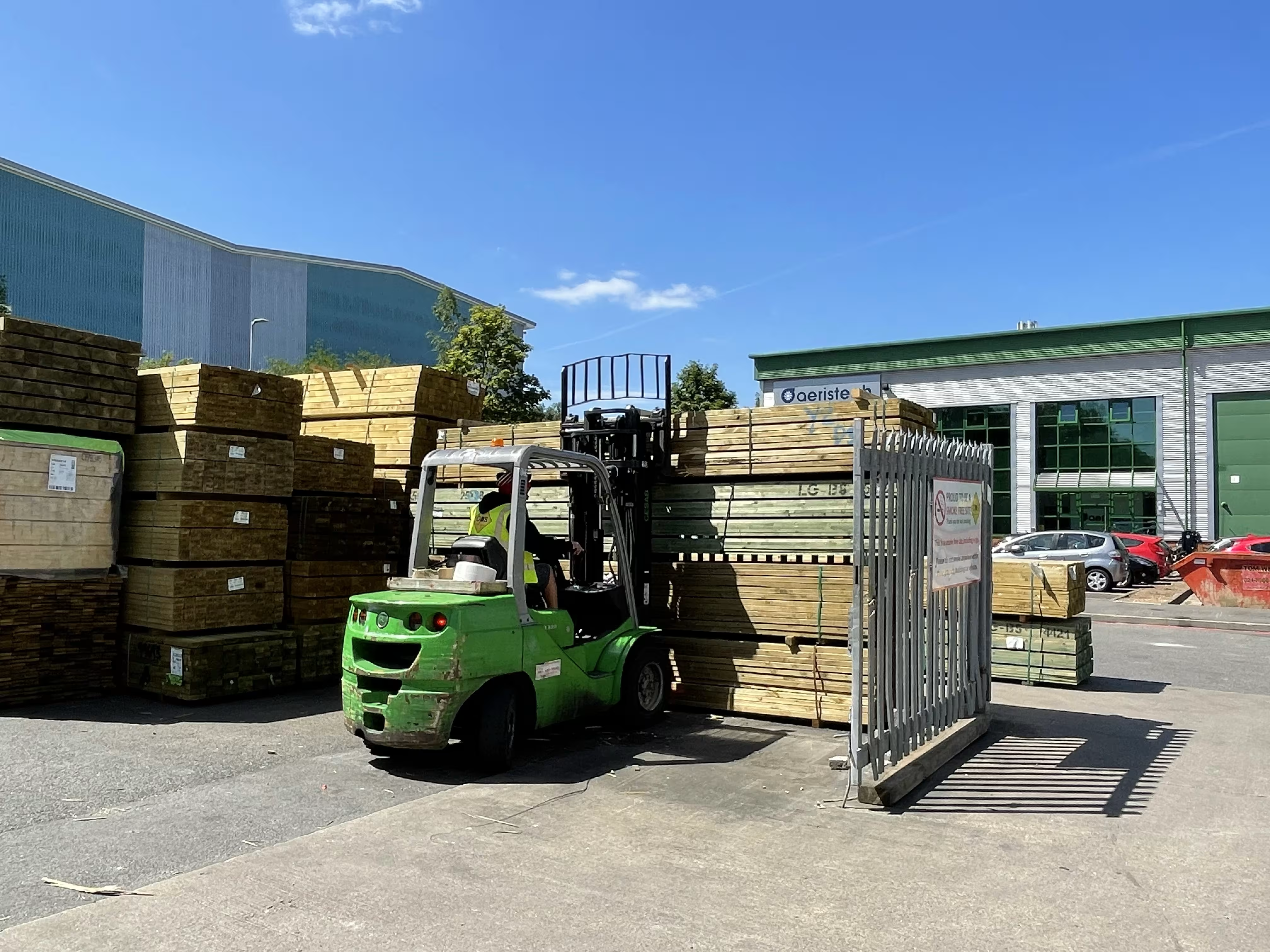
A yard alteration or new racking going in while the branch trades puts contractors near forklifts and customers. The method statement sets out how the work area is kept apart from yard traffic and the trade counter.

Warehousing & Logistics
Repairing damaged pallet racking puts a contractor working at height into an aisle the trucks use. Offloading and cordoning the bay come first in the method, and trucks stay out of the aisle until the repair is done.

Manufacturing & Engineering
Installing fixed plant, or maintaining a machine with the production line running beside it, needs isolation and access planned before the first step. Your RAMS name who isolates the machine and who signs it back into use.

Garden Centres
A refit or a new building while the centre stays open puts the public beside the work. Fencing off the work area, and timing deliveries and lifts, are part of the plan.

Metal Stockholders
Overhead cranes and long, heavy stock put lifting at the centre of maintenance work. Regulation 8 of the Lifting Operations and Lifting Equipment Regulations 1998 requires every lifting operation involving lifting equipment to be properly planned by a competent person, and the RAMS record that plan.

Childcare & Nurseries
Building or maintenance work during opening hours brings contractors into a building full of young children. The work area is closed off, and noisy or dusty work is timed for when the rooms nearby are empty.

Ready to book your first RAMS template pack?
Tell us about the work your teams repeat and who asks you for RAMS. We'll call you back, usually within 2 hours on working days, to talk it through and quote. You get a template pack in Opus RAMS that your team adapts for each new job and site.
Prefer to book a call directly?




Frequently asked questions
What does a RAMS service include?

Can we use a method statement template instead?
If a consultant helps with our RAMS, who is responsible for them?
A client has asked for RAMS before we start. What should we send?
Do we need RAMS for maintenance work outside construction?
Do RAMS need to be signed by the people doing the work?
Can one set of RAMS cover several sites?
How much do RAMS cost?


