%201.svg)
%201.svg)

If you need somebody on site most days, employ them. If you need competence that is missing inside, and you need it across several sites or a few days a month, retain it. You may need both, because an outsourced consultant extends what your existing manager can cover and takes none of their responsibility away.
If you need somebody on site most days, employ them. If you need competence that is missing inside, and you need it across several sites or a few days a month, retain it. You may need both, because an outsourced consultant extends what your existing manager can cover and takes none of their responsibility away.
The law puts the two in order. Regulation 7 of the Management of Health and Safety at Work Regulations 1999 requires you to appoint one or more competent persons to help you comply, and it requires you to appoint from among your own employees where you have the competence. External help is what the same provision anticipates when the competence is missing.
So work out which parts of safety at your business need somebody present, and which parts need somebody qualified.
The short version
| In-house appointment | Retained consultant | |
|---|---|---|
| Right when | Safety work exists every day and needs somebody on the floor | The work is periodic, technical, or spread across sites |
| What you buy | Presence, site knowledge, culture over time | Breadth, current legal knowledge, cover for a specialist gap |
| Cost shape | Salary, on-costs, training, recruitment, cover when they leave | Fixed fee, scaled to sites and risk |
| The gap it leaves | One person's range of experience, and one person's holidays | Nobody walking the floor between visits |
What an in-house appointment gives you
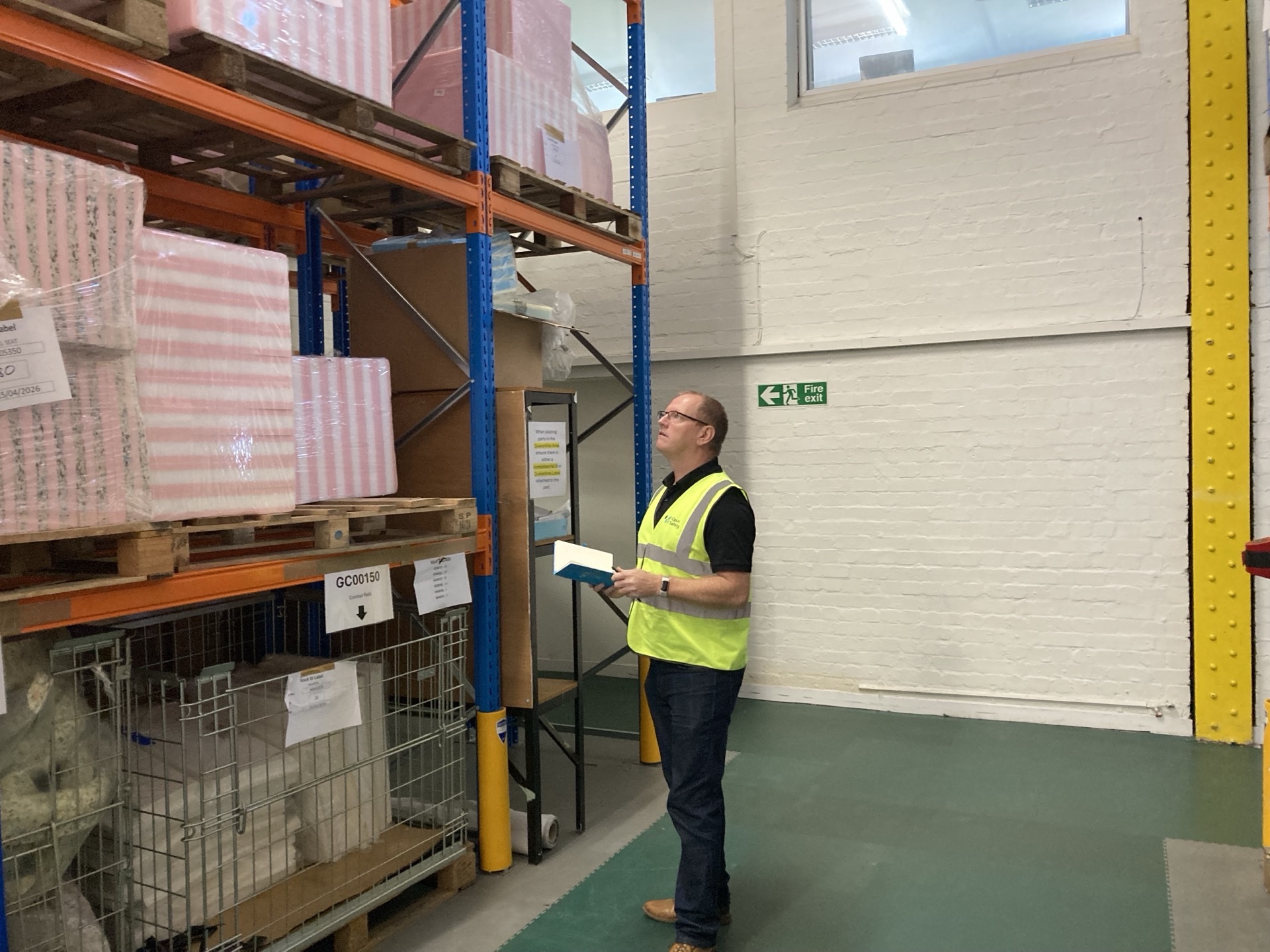
The main thing it gives you is presence. Somebody employed at your site sees the interlock that keeps getting defeated, hears the near miss that nobody logged, and is in the room when a supervisor decides to run the line short-handed. None of that reaches a visiting consultant reliably.
An employed safety person also learns your layout and your history in a way a contract cannot. When the same racking bay gets hit a third time, they know it is the third time.
Budget for all of it. The cost is the salary plus employer's on-costs, continuing professional development, the recruitment round when they leave, and the months of exposure while the post is vacant.
Its limit is range. One competent person holds one person's experience. Asbestos, DSEAR, occupational health surveillance, machinery guarding and fire are separate disciplines, and it is a lot to ask one person to stay current in all of them.
What a retained consultant gives you
A consultancy carries specialists across the disciplines above, so you are buying access to a range instead of a person.
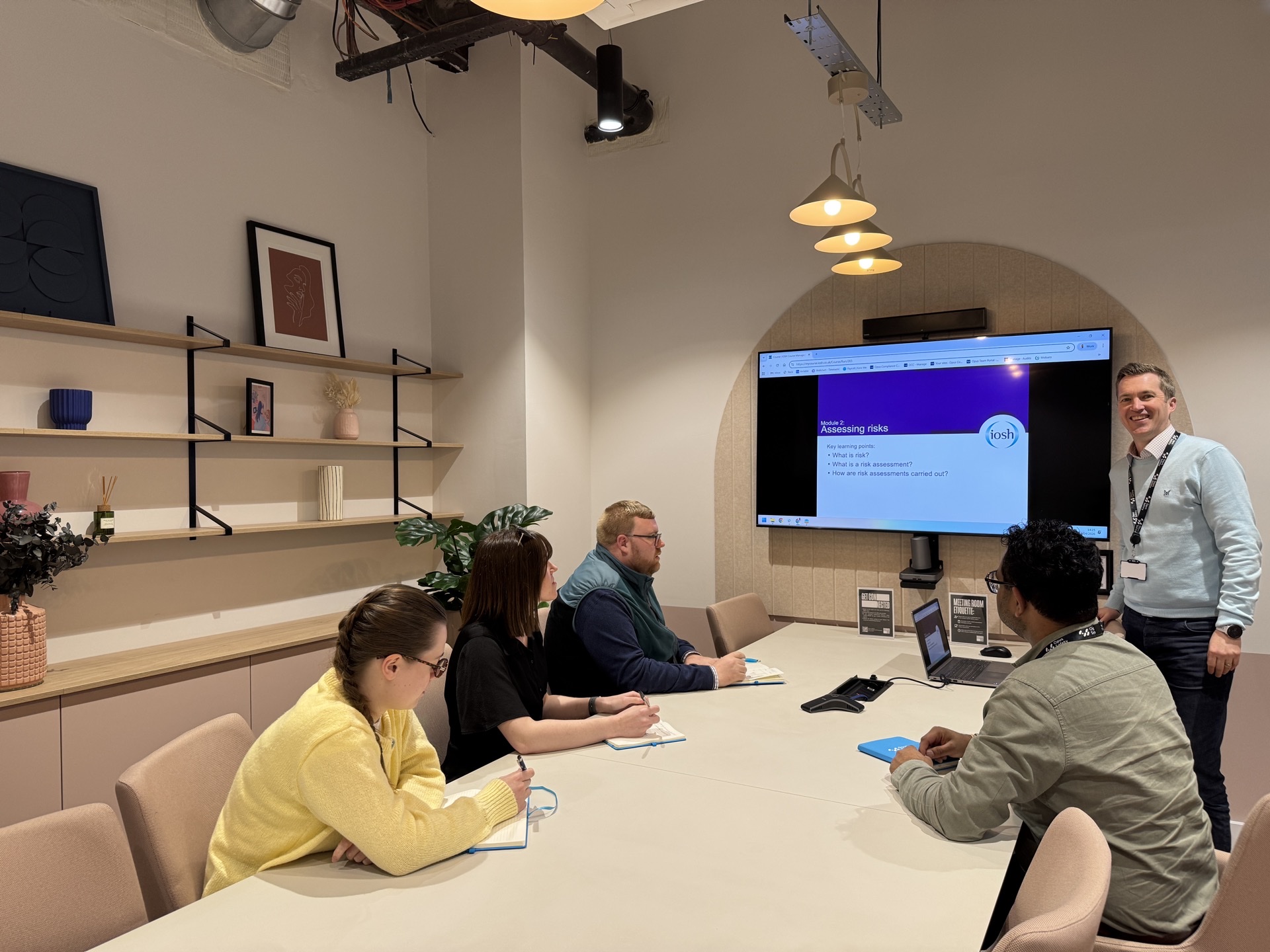
It also gives you an outside perspective. A person employed inside a business gradually absorbs its normal. A visiting consultant sees the yard as an inspector would because they have not stopped noticing it.
A retained consultant needs a named internal owner at your end. A retained contract with nobody inside the business responsible for acting on the findings produces a report and no change.
Its limit is presence. Between visits, nobody is walking your floor.
What decides it
Do you need somebody present, or somebody qualified? Write down the safety tasks at your business for one month. If most of them need a person on site that day, you are describing a job. If most of them are assessments, reviews, training and audits, you are describing a contract.
How many sites? One site rewards an employee who knows it. Four sites stretch one employee, and travel takes a share of every week.
What is your risk profile? A machinery-heavy manufacturer generates daily safety work. A five-site office business generates periodic work.
What happens during an inspection? If an inspector arrives on a day your one safety person is on leave, who talks to them?
Can the duty be delegated? No. The duty under the Health and Safety at Work etc. Act 1974 rests with the employer either way. Neither arrangement moves liability anywhere.
Who should choose which
Employ, if: you run a machinery-heavy site with daily safety work, you already employ somebody competent for the work, or you are large enough that a safety manager's time is genuinely full.
Retain, if: the safety work is real but periodic, you need a discipline nobody inside holds, or you cannot recruit for the role at the level you need. A small business may not be able to justify a full salary, and it still carries the full duties.
Do both if: you have a capable operations or HR manager carrying safety alongside another job. They keep the presence and the site knowledge. The consultant supplies the disciplines outside their range and the current legal read, and acts as the appointed competent person where that is the honest description.
Three elements to be aware of
Whether outsourcing moves the liability. It does not, and no contract can. The employer holds the duties under the 1974 Act. What an external appointment changes is the quality of the advice you acted on, which is a different and real benefit.
Whether any in-house appointment satisfies the competence duty on its own. The regulation asks for competence for the work in question. Appointing a willing office manager with a one-day course, for a site running abrasive wheels and LEV, misses the test.
Whether the choice is permanent. You can move along this line as you grow, and a sensible pattern is addition: retain first, appoint internally as the volume justifies it, and keep the specialist disciplines external.
Frequently asked questions
Is outsourced health and safety cheaper than hiring? For a business that cannot fill a safety person's week, it can be, because you pay for the work performed instead of a salary. For a business generating daily safety work, employing can work out cheaper per hour of cover. Price both at your real volume before deciding.
Can an external consultant be my competent person? Yes. Regulation 7 of the Management of Health and Safety at Work Regulations 1999 allows you to appoint a person outside the business, and it requires you to appoint from among your own employees where you have the competence. So the test is whether that competence exists inside.
Does outsourcing transfer my legal responsibility? No. The duty under the Health and Safety at Work etc. Act 1974 remains with the employer whatever the arrangement.
We already employ a health and safety manager. Is a consultant a duplicate? Not necessarily. A workable split is presence in-house and specialist disciplines external, such as asbestos, DSEAR or health surveillance, with the consultant covering annual leave and inspections.
How many employees before hiring in-house makes sense? There is no threshold in law, and headcount alone is the wrong measure. A hundred people in one low-risk office generates less safety work than thirty in a machining shop.
What happens if our safety manager leaves? Plan for it. A retained contract alongside the role means somebody who knows your sites is still in place the day after they go.
Working out which you are
List the safety tasks at your business for one month, then mark each as needing presence or competence. The split tells you which arrangement you need, and which parts of it you already have.
If the answer is the middle case, outsourced health and safety sets out how we work alongside an existing manager. Many of our consultants are former HSE and local authority regulators, so the read you get on a marginal call is the enforcement one.

Last updated
September 29, 2026
Opus Safety
Health & safety insights
Guidance, updates and practical advice for your sector.



What a retained health and safety service includes
A retained health and safety service means ongoing access to a competent person. What it includes, what it can exclude, and what stays your legal duty.
How to choose a health and safety consultancy
How to choose a health and safety consultancy: the competence and time tests in regulation 7 of the MHSWR 1999, the questions to ask, and the red flags.
What qualifications should an outsourced competent person have?
No qualifications are prescribed by law. Which NEBOSH, IOSH and sector credentials matter when appointing an external adviser.
Who can act as a competent person for a small business?
Small businesses can appoint the owner, a trained employee or an external consultant. How to choose, and what the law requires.
Why Health and Safety Matters: When to Hire a Consultant
Hire a health and safety consultant when you grow, your team is stretched, risks get complex, or you receive an enforcement notice - whatever your size.

Why businesses choose
Opus Safety
We've worked across UK industry for years. The numbers show what our clients achieve when compliance becomes a strength, not a burden.


%201.svg)


