%201.svg)
%201.svg)
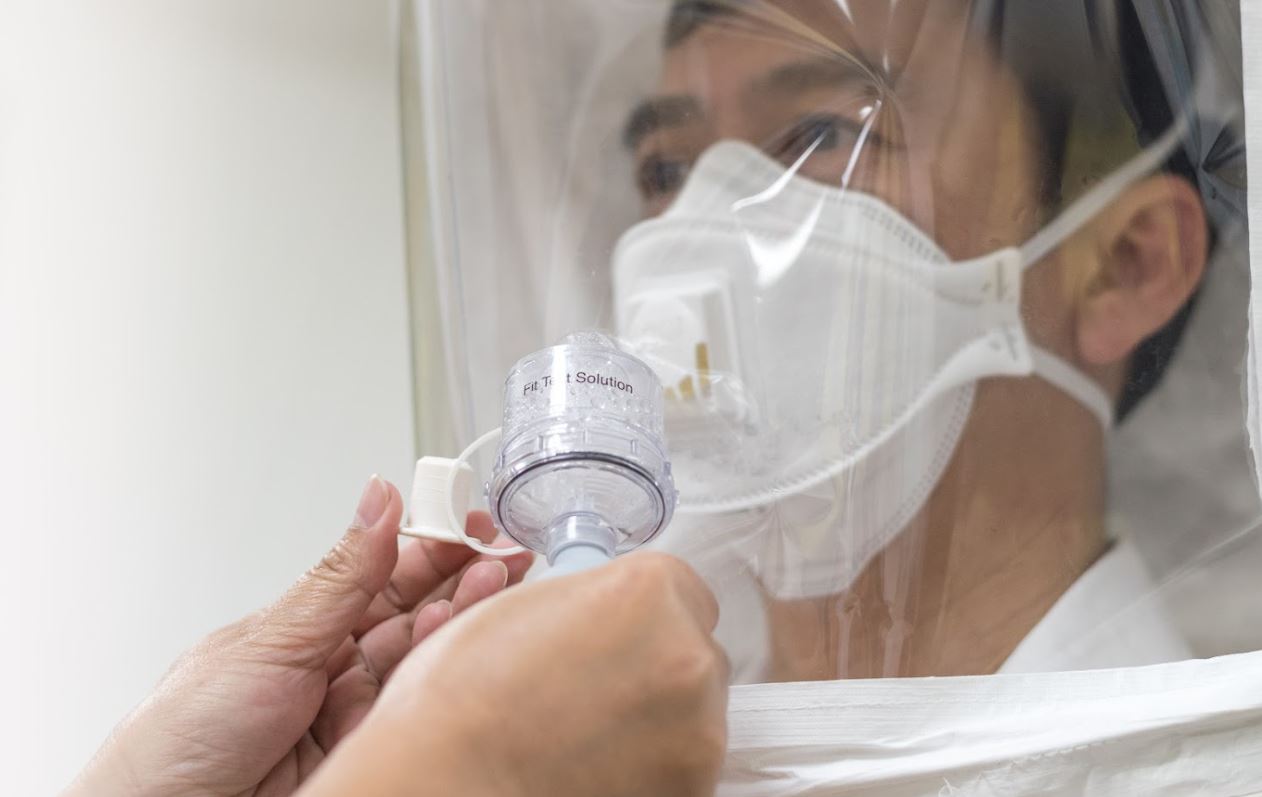
For National Health and Safety at Work week, we're focusing on face-fit testing and respiratory protective equipment (RPE) – a critical but often overlooked element of workplace safety.
What is face-fit testing?
Face-fit testing is the process used to ensure that a tight-fitting respirator (such as an FFP2, FFP3, or full-face respirator) provides an adequate seal on the individual wearer's face. Because people's facial features vary significantly, a respirator that fits one person well may not provide effective protection for another.
There are two types of face-fit test:
- Qualitative fit testing: A pass/fail test that uses the wearer's sense of taste or smell to detect leakage around the respirator seal. It is suitable for half-face respirators but not for full-face respirators.
- Quantitative fit testing: Uses specialised equipment to measure the actual leakage into the respirator, providing a numerical result. It can be used for all types of tight-fitting respirators.
Who needs face-fit testing?
Face-fit testing is required for anyone who wears a tight-fitting respirator as part of their job, where exposure to a hazardous substance means that RPE is needed. This includes workers exposed to:
- Wood dust
- Silica dust
- Asbestos fibres
- Chemical vapours and fumes
- Biological agents
Face-fit testing should be repeated if the wearer's facial features change significantly (for example, following significant weight loss or gain, dental work, or scarring), or if the make or model of respirator changes.
What are the consequences of poor RPE compliance?
Failing to ensure adequate RPE compliance can have serious consequences:
- Health consequences: Workers exposed to hazardous substances without adequate protection are at risk of developing serious occupational illnesses, including lung disease, occupational asthma, and in the case of silica dust, silicosis and lung cancer.
- Legal consequences: Employers have a legal duty under the Control of Substances Hazardous to Health Regulations (COSHH) to ensure that workers are adequately protected from exposure to hazardous substances. Failure to provide suitable RPE and to ensure it is correctly fitted can result in HSE enforcement action, improvement notices, and prosecution.
- Financial consequences: In addition to the cost of any HSE enforcement action, businesses that fail to provide adequate RPE may also face civil claims from workers who develop occupational illnesses as a result.
Best practice for RPE management
To ensure your RPE programme is effective, consider the following best practice steps:
- Conduct a COSHH risk assessment to identify all hazardous substances your workers are exposed to and determine the level of protection required
- Select RPE that is appropriate for the specific hazard and provides adequate protection
- Ensure all workers who require tight-fitting RPE are face-fit tested by a competent person
- Keep records of all face-fit tests, including the date, tester, result, and the make and model of respirator tested
- Implement a maintenance and inspection programme for all RPE
- Provide training to workers on the correct use, maintenance, and limitations of their RPE
- Review your RPE programme regularly to ensure it remains effective and up to date
If you would like support with face-fit testing, COSHH risk assessments, or RPE management, our occupational health and safety consultants are here to help. Get in touch today.

Last updated
October 2, 2025
Opus Safety
Health & safety insights
Guidance, updates and practical advice for your sector.


Summer safety - review your transport risks
Summer brings new compliance concerns to your yard, including workplace transport issues you may not have considered.
Reducing delivery risks – a quick guide to crane safety
Lorry-mounted cranes can cause life-threatening injuries. Make sure workers, customers and the public stay safe with expert delivery guidance.
On-site driver safety: Are you getting the basics right?
Prevent vehicle-related accidents at your builders merchant with six workplace transport fundamentals for every site.

Why businesses choose
Opus Safety
We've worked across UK industry for years. The numbers show what our clients achieve when compliance becomes a strength, not a burden.


%201.svg)


