

The PPE regulations, formally the Personal Protective Equipment at Work Regulations 1992, require employers in Great Britain to provide suitable PPE, free of charge, to any worker who may be exposed to a risk at work, except where and to the extent that the risk has been adequately controlled by other means that are equally or more effective. Since 6 April 2022 that has covered limb (b) workers as well as employees. Regulations 20 to 25 of the Workplace (Health, Safety and Welfare) Regulations 1992 then set the welfare basics: toilets, washing facilities, drinking water, space for clothing and changing, and somewhere to rest and eat.
The PPE regulations, formally the Personal Protective Equipment at Work Regulations 1992, require employers in Great Britain to provide suitable PPE, free of charge, to any worker who may be exposed to a risk at work, except where and to the extent that the risk has been adequately controlled by other means that are equally or more effective. Since 6 April 2022 that has covered limb (b) workers as well as employees. Regulations 20 to 25 of the Workplace (Health, Safety and Welfare) Regulations 1992 then set the welfare basics: toilets, washing facilities, drinking water, space for clothing and changing, and somewhere to rest and eat.
HSE's guidance on the Regulations, L25, calls PPE "the last resort to protect against risks to health and safety", to be considered after engineering controls and safe systems of work. Your risk assessment under regulation 3 of the Management of Health and Safety at Work Regulations 1999 decides what is left for PPE to cover. Northern Ireland has its own regulations on PPE and on workplace welfare.
What do the PPE regulations require?
The Personal Protective Equipment at Work Regulations 1992 (PPER 1992) define PPE as all equipment, including clothing that protects against the weather, worn or held by a person at work to protect them against a risk to their health or safety. HSE's examples include safety helmets, gloves, eye and hearing protection, high-visibility clothing, safety footwear, harnesses and respiratory protective equipment (RPE).
| Provision | What it requires |
|---|---|
| Regulation 4 of PPER 1992 | Suitable PPE for every worker who may be exposed to a risk at work, except where and to the extent that the risk has been adequately controlled by other means that are equally or more effective. Regulation 4(3) of PPER 1992 sets minimum tests for suitable, including that it is right for the risk and the conditions and can fit the wearer |
| Regulation 5 of PPER 1992 | Items worn together are compatible and stay effective |
| Regulation 6 of PPER 1992 | An assessment before you choose, comparing what the risk demands with what the available equipment can do, reviewed if there is reason to suspect it is no longer valid or there has been a significant change in the matters it relates to |
| Regulation 7 of PPER 1992 | PPE maintained, including replaced or cleaned as appropriate, in an efficient state, in efficient working order and in good repair |
| Regulation 8 of PPER 1992 | Appropriate accommodation for PPE between uses |
| Regulation 9 of PPER 1992 | Information, instruction and training on the risk, how to use the PPE and how to keep it working, in a form the worker can understand |
| Regulation 10 of PPER 1992 | All reasonable steps to make sure PPE is properly used, and workers to use it as trained and instructed |
| Regulation 11 of PPER 1992 | Workers to report any loss of, or obvious defect in, their PPE straight away |
HSE's guidance suggests that before you choose, you think about who is exposed, to what, for how long and how much, and involve the people who will wear it. It warns against modifying PPE to fit, and notes that safety glasses can disturb the seal of a respirator worn with them. Where hygiene requires it, regulation 4(4) of PPER 1992 makes PPE personal issue, for use only by the person it was given to.
Who do the PPE regulations cover, and can you charge for PPE?
Regulation 4 of PPER 1992, as amended in 2022, covers workers. Regulation 2(1) of PPER 1992 defines a worker as anyone working under a contract of employment, or under any other contract to do work or services personally for someone who is not their client or customer. HSE calls the second group limb (b) workers, people who generally do casual or irregular work and work only when they choose to. HSE's guidance says there should be no difference in how you provide PPE to employees and to limb (b) workers.
You cannot charge for any of it. Section 9 of the Health and Safety at Work etc. Act 1974 bars an employer from charging employees for anything done or provided to meet a specific requirement of health and safety law, and regulation 3A of the Personal Protective Equipment at Work Regulations 1992 applies that rule to workers. L25 spells out that the rule covers the PPE, its storage, maintenance and replacement, the training, and the cost of cleaning materials.
Which rules cover RPE, hearing protection and construction PPE?
Where the regulations on lead, ionising radiation, asbestos, hazardous substances or noise require PPE for a risk, regulation 3(3) of PPER 1992 switches off regulations 4 and 6 to 12 of PPER 1992 for that risk, and the hazard regulations govern it. Regulation 5 of PPER 1992, on compatibility, still applies.
For dust, fume, vapour and chemicals, regulation 7 of COSHH 2002 puts PPE after the other control measures, for use alongside them where they cannot achieve adequate control of exposure, and requires it to be suitable for the purpose. Your COSHH assessment is where that decision is made.
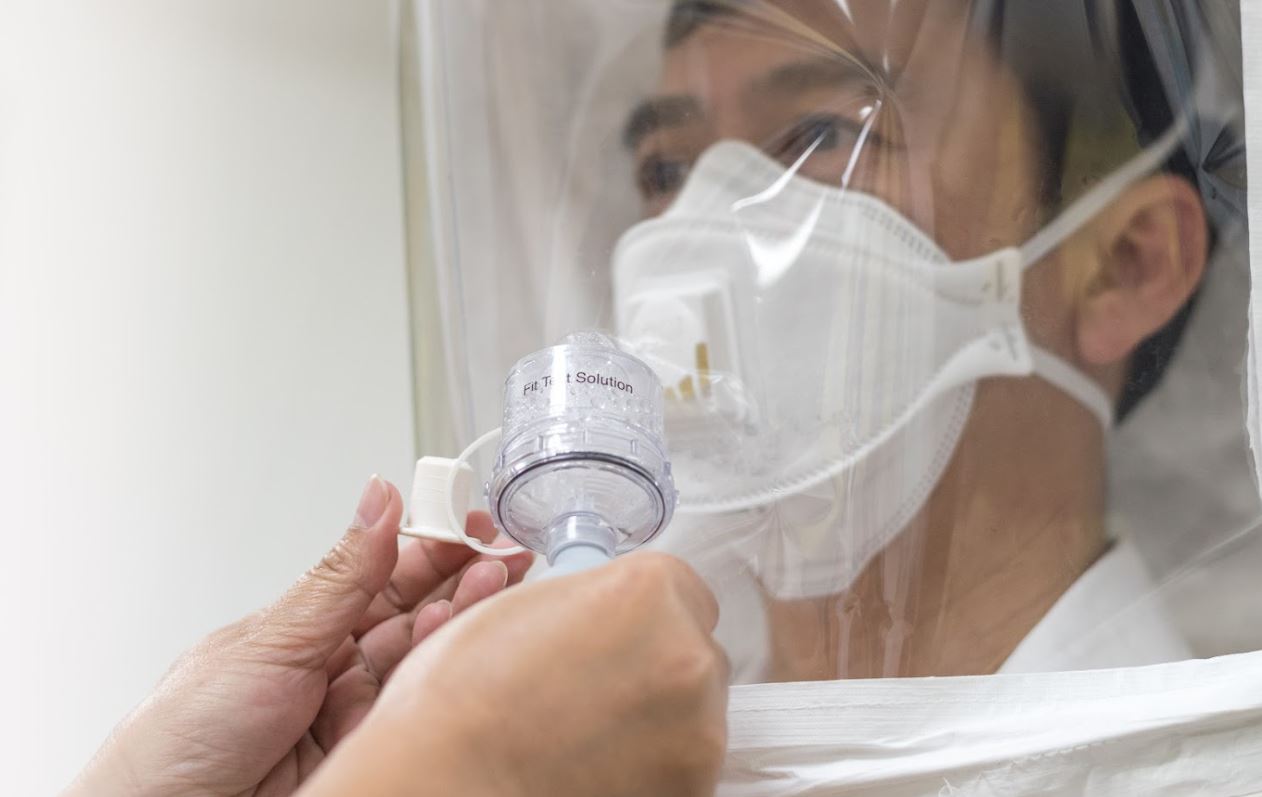
A tight-fitting mask protects only if it seals to the face. HSE says to fit test at the initial selection stage, that each type of tight-fitting facepiece a person wears should be tested, and that stubble and beards make a good seal impossible. Our occupational health technicians carry out face fit testing on your site using the qualitative method, which HSE's guidance INDG479 lists as suitable for disposable and reusable half masks. Full-face masks need a quantitative test, which we do not carry out.
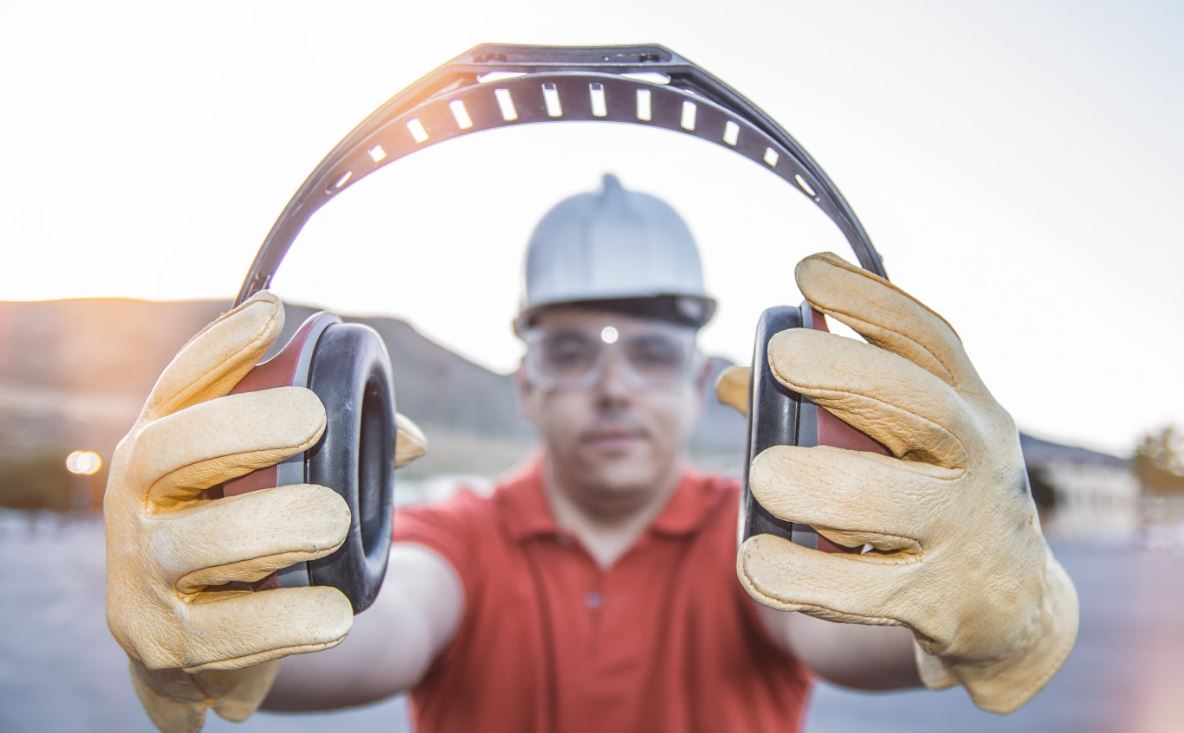
Under regulation 7 of the Control of Noise at Work Regulations 2005, you make hearing protectors available on request where someone is likely to be exposed at or above a lower exposure action value, and provide them where other measures cannot bring exposure below an upper exposure action value. Areas at or above an upper value become hearing protection zones, and a noise assessment shows where they belong and which protectors suit the exposure.
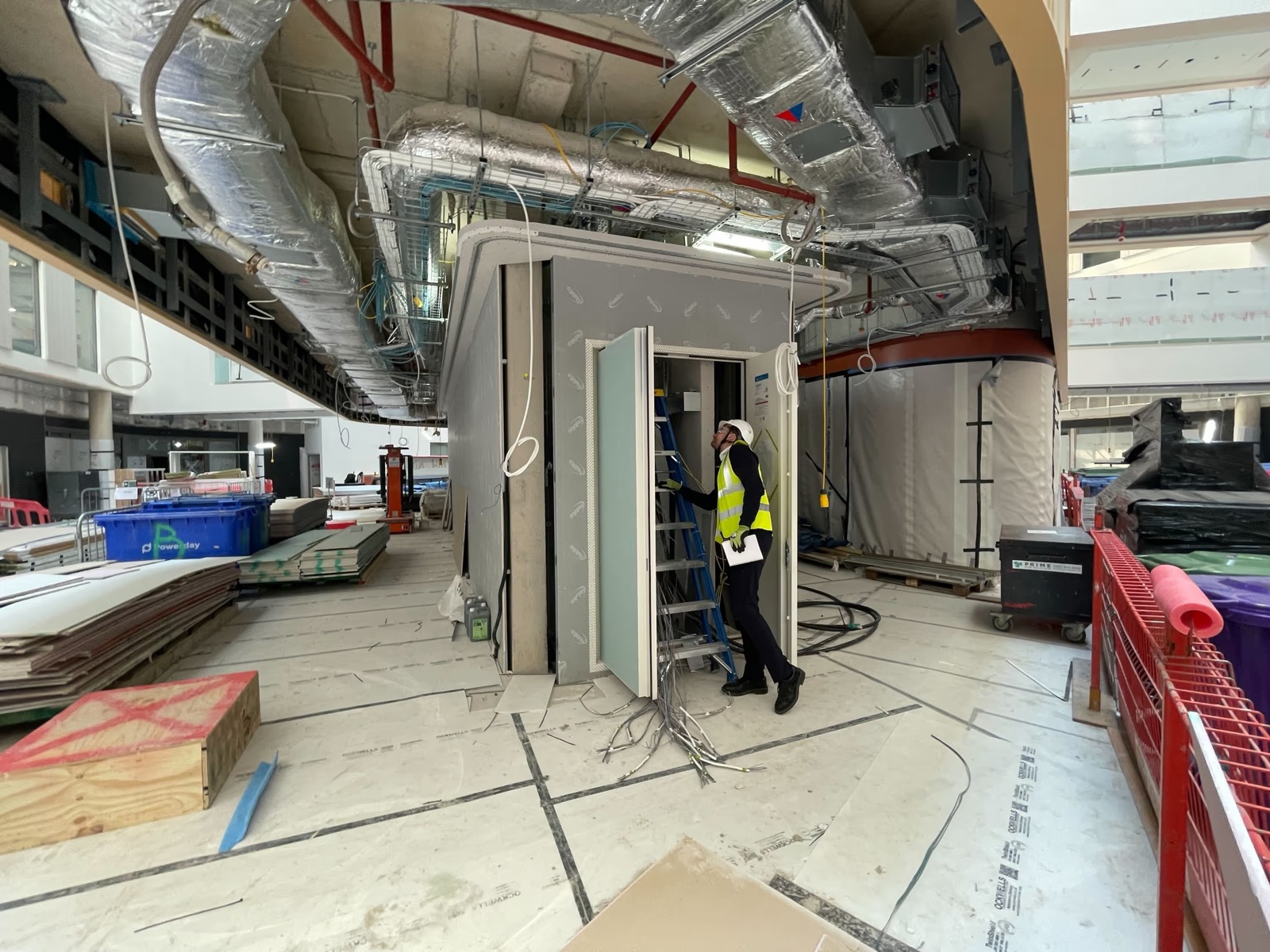
On construction sites, head protection has come under PPER 1992 since 6 April 2013, when the separate construction head protection rules were revoked. HSE's construction guidance says that on almost all sites the risk of head injury means the law requires head protection, and notes that turban-wearing Sikhs are exempt from any legal requirement to wear a safety helmet at work. It also expects safety footwear on site during heavy work, and high-visibility clothing wherever vehicles or plant are operating. Replace a helmet once it is damaged.
What welfare facilities must an employer provide?
Section 2(2)(e) of the Health and Safety at Work etc. Act 1974 extends the employer's general duty to a working environment that is, so far as is reasonably practicable, adequate as regards facilities and arrangements for welfare at work. Regulations 20 to 25 of the Workplace (Health, Safety and Welfare) Regulations 1992 set the detail.
| Facility | Regulation | Main requirements |
|---|---|---|
| Toilets | 20 | Suitable and sufficient, readily accessible, ventilated, lit and kept clean, with separate rooms for men and women unless each toilet is in its own room with a door that locks from inside |
| Washing | 21 | By every toilet and near any changing rooms, with clean hot and cold, or warm, water, soap and a means of drying, plus showers where the work or health reasons require them |
| Drinking water | 22 | An adequate supply of wholesome water, readily accessible, with cups unless it comes from a jet people can drink from easily |
| Clothing storage | 23 | Space for the clothing people take off for work and for special work clothing kept on site, secure where changing facilities are required |
| Changing | 24 | Changing facilities, with seating, where people must wear special clothing for work and cannot be expected, for reasons of health or propriety, to change in another room |
| Rest and meals | 25 | Rest facilities with enough tables and seating with backs, somewhere for pregnant women and nursing mothers to rest, and facilities to eat where meals are regularly eaten at work |
HSE describes the Regulations as applying to most workplaces, the exceptions being construction sites where construction work is the only activity, ships, and workplaces below ground at a mine. At a temporary work site, regulation 3(3) of the Workplace (Health, Safety and Welfare) Regulations 1992 limits the welfare duties to what is reasonably practicable.
The Regulations ask for "suitable and sufficient" toilets and washing facilities. HSE's Approved Code of Practice, L24, gives minimum numbers for a workplace used by both men and women, counted by the maximum number of workers likely to be there at any one time:
| People at work | Toilets | Washbasins |
|---|---|---|
| 1 to 5 | 1 | 1 |
| 6 to 25 | 2 | 2 |
| 26 to 50 | 3 | 3 |
| 51 to 75 | 4 | 4 |
| 76 to 100 | 5 | 5 |
Above 100, L24 adds one toilet and one washbasin for every 25 people or part of 25. Where members of the public use the same facilities, it says to increase the numbers so that workers can use them without unreasonable delay. HSE has also said it will update its guidance to state that visiting delivery drivers must have access to welfare facilities at the premises they visit, which matters for any yard, warehouse or depot.
Welfare on a construction site
Schedule 2 to the Construction (Design and Management) Regulations 2015 sets the minimum welfare for construction sites: toilets, washing facilities, drinking water, changing rooms and lockers, and rest facilities. The rest facilities must include arrangements for meals to be prepared and eaten, the means for boiling water, and an appropriate temperature.
Regulation 13(4)(c) of CDM 2015 requires the principal contractor to make sure those facilities are provided throughout the construction phase, and regulation 15(11) of CDM 2015 requires each contractor to ensure, so far as is reasonably practicable, that they are met for the workers it controls. If you commission building work, including a fit-out of your own premises, you are the client. Regulation 4(2)(b) of CDM 2015 then requires your arrangements for the project to ensure the facilities are provided, one of the client duties under CDM.
Frequently asked questions
Can an employer charge for PPE? No. Section 9 of the Health and Safety at Work etc. Act 1974 and regulation 3A of the Personal Protective Equipment at Work Regulations 1992 rule it out for employees and workers alike, and L25 says that includes storage, maintenance, replacement, training and cleaning.
Do the PPE at Work Regulations apply to agency and casual workers? Yes. Casual workers have been covered since 6 April 2022, where they work under a contract to do the work personally. For agency staff, the host site may issue the PPE, but L25 says the agency or employer remains responsible for making sure it is provided, so agree who issues what before the first shift. HSE says the change does not apply to the self-employed.
Does a PPE assessment have to be written down? L25 says the simplest and most obvious cases, which can easily be repeated and explained at any time, need no record. In more complex cases it says to record the assessment and keep it accessible, so the basis of the choice can be understood at later reviews.
How often should PPE be replaced? The PPE regulations set no fixed interval. Regulation 7 of PPER 1992 requires it to be maintained, including replaced as appropriate, in an efficient state and good repair. HSE's guidance points to the manufacturer's replacement schedule and to keeping replacement PPE available.
Is a uniform PPE? Only if it protects against a specific risk. L25 places corporate uniforms, ordinary working clothes and food hygiene clothing outside the Regulations. Clothing that protects against a specific risk, such as high-visibility clothing, is covered, and so is weatherproof clothing worn to protect against a risk to health or safety.
Do you have to provide PPE for visitors? Visitors are outside PPER 1992, but section 3 of the Health and Safety at Work etc. Act 1974 still requires you to protect people outside your employment who may be affected by your work, so far as is reasonably practicable. L25's example is a stock of hard hats, hi-vis jackets or disposable overalls kept for visitors.
Where to start
List every task where your risk assessment relies on PPE. For each one, check the assessment behind the choice under regulation 6 of PPER 1992, that the item fits the person wearing it, who issues it to casual and agency staff, and where it is kept and replaced. Then compare your toilets and washbasins with the L24 table, using your headcount at the busiest point of the day.
Many of our consultants are former HSE and local authority regulators. If you want an outside check, a health and safety audit tests your documents against the law and your sites against your documents.

Last updated
October 26, 2026
Opus Safety
Health & safety insights
Guidance, updates and practical advice for your sector.






Management of Health and Safety at Work Regulations 1999: what they require
The Management of Health and Safety at Work Regulations 1999 require employers in Great Britain to assess risks and appoint a competent person.
What is Health and Safety Legislation? A Guide for UK SMEs
Understand UK health and safety legislation, including HSWA, risk assessments, RIDDOR and key regulations to keep your business compliant.
Onsite welfare provision - are you at risk of an improvement notice?
You’re legally required to provide site welfare facilities – but are you doing enough? Build a safe, healthy workplace with our essential checklist.
Noise-induced hearing loss: Choosing the proper protection for your team
Safeguard employees’ hearing health with helpful guidance on noise-reducing PPE – plus links to our latest white paper on preventing noise-induced hearing loss.
Face-fit fundamentals: Reducing risks with the right RPE
Mitigate wood dust hazards and maximise your team’s respiratory protective equipment (RPE) with the best practice basics of face-fit testing.
Dust exposure: How to protect your workers’ lung health
Inhaling sawdust, concrete dust, and other debris can lead to serious long-term health problems. Get expert guidance on proven safety controls.
Recent prosecutions – plant hire company fined for poor work at height and welfare practices
Hefty penalties can be levied even in the absence of an accident. Get specialist advice to reduce your risk of harm and prevent falls from height.
PPE, safety equipment, and site welfare: Best practice for builders merchants
Get a summary of site welfare requirements and the bare minimum safety equipment you need on hand at your builders merchants.

Why businesses choose
Opus Safety
We've worked across UK industry for years. The numbers show what our clients achieve when compliance becomes a strength, not a burden.


