

Safety-critical medicals for HGV drivers and forklift operators
A safety-critical medical checks that someone is fit for work where a sudden illness, or a lapse in vision or concentration, could injure them or someone else. For drivers in Great Britain the yardstick is DVLA's medical standards, and an HGV driver is assessed to Group 2, the lorry and bus standard. For forklift operators, HSE's guidance in L117 suggests a standard equivalent to Group 1 for most work, and probably Group 2 for more demanding work such as night shifts or moving highly toxic or explosive materials. The medicals take place on your site, and anyone whose results need a clinical view is reviewed by an Occupational Health Advisor or Physician from our clinical partners, acting on Opus's behalf.


What a safety-critical medical includes
Every driver and operator assessed against the standard their role needs, and the result written up so you can act on it.
The duty to check comes from general health and safety law. In Great Britain, section 2 of the Health and Safety at Work etc. Act 1974 covers your employees, section 3 of the same Act covers people your work affects, such as pedestrians in your yard and other road users, and regulation 13(1) of the Management of Health and Safety at Work Regulations 1999 requires you to take your employees' capabilities as regards health and safety into account when you give them tasks. DVLA's guidance for medical professionals says that decisions on applying its fitness standards to your employees are for you, the employer, to make.

HGV medicals to the DVLA Group 2 standard
Group 2 covers large lorries (category C) and buses (category D). DVLA says its medical standards for Group 2 drivers are in most cases substantially higher than for Group 1, because of the size and weight of the vehicle and the time an occupational driver spends at the wheel. Eyesight is one example: on top of the standard for every driver, Group 2 needs a visual acuity of at least 6/7.5 in the better eye and 6/60 in the poorer eye, with corrective lenses where needed. We assess your drivers against the Group 2 standard.

Forklift and plant operator medicals
L117, HSE's Approved Code of Practice and guidance for rider-operated lift trucks, says fitness to operate should always be judged case by case, with a risk assessment identifying the areas of concern. It suggests a standard of fitness equivalent to Group 1 for most lift-truck work. Work in a particularly demanding environment, at night, or moving highly toxic or explosive materials would probably be more appropriate to Group 2. We assess lift-truck and plant operators to the standard L117 suggests for the work they do.

Eyesight, health checks and clinical review
The checks are chosen for the role. Eyesight and colour vision matter for anyone driving or reading signals and colour-coded markings. Blood pressure and glucose screening matter where a sudden loss of control would put people at risk, and drug and alcohol testing follows your workplace policy. Where a result or a medical history needs a clinical judgement, an Occupational Health Advisor or Physician from our clinical partners reviews it.
What lands on your desk afterwards
An outcome for every person assessed, written for a manager to act on. The diagnosis stays between the employee and the clinician.
A fitness outcome for each person
Fit, monitor, defer or refer, set against the standard agreed for that role, so you know who is cleared to drive or operate plant and who is waiting on a review.
A consolidated report
Names and outcomes across everyone assessed, in one place.
Fitness to Work Certificates
For anyone deferred, the recommended adjustments or further action.
A route for anyone flagged
Clinical review by an Occupational Health Advisor or Physician from our clinical partners, and a three-month follow-up visit for deferred results and for anyone absent on the day.
What you should be able to show
For anyone who drives or operates plant for you, these are the records the law and HSE's guidance point to. Could you put your hands on all six today?
- ✓A risk assessment covering the people who drive and operate plant, with the fitness standard set for each role
- ✓Evidence that you took each person's capabilities into account before giving them the work, as regulation 13(1) of the Management of Health and Safety at Work Regulations 1999 requires
- ✓Licence checks for everyone who drives for you: the right category for the vehicle, and in date
- ✓Renewal dates for your lorry and bus drivers, since DVLA asks for a D4 medical report at 45 and at every renewal after that
- ✓A rule that nobody operates a lift truck while unfit through alcohol or drugs, prescription or recreational, which L117 sets out
- ✓A route for drivers to report a change in their health to you, alongside their own legal duty to tell DVLA about a notifiable condition

What a safety-critical medical costs
Price depends on a number of variables, including:
How many people need a medical
A handful of forklift operators at one site is a short visit. A fleet of drivers across several depots is a programme.
The standard each role is assessed to
Group 2 standards are higher than Group 1 in most cases, so a role at the higher standard can need more checks or a clinical review.
Sites and shift patterns
How many sites we visit, with medicals scheduled around your shifts, including nights and weekends.
Whether results need clinical review
A flagged result goes to an Occupational Health Advisor or Physician, which adds a step for that person.
We quote before anything is booked. A safety-critical medical is matched to driving and operating plant. For roles with other physical demands or hazardous exposures, a fitness to work medical matches the tests to the job, and vision and colour vision testing or drug and alcohol testing can be booked on their own.
Two ways to work with Opus
Book a one-off service for a specific need, or take on a partnership for ongoing support. Either way, the work gets done by the same team.
Book a service
For a specific need - a single assessment, audit, or
on-site service with a clear deliverable.

Opus Safety Partnership
Ongoing support and consider-it-done compliance. For businesses that want compliance off their plate, not on their to-do list.

Not sure which fits? Speak to a consultant - no commitment required.
Kellaway


Why businesses bring safety-critical medicals to Opus
One team for the medical and for what follows it. Safety-critical medicals sit alongside the rest of our occupational health services, from health surveillance to referral.
The standard comes from the job
Our health and safety consultants, who include former health and safety inspectors, support risk assessments for on-site vehicle risks, so the standard each role is assessed to follows the hazards of the work.
One provider from medical to referral
A flagged result goes straight to clinical review by an Occupational Health Advisor or Physician from our clinical partners, acting on Opus's behalf, with no new supplier to brief.
On your site, around your shifts
Our technicians bring the equipment to your premises and schedule medicals around your shifts, including nights and weekends, so drivers and operators are not lost to a clinic visit.
Safety-critical medicals by sector


Builders Merchants
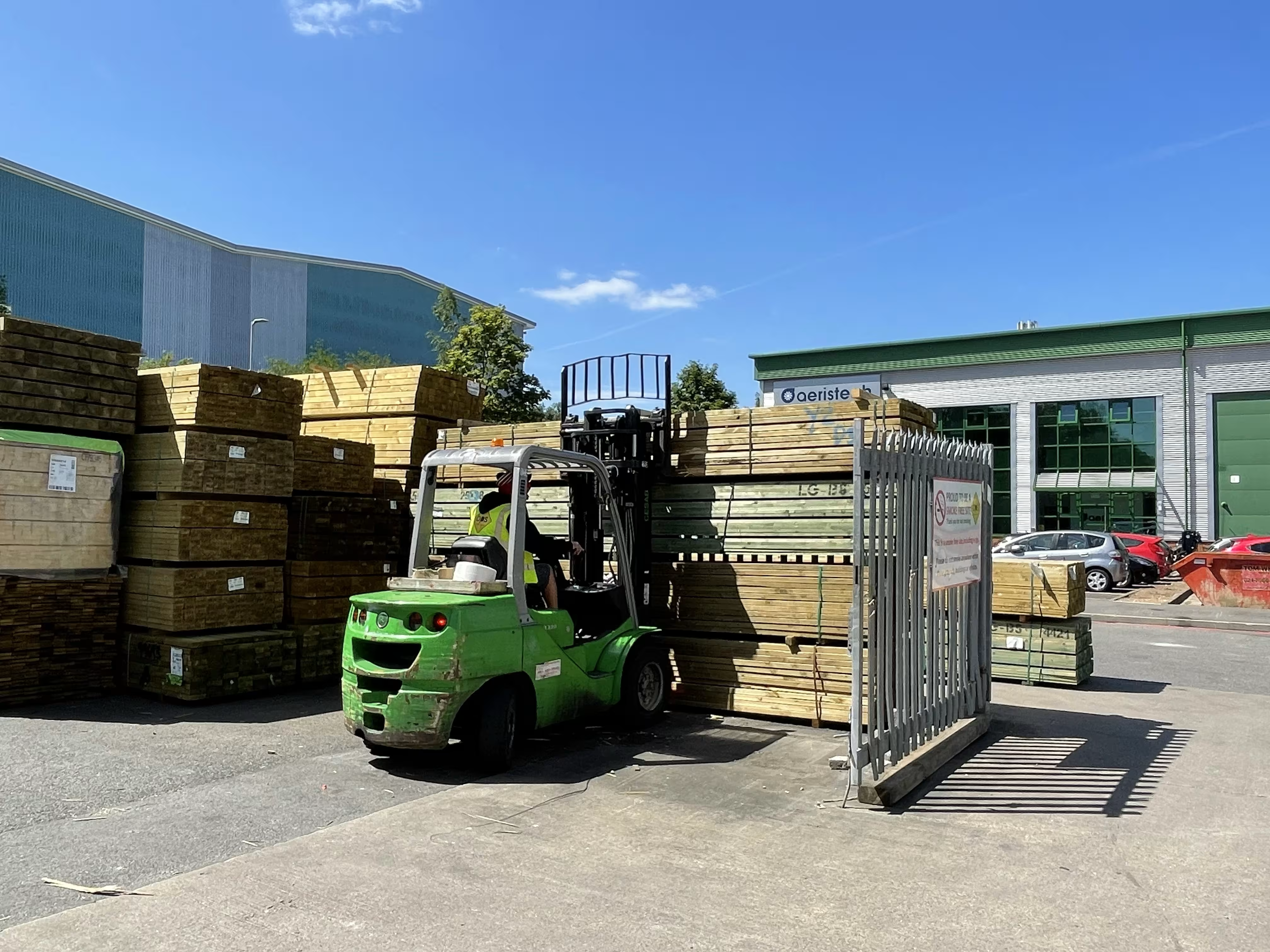
Forklifts in the yard and lorries on the delivery round put two standards on one site: the one L117 suggests for lift trucks, and DVLA Group 2 for your lorry drivers. Each person is assessed to the standard of the work they do.

Warehousing & Logistics
Working at night is one of the conditions L117 names as probably more appropriate to the Group 2 standard for lift-truck operators. We assess HGV drivers to Group 2, and set the standard for each lift-truck role from the hours and loads it involves.

Manufacturing & Engineering
Where lift trucks move highly toxic or explosive materials, or run through the night, L117 points towards the Group 2 standard. For most other lift-truck work it suggests a standard equivalent to Group 1, and we assess to whichever your work calls for.

Garden Centres
Forklift operations alongside family footfall, and any operator taken on for the season. L117 says you may choose to screen potential operators before placement, so each one can be assessed for the work before they start, with the record on file.

Metal Stockholders
Heavy lift-truck work in the yard and lorry deliveries to customers: operators are assessed to the standard L117 suggests for their work, and HGV drivers to DVLA Group 2.

Childcare & Nurseries
If nobody in your setting drives for work or operates plant, a safety-critical medical is not needed. If staff drive a minibus, check their licence entitlement first: DVLA applies the higher Group 2 medical standards to minibus (D1) entitlement on renewal or reapplication.


Ready to book safety-critical medicals?
Tell us which roles drive or operate plant, how many people are in each, and your shift patterns. We will quote for the work, and by the end you will know who is fit for the work they do and who needs adjustments or a clinical review.
Frequently asked questions
What is a safety-critical medical?

Is a safety-critical medical a legal requirement?
Do forklift drivers need a medical?
What is the difference between Group 1 and Group 2 medicals?
How often do HGV drivers need a medical?
Can an employer ask for a medical before offering a job?
What happens if an employee fails a safety-critical medical?
How much does a safety-critical medical cost?


