


- An accident book is where an injured employee, or someone acting for them, records the details of an accident at work.
- In Great Britain, regulation 25 of the Social Security (Claims and Payments) Regulations 1979 requires one where 10 or more people are normally employed at the same time on or about the same premises, and at mines, quarries and factories. Each entry must be kept for at least three years.
- The book can also serve as the injury record that regulation 12 of the Reporting of Injuries, Diseases and Dangerous Occurrences Regulations 2013 requires, but an entry in it is never a RIDDOR report.
- Each entry describes an injury, so it is health data. Keep completed records secure, and share them with safety representatives only with the employee's consent or once anonymised.
- Northern Ireland has its own social security rules, and HSENI asks employers there to use the Northern Ireland edition of the book.
An accident book is the record in which an employee, or someone acting for them, writes down the details of an accident at work that injured them. In Great Britain, regulation 25 of the Social Security (Claims and Payments) Regulations 1979 requires you to keep one if 10 or more people are normally employed at the same time on or about the same premises, or if you employ people at a mine, quarry or factory you own or occupy. Each entry must be kept for at least three years.
The same book can hold the injury records that the Reporting of Injuries, Diseases and Dangerous Occurrences Regulations 2013 (RIDDOR) require. Every entry describes an injury, so it is health data, and data protection law applies to how you store it.
Who needs an accident book?
Regulation 25 of the Social Security (Claims and Payments) Regulations 1979 sets the duty. It applies to two groups of employer:
- every employer "by whom 10 or more persons are normally employed at the same time on or about the same premises in connection with a trade or business"
- every owner or occupier of a mine, a quarry or a factory, if they are an employer, whatever the headcount
Those employers must keep a means, "readily accessible", by which an employee or someone acting on their behalf can record the details of any accident causing them personal injury. The Social Security (Claims and Payments) Regulations 1979 allow that to be "a book or books" or "electronic means", in a form approved by the Secretary of State, and require every entry to be kept for at least three years from the date it was made. Regulation 31 of the same Regulations makes a failure to comply a criminal offence.
The test counts the people normally employed at the same time on or about the same premises. If any of your sites sits close to 10, keep a book there: the injury records RIDDOR requires apply at any size, and the book is a ready way to hold them.
HSE publishes the Accident book BI 510, which uses an approved format. HSE says it helps employers meet their duties under social security and health and safety law, including RIDDOR.
What applies to a smaller employer
Below the threshold the book itself is optional. Three rules still apply:
- An injured employee can give you notice of an accident in writing or orally, under regulation 24 of the Social Security (Claims and Payments) Regulations 1979.
- Regulation 25(1) of the same Regulations requires every employer to take reasonable steps to investigate an accident they are told about, and to record what they find if it differs from the notice.
- Regulation 12 of RIDDOR 2013 requires a record of every reportable incident and every injury that keeps a worker off routine work for more than three consecutive days, with no size threshold.
Northern Ireland has its own social security rules. HSENI says employers there with 10 or more employees must keep an accident book, and asks them to use the Northern Ireland edition.
What should be recorded in an accident book?
Schedule 4 to the Social Security (Claims and Payments) Regulations 1979 lists the particulars. RIDDOR 2013 sets its own list for the injuries it requires you to record. The two overlap closely, which is why one complete entry can serve both.
| What is recorded | Accident book under the Social Security (Claims and Payments) Regulations 1979 | Record of an over-three-day injury under RIDDOR 2013 |
|---|---|---|
| Injured person's full name | Yes | Yes |
| Their address | Yes | Not listed |
| Their occupation | Yes | Yes |
| Date and time of the accident | Yes | Yes |
| Where it happened | Yes | Yes |
| What happened | The cause of the injury | A brief description of the circumstances |
| The injury | Its nature | The injury |
| Who made the entry | Name, address and occupation, if someone other than the injured person | Not listed |
For an incident you report under RIDDOR 2013, the record must also show the date you reported it and the method you used.
HSE's BI 510 form asks for those details, then adds a signature and date, a box where the employee can consent to their details going to safety representatives, and a box where the employer records how and when a reportable accident was reported under RIDDOR.
Who fills in the accident book?
The injured employee, or someone acting on their behalf, such as a first aider or a colleague. Under regulation 24 of the Social Security (Claims and Payments) Regulations 1979, an entry made in the book as soon as practicable after the accident counts as the employee's notice of it.
The entry is the start of your part. Regulation 25(1) of the same Regulations requires you to take reasonable steps to investigate the circumstances of every accident notified to you, and to record the circumstances you find where they differ from the notice.
How does the accident book relate to RIDDOR?
An accident book entry records an accident. A RIDDOR report tells the enforcing authority about it. They are separate steps, and an entry in the book never counts as a report.
Regulation 12 of RIDDOR 2013 requires a record of every reportable incident, every reportable diagnosis of disease, and every injury that keeps a worker off routine work for more than three consecutive days, excluding the day of the accident. Regulation 12(4) of RIDDOR 2013 says a record you keep for another purpose satisfies the duty if it covers those injuries and contains the particulars RIDDOR lists. So the accident book can serve as your RIDDOR injury record. HSE says a separate method is needed for cases of disease.
| After the accident | What RIDDOR 2013 requires |
|---|---|
| Off routine work for three consecutive days or fewer, with no specified injury | Nothing under RIDDOR. The accident book entry stands on its own |
| Off for more than three consecutive days | Keep a record |
| Off for more than seven consecutive days | Keep a record, and report it within 15 days of the accident |
| A death, or a specified injury such as a fracture other than to a finger, thumb or toe | Keep a record, and notify the enforcing authority by the quickest practicable means without delay |
RIDDOR records must be kept for at least three years, at the place where the work happens or at your usual place of business. Our guide to RIDDOR reporting sets out what counts as a specified injury, and our step-by-step guide to reporting an incident under RIDDOR covers how to make the report.
The social security duty is about your employees. HSE says its book can also be used for contractors and visitors, and an injury to a member of the public who is taken from the site to hospital for treatment can be reportable under regulation 5 of RIDDOR 2013.
Opus's RIDDOR reporting service checks whether an incident is reportable, submits the notification, and gives you a written incident record.
Accident books and data protection
An accident book entry holds personal data, and the injury it describes is health data. The UK GDPR treats "data concerning health" as a special category of personal data, which carries extra conditions on how you use it.
| Topic | What to do |
|---|---|
| Who can see it | Keep completed records where only the people who need them can read them. HSE's BI 510 is designed so that individual record sheets "can be removed and stored securely" |
| Sharing with safety representatives | Pass an injured employee's details to safety representatives when they have ticked the consent box on the form. If they have not, the BI 510 guidance says to anonymise the information and share that |
| How long to keep it | At least three years under both the social security rules and RIDDOR. Data protection law then limits you to keeping it no longer than necessary, so set a retention period and write it down |
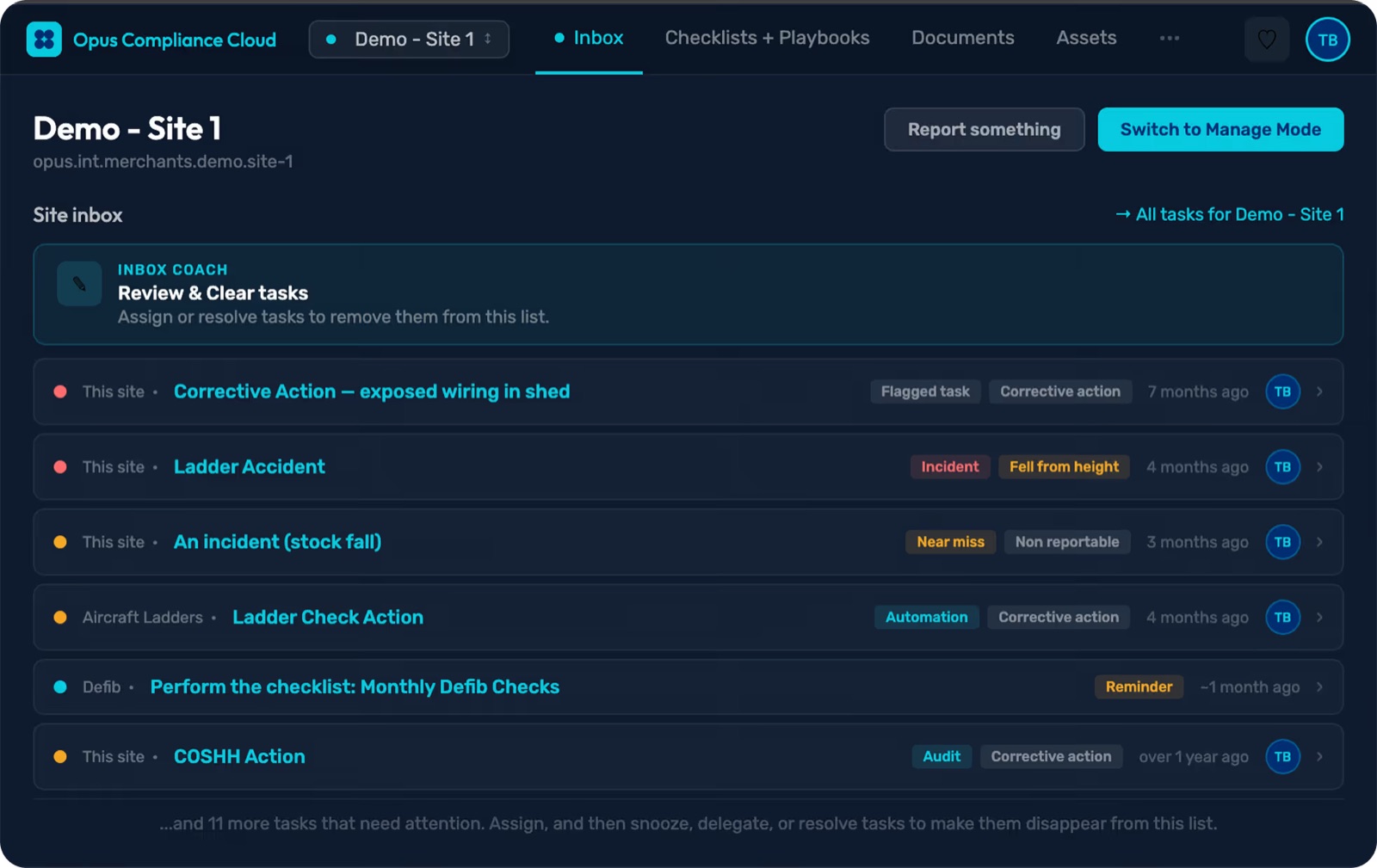
An electronic system works the same way. The Social Security (Claims and Payments) Regulations 1979 allow electronic records, so check that any system you use captures the same details as the book and restricts who can read the entries. Opus's Compliance Cloud lets anyone log an incident in seconds by scanning a QR code.
Opus's accident investigation service finds the root cause of an incident using HSE's HSG245 method, and our RIDDOR reporting service decides whether it is reportable and submits the notification.
Frequently asked questions
Is an accident book a legal requirement? Yes, for some employers. In Great Britain, regulation 25 of the Social Security (Claims and Payments) Regulations 1979 requires one where 10 or more people are normally employed at the same time on or about the same premises, and at any mine, quarry or factory where the owner or occupier employs people.
Do small businesses need an accident book? Below that threshold the book is optional. You still have to investigate any accident an employee tells you about, and RIDDOR 2013 still requires a record of reportable incidents and over-three-day injuries whatever your size.
How long should accident book records be kept? At least three years from the date of the entry, under regulation 25 of the Social Security (Claims and Payments) Regulations 1979. RIDDOR records also have to be kept for at least three years. Data protection law then means you keep them no longer than you need them.
Who should fill in the accident book? The injured employee, or someone acting on their behalf, such as a first aider. The entry should be made as soon as practicable after the accident.
Can an accident book be kept electronically? Yes. The Social Security (Claims and Payments) Regulations 1979 allow the record to be kept in a book or by electronic means, in a form approved by the Secretary of State. It must capture the same details, and each entry must be kept for at least three years.
Do accidents to visitors go in the accident book? The legal duty covers your employees, but HSE says its book can be used for contractors and visitors as well. A visitor taken from your site to hospital for treatment of an injury may also need to be reported under RIDDOR 2013.
Is an accident book entry the same as a RIDDOR report? No. The entry records the accident. A RIDDOR report goes to the enforcing authority, and is required only for the incidents RIDDOR 2013 lists. The accident book can hold the record RIDDOR requires for injuries.
Do near misses go in the accident book? The legal duty covers accidents that cause personal injury. Log near misses separately, because they show where the next injury could come from.

Last updated
November 16, 2026
Opus Safety
Health & safety insights
Guidance, updates and practical advice for your sector.

First aid needs assessment: what it decides and how many first aiders you need
A first aid needs assessment decides your kit, whether an appointed person is enough and how many first aiders you need, using HSE's suggested numbers.
How to choose health and safety software: what to check before you buy
How to choose health and safety software: the records the law expects, how long to keep them, protecting health data and what to ask a supplier.

Why businesses choose
Opus Safety
We've worked across UK industry for years. The numbers show what our clients achieve when compliance becomes a strength, not a burden.


