%201.svg)
%201.svg)
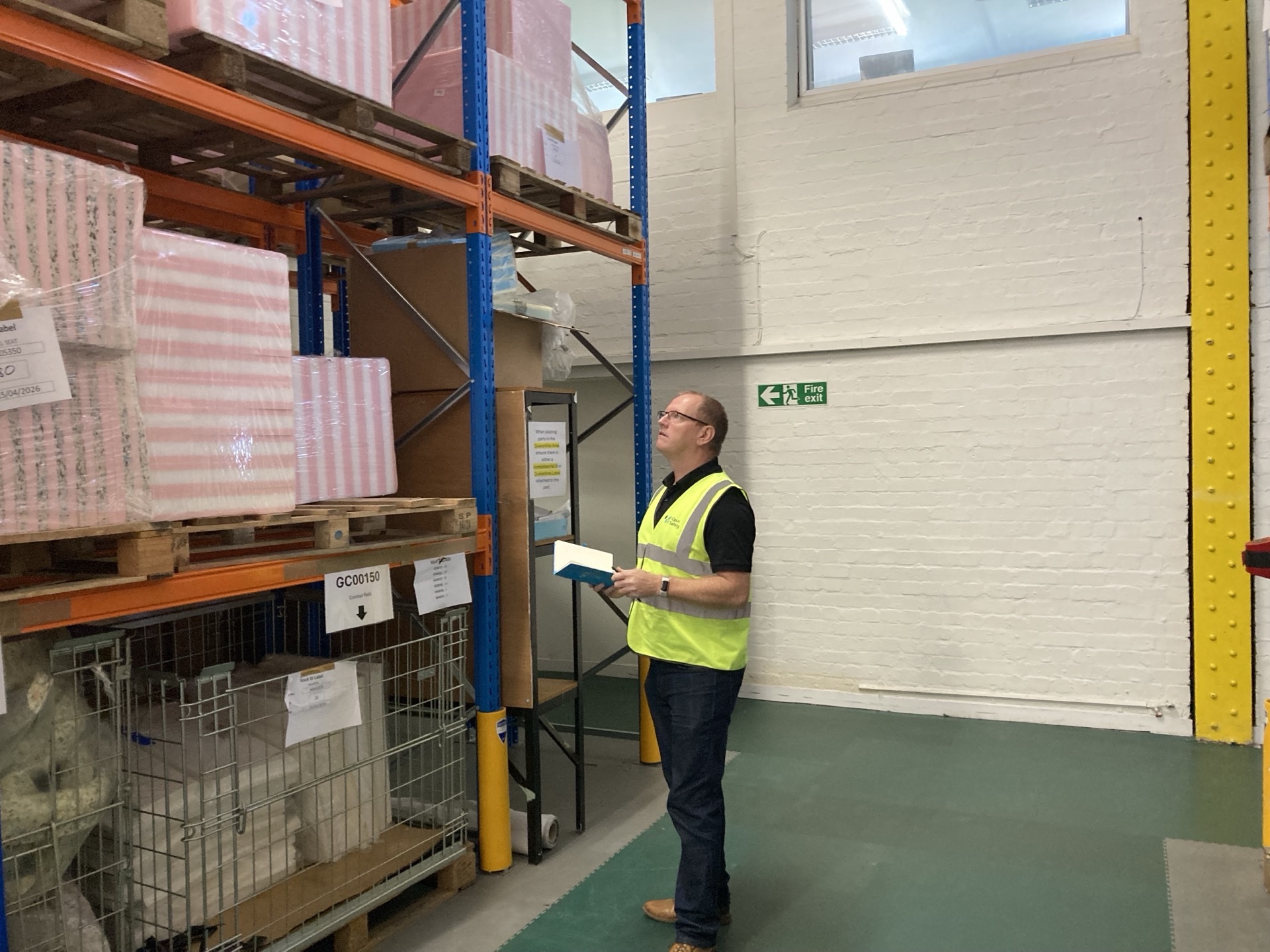
The HSE Business Plan 2026 to 2027 keeps the target of 14,000 proactive inspections and focuses them on asbestos, noise, musculoskeletal disorders and respiratory risks. For the second year running it also says that where health surveillance is legally required, inspectors will assess the consultancy and occupational health services behind it. HSE does not license or accredit those providers, and the employer remains legally responsible throughout. This article sets out the four focus areas, the practical steps inspectors will expect to see, and what to check with your own provider.
The Health and Safety Executive (HSE) published its Business Plan for 2026 to 2027 on 28 May 2026. It sets out the fifth year of HSE's ten-year strategy and, more usefully for employers, where inspectors will be spending their time this year.
Key points for businesses include the HSE's sustained focus on worker health and the inspection time it is putting into asbestos, noise, respiratory, and musculoskeletal disorder (MSD) risks. The HSE aims to deliver 14,000 proactive inspections in 2026/27, prioritising high-risk sectors and activities.
The plan signals a continued emphasis on preventing work-related illness, and repeats a line worth reading closely:
Where health surveillance is legally required, we will check compliance and assess consultancy and occupational health services.
That bites where health surveillance is required by law, such as hearing checks for staff exposed to noise above the upper exposure action value. In practice, inspectors look at whether the surveillance you have in place is adequate for your risks, including the work of the provider delivering it.
Below is a summary of the four focus areas and the practical steps inspectors will expect to see.
Raising standards across the HSE's four focus areas
This year, the HSE will invest more time in enforcing compliance through inspections focusing on asbestos, noise, MSDs, and respiratory risks. While the Business Plan calls out specific concerns, such as occupational lung disease from isocyanate paint spraying and dusty bakery ingredients, every employer should take preventative steps.
Across most of the inspection lines in the plan's annex, the HSE expects enforcement in 40 to 60 per cent of cases. The regulator also recognises that an increased focus on inspecting health priorities may limit its ability to achieve the 14,000 target. Either way, it is a clear call for proactive risk management.
Asbestos
Asbestos-containing materials (ACMs) are still present in many older buildings, putting construction and emergency workers, demolition crews, and tradespeople at risk. Under the Control of Asbestos Regulations 2012, you have a duty to locate any ACMs in your building, usually through an asbestos management survey, create a register, assess the risk, and implement an asbestos management plan.
You must also train employees who are, or are liable to be, exposed to asbestos, along with their supervisors. Use an HSE-licensed contractor for licensable work, such as removing sprayed coatings, pipe lagging or most asbestos insulating board. Lower-risk work on asbestos cement, floor tiles and gaskets can be non-licensed or notifiable non-licensed work, but it still needs a risk assessment, trained operatives and proper controls.
Action points:
- Make sure nobody disturbs, damages or works on ACMs without the right controls in place.
- Provide appropriate personal protective equipment, such as disposable coveralls, gloves and respirators, for anyone working near asbestos.
- Put arrangements in place to stop fibres spreading, including safe disposal of contaminated clothing and equipment.
- Give your team a clear route to report suspected asbestos, and make sure someone acts on what comes in.
Workplace noise
Regulation 5 of the Control of Noise at Work Regulations 2005 requires a suitable and sufficient risk assessment where work is liable to expose employees to noise at or above the lower exposure action value: a daily or weekly personal noise exposure of 80 dB(A), or a peak sound pressure of 135 dB(C).
Think daily saw noise in your builders merchant, or the hum of manufacturing machinery across a full shift. What counts is the dose, meaning how loud combined with how long, rather than the level at any one moment. Note also that hearing protection counts towards the exposure limit value but not towards the action values, so you cannot assess your way below the threshold by issuing ear defenders.
Action points:
- Use a noise assessment to establish your baseline measurements.
- Reduce noise at source with quieter machinery, acoustic barriers, or soundproofed spaces. Use PPE, like earmuffs, earplugs and canal caps, as a last resort.
- Consider noise screens or equipment enclosures to limit worker exposure.
- Rotate job roles, shift patterns, and working practices.
- Zone noisy work so that quieter areas do not need hearing protection at all.
- Train workers to avoid noise-induced hearing loss risks.
- Introduce health surveillance to identify early signs of hearing loss.
Respiratory risks
Under the Control of Substances Hazardous to Health (COSHH) Regulations 2002, you need to carry out risk assessments, and prevent or adequately control exposure. Health surveillance is required where it is appropriate: broadly, where there is an identifiable disease or adverse health effect linked to the exposure, a reasonable likelihood it will occur in your conditions of work, and a valid way of detecting it.
The work you do now to control wood dust, solvents, metalworking fluids (MWFs), and other hazardous substances could save your team from lethal lung diseases decades down the line.
Action points:
- Do a COSHH risk assessment to locate and measure exposure hazards and improve current safety controls.
- Reduce airborne particles with local exhaust ventilation (LEV).
- Run daily checks and weekly concentration, pH, and dip slide tests to identify MWF contaminants.
- Introduce respiratory protective equipment (RPE) if standard controls aren't reducing airborne hazards to acceptable levels.
- Face-fit test every wearer of tight-fitting RPE, for the specific model and size they will use. Loose-fitting hoods and helmets do not need fit testing.
- Use health surveillance and air monitoring to track individuals' lung function and assess your wider working environment.
Musculoskeletal disorders (MSDs)
MSDs are often caused by improper manual handling techniques, awkward postures, and repetitive actions. They're made worse by poor working conditions and task organisation, like a cold warehouse or a long yard shift. The Manual Handling Operations Regulations 1992 (MHOR) set out your legal duty to avoid, assess, and reduce the risk of injury from manual handling where the operation involves a risk of injury.
Action points:
- Avoid manual handling wherever possible by redesigning or rotating tasks.
- Assess the risk when it is unavoidable.
- Reduce the risk with practical controls such as trolleys, pallet trucks, hoists, and other mechanical aids.
- Use MSD screening to assess employees in physically demanding roles.
- Train staff on best practices, including the use of lifting aids, correct handling techniques, safe systems of work specific to your site, and what to do if conditions change.
- Set task-specific load limits based on the load, the environment and individual capability. HSE's guideline figures are filters for deciding what needs a fuller assessment, not legal limits.
Assessing health surveillance and the providers behind it
For the second year running, the Business Plan extends health surveillance checks beyond the employer. Where health surveillance is legally required, the HSE will check compliance and assess consultancy and occupational health services.
That places real emphasis on the quality and competence of your outsourced health and safety provider. You may need to demonstrate that:
- Your health surveillance arrangements are appropriate for the risks in your workplace.
- They're being delivered by competent professionals.
- You're acting on your programme's findings and results.
It is worth being clear about what this does not change. HSE does not license or accredit consultancies and occupational health providers, and the employer remains legally responsible for health and safety. With that in mind, now is a good time to revisit your health surveillance programme with your provider. It should be linked to the hazards identified in your risk assessments and help identify whether further action or improvements to controls are needed.
You should also ensure your consultant has the skills, training, and experience to provide competent health and safety support. This could include relevant qualifications and professional registrations, experience of working with similar hazards and industries, evidence of continuing professional development (CPD), and details of how your health surveillance programme will be supervised and quality assured.
If you're unsure what comprehensive health surveillance and competent consultancy should look like, we can help. We provide occupational health services across the UK to help businesses protect their staff and stay compliant with changing regulations.
Sources
- HSE, Business Plan 2026 to 2027, published 28 May 2026
- Control of Asbestos Regulations 2012
- Control of Noise at Work Regulations 2005
- Control of Substances Hazardous to Health Regulations 2002
- Manual Handling Operations Regulations 1992
- HSE, Guidance on respiratory protective equipment (RPE) fit testing, INDG479

Last updated
September 27, 2026
Opus Safety
Health & safety insights
Guidance, updates and practical advice for your sector.

Why businesses choose
Opus Safety
We've worked across UK industry for years. The numbers show what our clients achieve when compliance becomes a strength, not a burden.


%201.svg)


