%201.svg)
%201.svg)
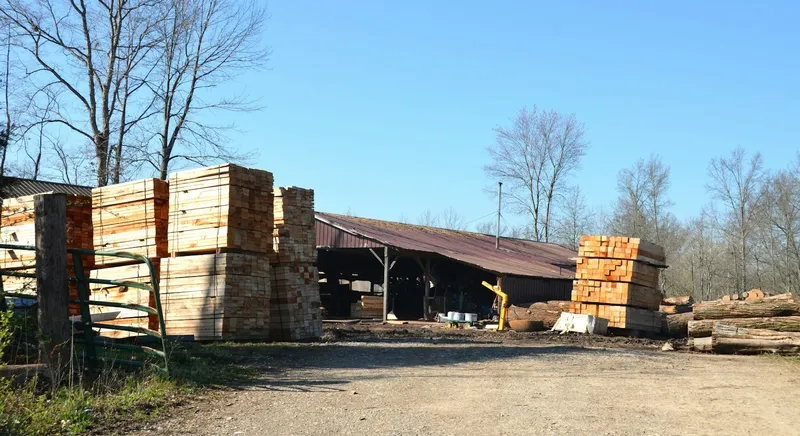
The risks that make inspectors focus on merchants are the yard ones: vehicle movements, forklift operations and stacked materials. All three sit outside what a generic, office-led assessment covers well, and all three carry the potential for a fatal outcome rather than 'just' a more minor problem. The other four below are the ones that turn up in enforcement because nobody has dealt with them, rather than because they were hard to control.
The risks that make inspectors focus on merchants are the yard ones: vehicle movements, forklift operations and stacked materials. All three sit outside what a generic, office-led assessment covers well, and all three carry the potential for a fatal outcome rather than 'just' a more minor problem. The other four below are the ones that turn up in enforcement because nobody has dealt with them, rather than because they were hard to control.
Why a merchant is not a warehouse
Merchanting combines three things that rarely appear together. A working yard with heavy vehicle movements. A retail counter with members of the public walking through. And a stock profile that runs from cement and timber to gas cylinders and powered tools.
An assessment written for a distribution centre misses the customer. One written for a shop misses the yard. The list below is ordered by potential severity rather than by how often something happens, so the frequent-but-minor items sit lower than they would on an incident log.
1. Vehicle movements in the yard
Deliveries arrive on artics, customers reverse into loading areas, and forklifts cross both. Pedestrians in that mix is where the severe outcomes come from, and it is the hardest thing to retrofit once a yard is laid out.
Regulation 17 of the Workplace (Health, Safety and Welfare) Regulations 1992 requires traffic routes to be organised so that pedestrians and vehicles can circulate safely. In practice that means marked and physically separated walkways, a one-way flow where the yard allows it, and a reversing policy that does not rely on a colleague waving.
The fix that holds: segregate physically rather than with paint alone, and control the customer. A member of the public walking to their car with a length of timber across your yard is at risk if you are not showing them the correct route.
2. Forklift and telehandler operations
Every merchant runs lift trucks, and the failures cluster in three places: the truck itself, the operator, and the load.
Regulation 9 of the Lifting Operations and Lifting Equipment Regulations 1998 requires thorough examination of lifting equipment at set intervals, which is separate from and additional to servicing. Regulation 5 of the Provision and Use of Work Equipment Regulations 1998 requires work equipment to be "maintained in an efficient state, in efficient working order and in good repair", and that where machinery has a maintenance log, the log is kept up to date. Finally operators need to be suitably trained and that training refreshed at appropriate intervals.
The fix that holds: treat the thorough examination certificate as a compliance document rather than paperwork from the hire company, ensure you have a planned maintenance regime for the trucks and check that refresher training actually happened rather than that a certificate exists somewhere.
3. Racking, stillages and stacked materials
Timber stacks, block packs and racking that has been reconfigured over years without anyone recalculating the load can make your set-up vulnerable. Where impact damage from forklifts is routine and often unreported, that is what turns a dented upright into a collapse.
Racking is work equipment, so regulation 5 of the Provision and Use of Work Equipment Regulations 1998 applies to it in the same way it applies to trucks.
The fix that holds: a named person doing a recorded visual inspection on a set frequency, plus a no-blame route for reporting a strike. Drivers who expect a disciplinary do not report the knock, and the damage stays invisible until it matters.
4. Manual handling at the counter and in the yard
Cement, plasterboard, paving and timber are heavy, awkward and often handled in poor weather on uneven ground.
Regulation 4 of the Manual Handling Operations Regulations 1992 sets the duty: avoid hazardous manual handling so far as is reasonably practicable, assess what cannot be avoided, and reduce the risk.
The fix that holds: mechanical aids close to where the lifting happens, and a policy on what staff will and will not load into a customer's car. The manual handling assessment is the documented part; the layout change is what actually reduces the injuries.
5. Wood dust from the cutting service
Timber cutting is a service that plenty of merchants offer and few assess properly. Hardwood dust is a carcinogen, softwood dust is a respiratory sensitiser, and both have workplace exposure limits.
Regulation 7 of the Control of Substances Hazardous to Health Regulations 2002 requires exposure to be prevented, or where that is not reasonably practicable, adequately controlled. Control means extraction at source, with respiratory protection as the last resort rather than the first purchase.
The fix that holds: local exhaust ventilation on the saw, tested on schedule, and health surveillance for the people using it. This is the most commonly enforced exposure issue in merchanting and timber, and a COSHH assessment that names the dust rather than only the chemicals is the starting point.
6. Noise, which nobody measures until they have to
Saw noise can cause merchants to be over the first action value and almost never know it, because noise feels like part of the job.
Regulation 5 of the Control of Noise at Work Regulations 2005 requires an assessment where employees are liable to be exposed at or above a lower exposure action value. Handing out ear defenders is not the assessment and does not replace it.
The fix that holds: measure it, because the duty and the controls both key off the measured level. A noise assessment takes a morning and settles the question either way.
7. Members of the public on a working site
The one that separates merchants from every other industrial setting. Customers walk through an operational yard, often in trainers, sometimes with children, and they do not know your rules.
Section 3 of the Health and Safety at Work etc. Act 1974 puts a duty on you to conduct your undertaking so that people who are not your employees are not exposed to risks to their health or safety, so far as is reasonably practicable. That duty is as enforceable as the one you owe your staff.
The fix that holds: a customer route that does not cross the forklift route, signage people actually read, and an active team who direct and help keep customers safe by pointing them to the correct places to be. Most merchants have the first two but the third requires discipline to introduce and maintain.
Where to start if you are reviewing all seven
Work in the order below rather than by whichever is easiest to close.
| Priority | Check | Why first |
|---|---|---|
| 1 | Pedestrian and vehicle segregation in the yard | Highest potential severity, and the hardest to retrofit |
| 2 | Lift truck thorough examination dates and operator refreshers | Legal duty with a fixed interval, easy to evidence, easy to miss |
| 3 | Racking damage reporting route | The failure is invisible until it is not |
| 4 | LEV test date on the saw | Carcinogen exposure with a testing interval |
| 5 | Noise measurement | Cheap to settle, commonly breached |
| 6 | Manual handling | Highest frequency of injury, lowest severity |
| 7 | Customer routes and loading policy | The duty in section 3 of HSWA 1974, usually the least documented |
Two of these carry fixed intervals that an inspector can check in minutes, which is the thorough examination under LOLER and the LEV testing under COSHH. Those are the ones to have in order before anything else.
This article focussed on 'in branch' hazards. Don't forget about your fleet and the risks from loading and unloading stock when delivering.
If you want this checked properly
We work with merchants across the UK and are a BMF preferred supplier. Tell us how many branches you run and what is already in place, and we will tell you which of the seven above is your real exposure. See what we do for builders merchants, or the Opus Safety Partnership for ongoing cover.
Frequently asked questions
What are the main health and safety risks in a builders merchant? Vehicle and pedestrian movements in the yard, forklift operations, and stacked or racked materials cause the most serious injuries. Manual handling produces the most frequent ones. Wood dust from a cutting service and noise are the two occupational health exposures most often missed.
How often should racking be inspected in a builders merchant? Racking is work equipment under the Provision and Use of Work Equipment Regulations 1998, which requires it to be maintained in an efficient state and in good repair. Common practice is a recorded visual check by a trained person at a set interval, alongside an immediate report whenever a truck strikes a frame.
Do we need health surveillance for staff using the saw? If your COSHH assessment shows exposure to wood dust that is not adequately controlled, or where the work involves a substance linked to an identifiable disease, health surveillance is likely to be required. The assessment decides it, which is why the assessment has to name process-generated dust rather than only the products you buy in.
Does health and safety law cover customers in the yard? Yes. Section 3 of the Health and Safety at Work etc. Act 1974 requires you to conduct your undertaking so that people who are not your employees are not exposed to risks, so far as is reasonably practicable. A customer injured in your yard is an enforcement matter.
Who is responsible for health and safety in a multi-site merchant? The employer, and in practice the directors who decide how it is resourced. Appointing a competent person, internally or externally, changes who does the work rather than who is accountable. We have written on what to do when there is no in-house expert.
Is a generic health and safety assessment enough for a merchant? Rarely. A merchant combines a working yard, a retail counter and a hazardous stock profile, and assessments written for a warehouse or a shop miss one of those. The gap is usually the customer and the cutting service.
Sources
- Regulation 17, Workplace (Health, Safety and Welfare) Regulations 1992
- Regulation 9, Lifting Operations and Lifting Equipment Regulations 1998
- Regulation 5, Provision and Use of Work Equipment Regulations 1998
- Regulation 4, Manual Handling Operations Regulations 1992
- Regulation 7, Control of Substances Hazardous to Health Regulations 2002
- Regulation 5, Control of Noise at Work Regulations 2005
- Section 3, Health and Safety at Work etc. Act 1974

Last updated
September 17, 2026
Opus Safety
Health & safety insights
Guidance, updates and practical advice for your sector.

Why businesses choose
Opus Safety
We've worked across UK industry for years. The numbers show what our clients achieve when compliance becomes a strength, not a burden.


%201.svg)


