

Emergency First Aid at Work
Emergency First Aid at Work (EFAW) is the one-day course that trains workplace first aiders to deal with an emergency: an unconscious casualty, resuscitation, choking, bleeding, shock and seizures. We run it at your premises for up to 12 delegates.
IOSH Approved | NEBOSH Silver Partner | 98% Client Retention | 400+ Active Partnerships


Train your emergency first aiders in one day
Emergency First Aid at Work is the one-day course for the people you nominate as emergency first aiders. Delegates cover managing an incident, the priorities of first aid, treatment of an unconscious casualty, resuscitation, shock, choking, seizures, bleeding and the common workplace injuries they are most likely to meet. In England, Wales and Scotland, regulation 3 of the Health and Safety (First-Aid) Regulations 1981 requires employers to provide "such number of suitable persons as is adequate and appropriate in the circumstances" to give first aid. Northern Ireland has its own first aid regulations. Your first aid needs assessment decides whether EFAW is enough, or whether you need first aiders trained to the three-day First Aid at Work level. We run the course at your premises as a closed course for up to 12 delegates, so the scenarios follow your sector and incident arrangements.

Three steps to a certified team
Pick the course, confirm a date, and we run the training. Every delegate leaves with a certificate - clear booking, clear agenda, no admin chase.
01
Scoped to your workplace
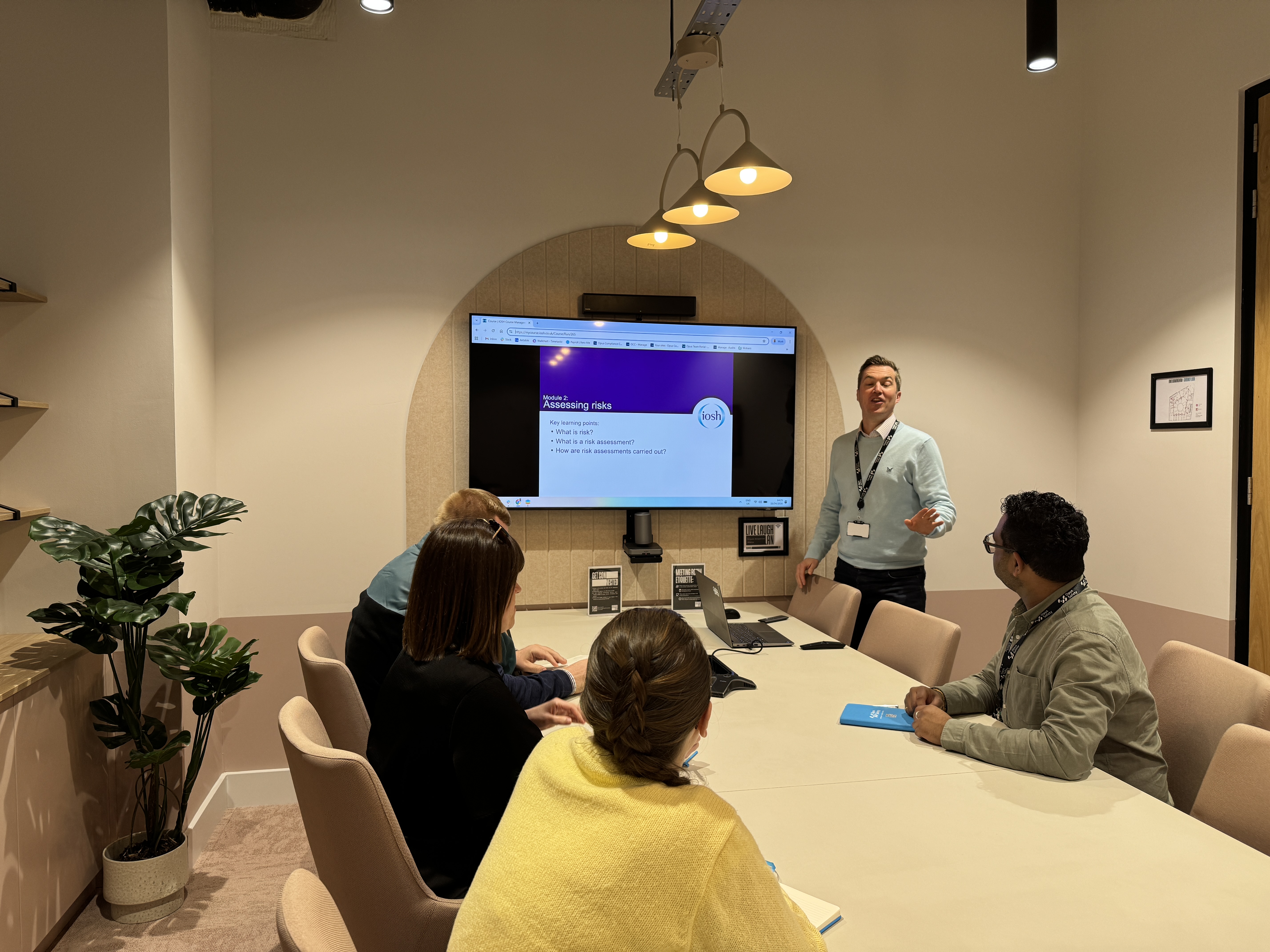
Opus confirms the roles delegates hold and your incident arrangements before delivery. Scenarios in training reflect your own environment so delegates leave ready to respond on site.

02
One-day practical training
A one-day combination of theory and realistic scenario practice. Delegates cover first aid regulations, managing an incident, first aid priorities, treatment of an unconscious casualty, resuscitation, shock, choking, seizures, bleeding and common workplace injuries.

03
Assessment and 3-year certificate
Delegates are continuously monitored during the day and complete a multiple-choice assessment. Those who pass receive a Certificate of Attendance valid for three years, and HSE strongly recommends an annual refresher during that time.
What to expect from this course

What's covered
First aid regulations, managing an incident, the priorities of first aid, treatment of an unconscious casualty, resuscitation, shock, choking, seizures, bleeding and common workplace injuries, over one day of theory and realistic scenario practice. For a wider range of injuries and illnesses, our three-day First Aid at Work course builds on this content, and staff with a specific defibrillator role can take our one-day defib training.


Who it's for
Anyone you nominate as an emergency first aider. HSE publishes suggested numbers in L74 and leaves the decision to your first aid needs assessment. For a low-hazard workplace such as an office or shop with 25 to 50 employees, it suggests at least one first aider trained in EFAW. For a higher-hazard site with 5 to 50, such as warehousing, food processing or construction, it suggests EFAW or FAW depending on the type of injuries that might occur. Above 50 employees, the suggestion moves to FAW first aiders. Our guide to the first aid needs assessment works through the numbers.


Prerequisites
None required. Delegates need a reasonable level of physical fitness to perform CPR and practical first aid tasks during the assessed sessions.

What you get
A Certificate of Attendance valid for three years, for each delegate who completes the continuous monitoring and passes the multiple-choice assessment. HSE strongly recommends an annual refresher during the three years. To requalify, a first aider repeats the one-day course before the certificate expires: L74 says a first aider who has not requalified by the expiry date is no longer considered competent to act as one.

What non-compliance actually cost your business
67%
Reduction in near-miss incidents
£28K
Saved on insurance premiums annually
6hrs
Audit prep time per branch



Ready to get your team certified?
Speak with the team about booking this course, when our next dates are, and when it fits around your schedule.
Scheduled around your operations · On-site or e-learning · Certificate on completion
Frequently Asked Questions
What does EFAW stand for?

What is the difference between Emergency First Aid at Work and First Aid at Work?
Who needs Emergency First Aid at Work?
How long is the Emergency First Aid at Work course?
How long does an Emergency First Aid at Work certificate last?
How is Emergency First Aid at Work assessed?
Can the course be delivered at our site?


