%201.svg)
%201.svg)

With hearing loss affecting over 11 million people in the UK, and noise-induced hearing loss (NIHL) being one of the most common occupational diseases, maintaining good hearing health in the workplace is a critical responsibility for employers.
Understanding the risks
Noise-induced hearing loss develops gradually over time, making it difficult for workers to realise the damage is happening until it's too late. It can be caused by both sustained exposure to loud noise and by sudden, very loud noises.
The Control of Noise at Work Regulations 2005 requires employers to take action when their workers are exposed to noise levels at or above the lower exposure action value (LEV) of 80 dB(A). At or above the upper exposure action value (UEV) of 85 dB(A), employers must provide hearing protection and ensure it is used.
Vibration works the same way. For hand-arm vibration, the Control of Vibration at Work Regulations 2005 set a daily exposure action value of 2.5 m/s² A(8), which triggers duties to reduce exposure and provide health surveillance, and a daily exposure limit value of 5 m/s² A(8) that must not be exceeded. Our hand-arm vibration calculator works out where your team sits against both.
Taking action to protect hearing health
To protect worker hearing health, employers should:
- Conduct a noise risk assessment: Identify sources of noise in the workplace, measure noise levels, and assess the risk to workers.
- Implement noise controls: Use the hierarchy of controls to reduce noise exposure. This may include engineering controls, such as installing acoustic barriers or replacing noisy machinery with quieter alternatives, and administrative controls, such as limiting the time workers spend in noisy areas.
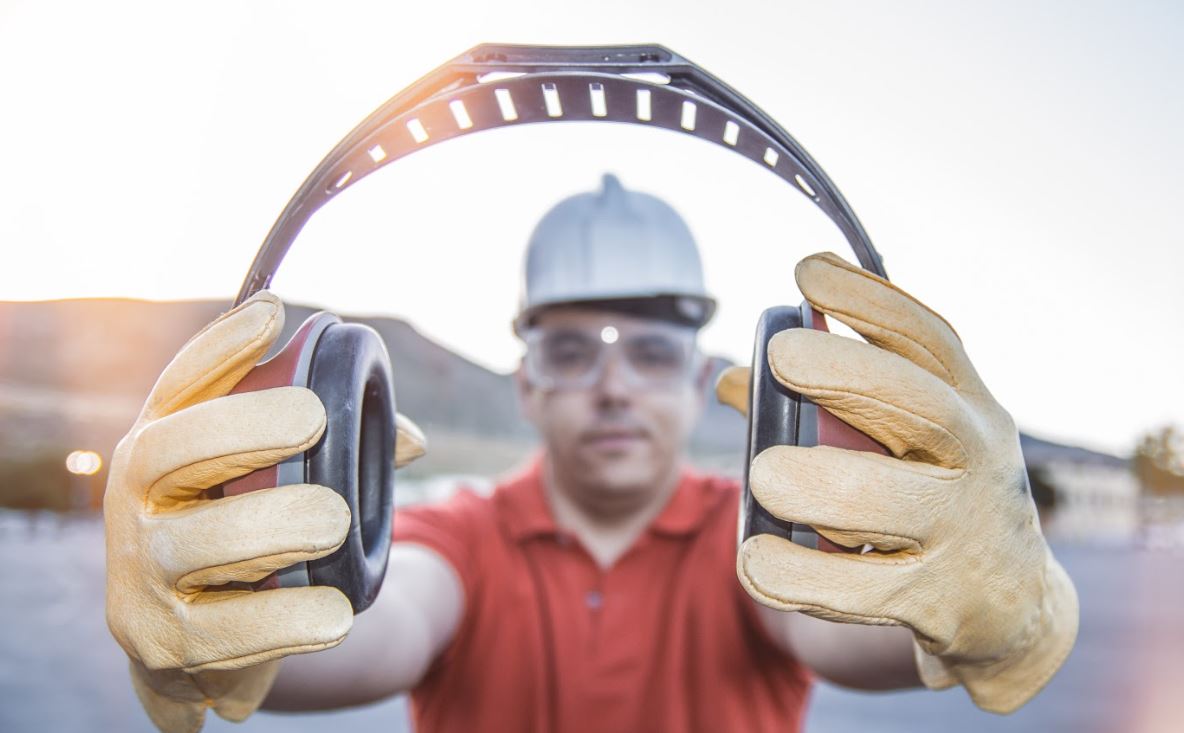
- Provide and maintain hearing protection: Where noise exposure cannot be adequately controlled, provide workers with suitable hearing protection, such as earplugs or earmuffs. Ensure that the hearing protection provided is appropriate for the level of noise and that it is correctly fitted and maintained.
- Carry out health surveillance: Where workers are at risk of hearing loss, carry out regular audiometry tests to monitor their hearing health and identify any early signs of hearing loss.
- Provide information and training: Ensure workers are aware of the risks to their hearing health and how to protect themselves, including the correct use and maintenance of hearing protection.
The importance of hearing health surveillance
Health surveillance for hearing health, also known as audiometry, involves regular hearing tests for employees who are regularly exposed to high levels of noise. It helps to identify any early signs of noise-induced hearing loss, allowing for earlier intervention and preventing further damage.
If you would like support with your noise risk assessment or health surveillance programme, our occupational health specialists are here to help. Get in touch today to find out more.

Last updated
May 23, 2024
Opus Safety
Health & safety insights
Guidance, updates and practical advice for your sector.


Best occupational health providers for UK employers in 2026: six compared
Six UK occupational health providers compared by fit: national clinic networks, safety-critical medics, SME specialists and on-site surveillance.
What the HSE will inspect this year
The HSE's Business Plan 2026 to 2027 targets asbestos, noise, MSDs and respiratory risks, and will assess the consultancy behind your health surveillance.
Workplace Noise Assessments: Protecting Your Employees
What a noise risk assessment involves and what the Control of Noise at Work Regulations 2005 require of employers in Great Britain.
Noise-induced hearing loss: Choosing the proper protection for your team
Safeguard employees’ hearing health with helpful guidance on noise-reducing PPE – plus links to our latest white paper on preventing noise-induced hearing loss.

Why businesses choose
Opus Safety
We've worked across UK industry for years. The numbers show what our clients achieve when compliance becomes a strength, not a burden.


%201.svg)


